
Top Creative Agencies: Elevate Your Brand with Innovative Solutions
June 1, 2026 · Captain

Creative agencies are at the forefront of shaping how brands communicate and connect with audiences in 2026. As omnichannel brand presence becomes essential for business success, creative agencies have become indispensable partners for organizations seeking to stand out in a crowded marketplace. This comprehensive guide covers what creative agencies do in 2026, the different types of agencies, how to choose the right one, and how they design for digital signage and split-flap displays. It is designed for business owners, marketers, and venue operators considering agency partnerships to elevate their brand presence across digital and physical touchpoints.
Why Creative Agencies Matter in 2026
In today’s rapidly evolving business landscape, creative agencies play a pivotal role in helping brands navigate the complexities of omnichannel marketing, digital transformation, and experiential design. With customer expectations higher than ever and the lines between physical and digital experiences increasingly blurred, businesses rely on creative agencies to deliver cohesive, engaging, and measurable brand communications across every channel.
What Is a Creative Agency? (Definition & Services)
A creative agency blends artistic design with strategic marketing to build brand identity and drive audience engagement. Unlike pure marketing agencies, creative agencies emphasize the production of creative assets, though many offer both services. Their services include:
- Branding and brand identity development
- Graphic design
- Website and app development
- Video production
- Photography
- Social media management
- Advertising campaigns
Creative agencies differ from pure marketing agencies by focusing on the creation and execution of visual and experiential assets, while marketing agencies may concentrate more on strategy, analytics, and media buying. Many modern agencies, however, offer a hybrid of both creative and marketing services to provide end-to-end solutions for their clients.
What Creative Agencies Do in 2026
Creative agencies in 2026 serve as specialized partner firms that plan, design, and produce brand communications across digital, print, and experiential channels. Rather than functioning as pure execution vendors, modern agencies position themselves as strategic growth partners—conducting audience research, developing brand positioning frameworks, and translating those insights into cohesive creative work that drives measurable business outcomes.
Scope of Services
The services these agencies deliver span a broad range, including:
- Brand identity development
- Campaign concepts
- Video production
- Social content creation
- Web design
- Digital signage systems
- Experiential installations
Integration of Physical and Digital Experiences
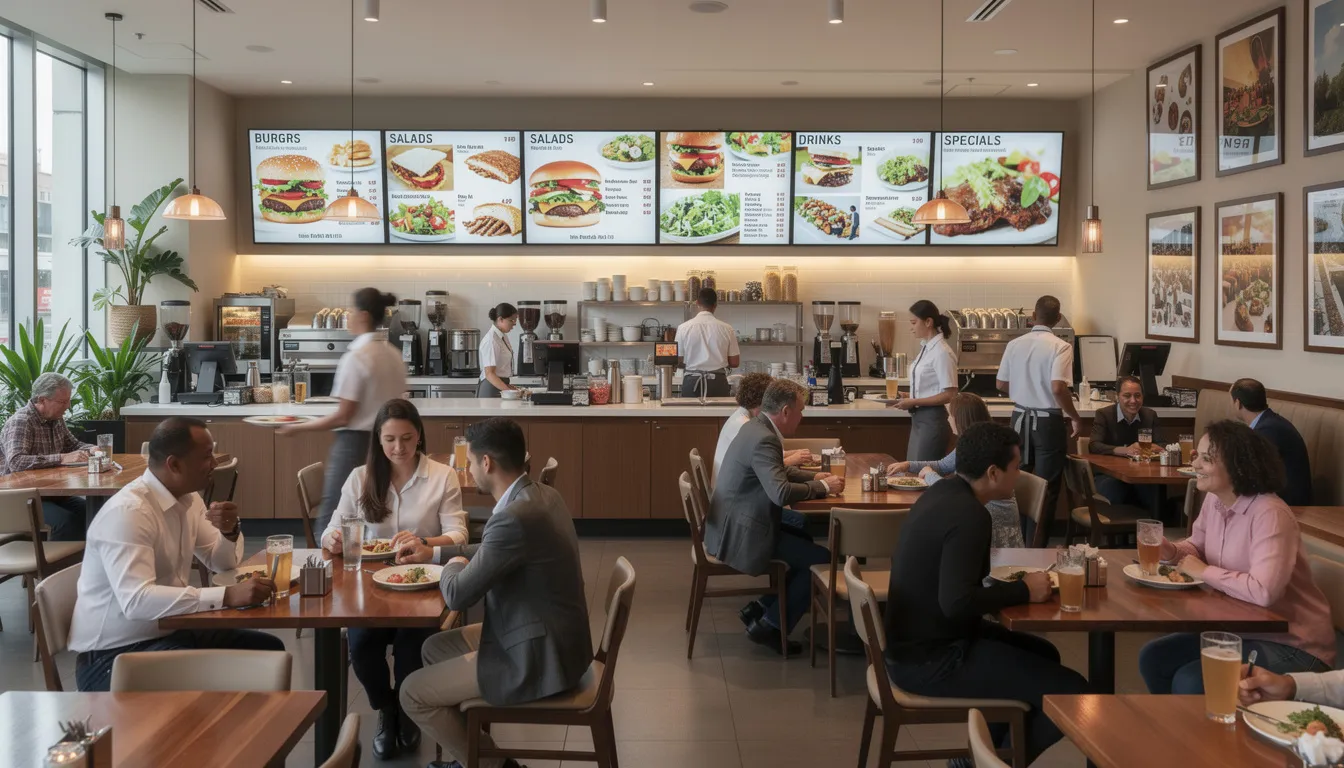
What distinguishes 2026-era creative agencies is their integration of physical and digital experiences. Screens in restaurants, hotel lobbies, retail locations, and corporate offices have evolved from simple menu boards to dynamic brand touchpoints requiring strategic design thinking, much like the historical evolution of split-flap displays from transit hubs to modern digital platforms. Agencies increasingly specify digital signage solutions directly into their environmental design work, including retro-style displays like split-flap-inspired boards that evoke the nostalgic charm of 1960s transportation hubs while running on modern smart TVs.
Technical Foundations
Modern digital signage systems are composed of various modules, such as sensor modules and display modules, allowing for flexible and scalable installations. Sensors—including proximity and hall-effect sensors—enable interactive features and ensure precise operation of display modules. Hardware components often include pin headers for easy assembly and compatibility, while power management is crucial for robust and sustainable operation of these modules. Many digital signage devices connect to computers or controllers via USB for data transfer, control, and debugging. Reliable content management depends on storage options, whether local or remote, to ensure smooth updates and playback of multimedia content. Connecting signage devices to a local network via Wi-Fi or wired connection enables rapid deployment and remote management. Content is structured in specific formats, such as binary wire format for data transmission, and systems support various serial modes and data representations for compatibility and efficiency.
Digital Signage Management
Networked digital signage systems are managed through centralized, often cloud-based, content management systems (CMS), while standalone systems operate independently and rely on local media playback. Digital signage software is responsible for content creation, scheduling, and management, and supports various operating systems to give customers flexibility in hardware and software choices. Interactive digital signage allows users to engage directly with displays using input methods like touch, gestures, voice, or proximity sensors. Many systems also integrate audience analytics, IoT sensors, or AI-driven personalization to enhance engagement and measure effectiveness.
Split-Flap TV offers creative agencies a practical tool to deliver these kinetic, nostalgic messaging experiences on standard screens without requiring custom hardware engineering. Agencies can design sophisticated split-flap layouts knowing their clients can manage day-to-day updates through a simple web dashboard, eliminating the need for expensive mechanical installations while maintaining that distinctive retro aesthetic that helps capture attention in crowded visual environments.

Types of Creative Agencies and What They Offer
Understanding the different types of creative agencies helps business owners identify the right partner for their specific needs, whether they’re launching a new brand, scaling social media presence, or integrating digital displays into physical venues.
Brand & Identity Agencies
- Specialize in foundational elements of brand expression: naming, logo design, visual systems, brand guidelines, typography standards, and color palettes.
- Design identity systems intended to endure for a decade or more.
- In 2026, increasingly design display-ready assets optimized for digital signage, specifying how brand elements should appear on larger displays, menu boards, and retro-style boards running on 4K screens.
- Consider viewing distance, contrast requirements, and how motion graphics should behave across different formats—including binary wire formats for data transmission and various serial modes used in digital signage systems.
Digital & Social Agencies
- Focus on performance-driven campaigns across Meta, TikTok, YouTube, and emerging platforms.
- Specialize in scalable ad creatives and micro-influencer partnerships.
- Emphasize rapid iteration, A/B testing, and optimization based on data.
- Repurpose successful social content for in-store and office screens, recognizing that the same video assets performing well on Instagram can drive engagement on lobby displays and retail signage when properly adapted.
Full-Service Agencies
- Combine strategy, media buying, and creative execution under one roof.
- Offer comprehensive suites spanning brand development, advertising campaigns, content production, experiential activation, and analytics.
- Provide a convenient, streamlined solution by integrating all creative, technical, and operational needs under one roof—though they typically serve larger enterprise clients with budgets exceeding $100,000 annually.
Experiential & Environmental Design Studios
- Focus on physical spaces: retail interiors, hotel lobbies, corporate offices, and event environments.
- Specify digital signage components directly into their designs, selecting screen sizes (from tablets to 86” ultra-stretch displays), mounting configurations, and software platforms.
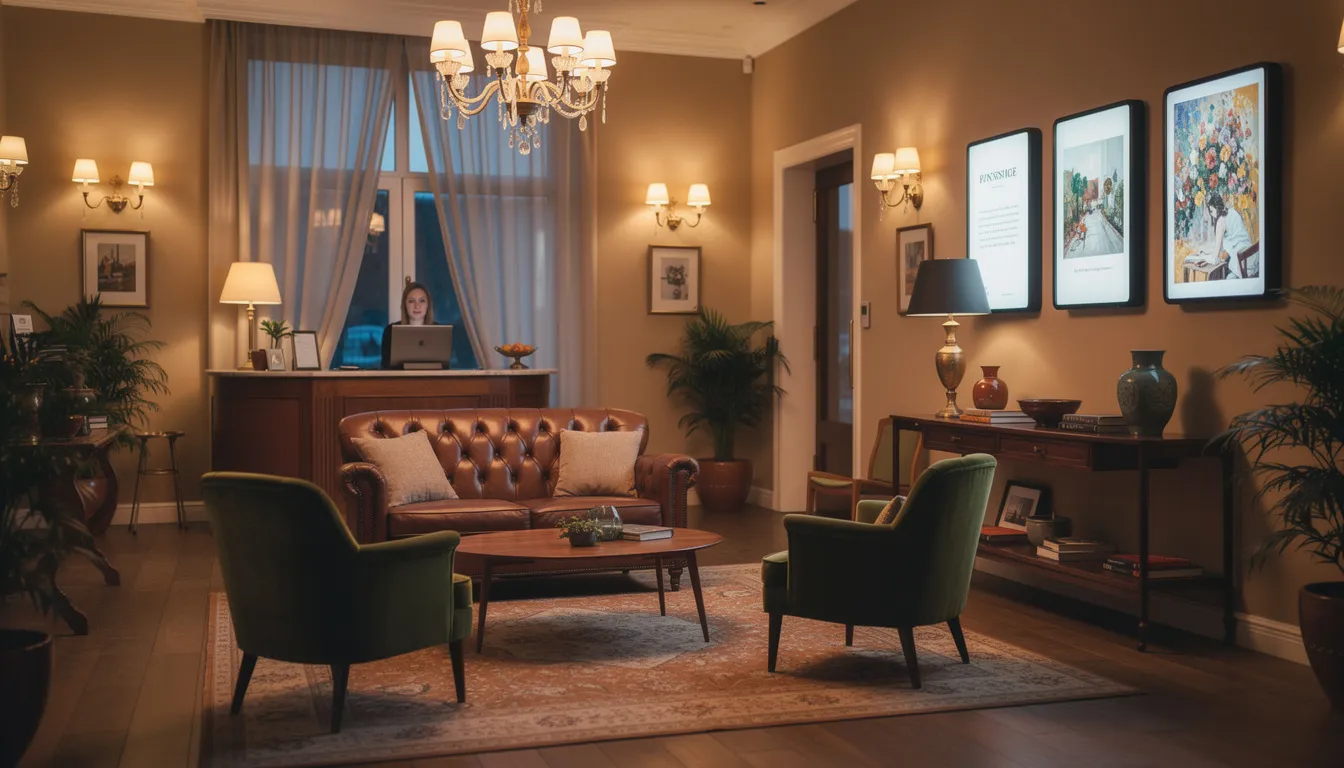
- Recommend solutions like Split-Flap TV to enhance the hotel guest experience on a 55” UHD screen to create a nostalgic welcome board displaying guest greetings, local weather, and curated city recommendations.
Specialist Content Studios
- Handle specific creative disciplines: motion graphics, 3D animation, copywriting, or video production.
- Often plug into larger agency ecosystems as subcontractors, providing specialized skills when a full-service agency needs advanced animation capabilities or long-form content writing for a particular campaign.
Why Businesses Hire Creative Agencies Instead of Going DIY
The decision facing a bar owner, restaurant operator, hotel manager, or retail store owner in 2026 often comes down to three options: handling creative work in-house, piecing together freelancers and SaaS tools, or partnering with a retained creative agency. Each approach carries distinct trade-offs in cost, quality, and time investment.
Strategic Thinking
Strategic thinking represents the primary value agencies provide that DIY approaches cannot replicate. Agencies conduct audience research, competitive analysis, and brand positioning workshops that inform everything from menu design to lobby displays. When fintech client Pointcard partnered with Superside, they achieved a 65% growth in click-through rate above industry standards—not through prettier graphics, but through strategic concept development and rigorous messaging testing. A 20-seat cocktail bar or 50-room boutique hotel lacks internal capacity for this level of strategic work.
Cohesive Visual Language
Cohesive visual language across all touchpoints builds brand recognition and customer trust over time. Creative agencies maintain brand guidelines, typography standards, color systems, and motion rules that ensure consistency whether a customer encounters your brand on a website, social media, print menu, or digital signage. A Split-Flap TV display in your lobby should feel like a natural extension of your Instagram presence and physical interior design. Agencies create these connections systematically rather than treating each touchpoint as a separate project.
Time and Capacity Constraints
Time and capacity constraints make DIY approaches impractical for most small businesses. Concepting, design iterations, production, and scheduling content represent significant labor. The restaurant manager balancing daily operations cannot dedicate 10–15 hours per week to content creation while also managing food service, staff, and customer experience. Agencies provide predictability: work gets completed, deadlines are met, and quality remains consistent.
Comparing Approaches
- DIY with Canva and SaaS tools: Works for basic, one-off needs but lacks strategic guidance and may produce visually decent individual assets without systematic coherence.
- Freelancer collective: Cheaper (often $30–60/hour) but requires significant management overhead and offers no accountability structure.
- Retained creative agency ($3,000–10,000 monthly): Scales capacity, provides flexibility, and brings strategic partnership—with measurable ROI justifying the cost for most growing businesses.
Even with a creative agency handling major brand work, simple daily updates—like rotating specials or event announcements—can be controlled by staff through tools like Split-Flap TV’s dashboard. The agency establishes the visual framework; your team manages day-to-day content within that framework.
With these advantages in mind, let’s explore how agencies approach the design of digital signage and split-flap style displays.
How Creative Agencies Design for Digital Signage and Split-Flap Style Displays
Screens in restaurants, hotels, offices, and retail environments have evolved far beyond simple static menu boards. In 2026, these displays function as core brand touchpoints that agencies design with the same strategic attention they apply to websites and advertising campaigns. The challenge lies in creating content that communicates effectively within unique environmental constraints while maintaining brand coherence.
Design Constraints for Digital Signage
- Short viewing times demand high contrast, clear typography readable from 10–30 feet, and sparing use of motion to avoid cognitive overload.
- Content must work as ambient background during casual glances and as focal engagement during intentional viewing.
- Agencies consider screen orientation (portrait versus landscape), brightness requirements for sunlit windows versus interior ambient lighting, and integration with real-time data feeds like weather APIs, social media counters, or flight information systems.
Split-Flap Aesthetics
Retro-inspired split-flap aesthetics have emerged as a distinctive trend, particularly in hospitality and lifestyle venues seeking to evoke nostalgia while remaining contemporary, reflecting how split-flap displays are making a comeback in digital spaces. The mechanical flip boards familiar from 1960s–1980s train stations and airports carry emotional resonance—a sense of timelessness and authenticity that contrasts with generic digital displays.
- Split-flap displays are modular, allowing customization in the number of rows and columns, as well as color and size, to fit different branding needs.
- The overall cost of a split-flap display varies depending on the number of rows and columns and other customizations.
- Split-flap displays attract attention through their kinetic movement and sound, creating memorable experiences for viewers.
- They are designed to be low-power and sustainable, making them an energy-efficient signage option.
- Installation is straightforward, with comprehensive installation guidelines provided by manufacturers.
- Split-flap displays are also built to last, with some units capable of operating for over 50 million rotations without failure.
- Traditional mechanical boards cost $10,000–$50,000+ and require ongoing maintenance.
- Split-Flap TV combines nostalgic vintage split-flap display aesthetics with modern digital technology, offering agencies a software solution that achieves the same aesthetic on existing 4K screens, tablets, or media players, making this design direction accessible for independent venues without enterprise budgets.
Concrete Use Cases
Agencies develop template systems for each use case that allow staff to update content daily through straightforward dashboard interfaces while maintaining visual consistency. Examples include:
- Rotating bar specials cycling every 30 seconds to feature cocktails and food pairings
- Hotel lobby welcome boards displaying current time, local weather, and curated city tips
- Corporate office announcement boards showing meeting schedules, company milestones, and employee recognition
- Retail storytelling boards that communicate brand heritage and seasonal promotions
Print vs. Digital Signage
- Print signage generally involves lower initial production and installation costs compared to digital signage.
- Digital signage eliminates the need for disposable materials but introduces concerns related to electronic waste and energy consumption.
- Digital signage is advantageous in low-light or nighttime environments, where its internal illumination ensures visibility without the need for external lighting.
- Digital signage systems can be either networked or standalone, with networked systems allowing for centralized content management.
- Traditional print signage is static and requires physical replacement for any updates, making it less adaptable to changing information needs.
- The adoption of digital signage has contributed to a gradual decline in demand for traditional printed signage, though many businesses continue to rely on print for certain applications, particularly in contexts where digital displays are impractical or cost-prohibitive.
With a clear understanding of design approaches, let’s look at the teams behind these creative solutions.
Team Structure: Who’s Who in a Creative Agency
Behind every impactful digital signage project lies a diverse constellation of creative professionals, each bringing their own distinctive spark—a blend of analytical precision and emotional intuition that transforms abstract business goals into tangible, memorable experiences.
Key Roles in a Creative Agency
- Account Managers: Serve as the empathetic bridge-builders, connecting deeply with clients to uncover not just their business objectives, but their authentic brand soul and aspirational vision.
- Creative Directors: Orchestrate the conceptual magic—those “aha” moments where strategic thinking meets innovative storytelling, ensuring every digital signage solution resonates with genuine brand authenticity and purposeful objectives.
- Designers and Copywriters: Forge an intimate creative partnership, crafting visually compelling and emotionally engaging content that speaks directly to the human experience within digital signage environments.
- Project Managers: Weave the organizational thread that keeps this creative tapestry intact, orchestrating timelines and resources with intentional precision to ensure seamless execution—from initial spark to final, polished delivery.
By thoughtfully assembling the perfect creative chemistry for each unique project, agencies consistently deliver digital signage solutions that transcend mere expectation-meeting—they craft experiences that genuinely connect businesses with their audiences, fostering those rare, tactile moments of authentic human engagement that transform ordinary spaces into memorable, story-driven environments.
With the right team in place, effective project management ensures these creative visions are brought to life efficiently and on schedule.
Project Management in Creative Agencies
Masterful project management becomes the beating heart of any creative agency that truly understands the magic—especially when crafting digital signage solutions that don’t just display information, but create those unforgettable moments in bustling transportation hubs and vibrant restaurants where people pause, look, and feel something.
Project Management Processes
- Robust management processes and thoughtfully chosen software orchestrate teams, set achievable deadlines, and allocate resources efficiently.
- Project management platforms and collaboration tools transform chaotic creativity into streamlined communication—tracking progress, ensuring every stage of a digital signage project carries that spark from initial concept through to final installation.
This beautifully structured approach allows agencies to juggle multiple projects like a master storyteller weaving parallel narratives, adapting to client feedback with the grace of an improviser, delivering digital signage that doesn’t just engage audiences—it moves them, meeting business objectives while touching something deeper.
With strong project management, agencies can focus on maintaining the highest standards of quality in every deliverable.
Quality Control: Ensuring Excellence in Creative Output
Quality control feels like the beating heart of truly exceptional digital signage projects—it’s where technical precision meets genuine care. Creative agencies embrace this beautiful dance of rigorous quality assurance, weaving together design reviews that spark joy, content audits that feel purposeful, and technical testing that brings confidence.
Quality Assurance Measures
- Design reviews, content audits, and technical testing ensure every display is visually appealing and functionally robust.
- Agencies focus on seamless integration with existing business networks, making digital signage easy to manage and update as business needs evolve.
- Quality control measures become the guardians of brand consistency, delivering performance that feels both reliable and alive across every single display.
By embracing excellence with genuine passion at every stage, agencies empower businesses to touch hearts, strengthen their authentic brand story, and achieve results that feel both meaningful and measurable in today’s competitive landscape.
With quality assured, agencies turn their attention to measuring and evaluating the impact of their creative work.
Measurement and Evaluation: Proving Creative Impact
📊 To capture the true magic of digital signage, creative agencies dive deep into the wonder of measurement and evaluation—it’s like watching stories unfold in real‑time data.
Measuring Success
- Track engagement patterns, sales connections, and customer feedback to understand how digital displays influence behavior and brand perception.
- Use insights to refine strategies and craft even more meaningful, impactful experiences.
🌱 Beyond business success, agencies are embracing sustainability—examining energy consumption and material lifecycle to create digital experiences that honor environmental values and community spirit.
With measurement in place, let’s see how creative agencies and Split-Flap TV work together for operational excellence.
Partnering with a Creative Agency When You Use Split-Flap TV
If you’re a small or medium business—a neighborhood bar, boutique café, independent hotel, retail storefront, or corporate office—considering both a creative agency partnership and Split-Flap TV for your signage needs, understanding how these two elements work together can help you maximize value from both investments.
Typical Workflow: Steps to Success
- Discovery Phase: The agency defines your overall brand concept, exploring your business personality, target customers, competitive positioning, and visual direction.
- Template Design: The agency designs templates specifically for split-flap layouts, establishing typography, color usage, message formats, and animation behavior.
- Content Management: Your business team updates actual messages through Split-Flap TV’s web-based dashboard—changing daily specials, adjusting welcome greetings, or announcing upcoming events without requiring additional design fees.
- Content Scheduling: Agencies plan content schedules around your business rhythms, leveraging Split-Flap TV’s rotating message feature and scheduling capabilities.
- Dynamic Elements: Split-Flap TV supports date and time displays, weather integration, and social media counters alongside custom messages. Agencies incorporate these dynamic elements into their designs.
- Ongoing Updates: Hotel staff or business teams update daily messages and special event announcements through the dashboard, while the agency returns periodically to refresh seasonal content and adjust templates based on feedback.
Agencies working with Split-Flap TV as a retro communication platform don’t need custom hardware engineering expertise. They design for common smart TVs, Android or Apple devices, and standard media players, relying on Split-Flap TV’s software to handle scheduling, playback, and real-time data processing. This approach delivers revolutionary split-flap TV experiences that bring retro back in style at subscription software prices—typically under $30 monthly—rather than the $10,000–$20,000 investment required for mechanical installations that demand ongoing firmware updates and physical maintenance.
With a clear workflow in place, the next step is choosing the right creative agency for your needs.
Choosing the Right Creative Agency for Your Signage and Brand
No single creative agency fits every business. A single-location bar with a $5,000 annual creative budget has different needs than a multi-site retail chain investing $200,000 in brand development. Understanding your own requirements—and knowing which questions to ask—helps identify the right partner.
Selection Criteria
- Industry Experience: Look for agencies with a track record in your sector (e.g., restaurants, hospitality, retail).
- Portfolio Relevance: Review actual digital signage work—menu boards, lobby displays, environmental installations.
- Team Composition: Consider agency size and whether you’ll get personal attention or be assigned to junior staff.
- Pricing Model: Clarify project-based fees vs. retainer models.
- Platform Familiarity: Ensure the agency understands digital signage platforms and technical requirements.
Evaluating Agencies
- Ask for real project examples where screens were integrated into physical spaces.
- Request specific outcomes (e.g., increased dwell time, upsells, improved brand perception).
- Commission a trial engagement (4–6 weeks) to concept and design a single Split-Flap TV channel before committing to a longer retainer.
- Assess how the agency handles ongoing updates—editable templates, clear guidelines, and export-ready assets optimized for both 1080p and 4K screens.
Content management systems (CMS) for digital signage allow for remote updates and scheduling of content, while real-time messaging enhances audience engagement by providing timely information. Interactive digital signage enables users to engage directly with displays, improving the user experience. Integrating audience measurement tools can help analyze viewer demographics and engagement, and IoT sensors can be used to create personalized experiences for viewers. Digital signage is widely used in transportation hubs, retail stores, restaurants, corporate buildings, hotels, educational institutions, healthcare facilities, and public spaces. Digital Out-of-Home (DOOH) advertising leverages digital signage displays in public spaces to deliver targeted advertisements. Digital signage systems can incorporate audience analytics, IoT sensors, or AI-driven personalization to enhance user engagement. Interactive digital signage is commonly used in places like retail, transportation, education, and public spaces to create engaging interactions. Digital signage can be deployed across various devices, including smart TVs, tablets, and media players, ensuring consistent content display.
Building a long-term relationship where the agency handles major brand evolutions—seasonal refreshes, new location launches, major rebranding initiatives—while Split-Flap TV powers day-to-day communications offers the best of both worlds: strategic creative partnership combined with operational independence for routine content management.

Questions to Ask a Potential Creative Agency
Before signing with a creative agency, prepare a list of specific questions that reveal their actual capabilities and working style. You can copy these questions directly into an email or meeting agenda to ensure you cover the essential topics.
- Can you show me a project where you designed content for screens installed in a physical space—menu boards, lobby displays, or retail signage? What were the measurable outcomes?
- Have you worked with restaurants, hotels, or retail stores similar to my business? What challenges did those clients face, and how did you address them?
- How do you approach brand discovery for a new client? What does the first month of working together look like?
- How do you work with in-house teams who will manage day-to-day content updates? Do you provide training and documentation?
- Are you familiar with tools like Split-Flap TV or similar digital signage platforms? Can you design templates that work within platform constraints?
- What’s your typical turnaround time for initial concepts? How quickly can you deliver final assets once we approve a direction?
- How do you define a successful project? What metrics do you track after launch, and how do you report results to clients?
Push for specificity rather than accepting vague answers. Instead of “we’ve worked with restaurants,” you want to hear “we redesigned the menu boards and lobby signage for a 12-location fast-casual chain in 2024, which contributed to a 7% increase in average ticket during the first quarter after launch.” Concrete dates, outcomes, and client names (with permission) signal an agency that tracks results rather than simply completing deliverables.
The right creative agency transforms your brand presence across every touchpoint—from website to social media to the split-flap display greeting customers in your lobby. The industry has evolved from aesthetic vendors to strategic partners who deliver measurable business outcomes through cohesive brand systems.
Start by clarifying your own needs: single project or ongoing partnership, specific platform requirements, budget constraints, and industry expertise. Use the questions above to evaluate candidates, and consider a trial engagement before committing to a longer relationship. With Split-Flap TV handling day-to-day content management and a creative agency providing strategic direction and design systems, even small businesses can achieve the kind of polished, dynamic brand presence that was once available only to enterprise organizations with six-figure budgets.
Testimonials and Case Studies: Real Results from Creative Partnerships
Nothing whispers quite like the stories that emerge from transformed spaces—those real-world tales of wonder that creative agencies cherish and share. These testimonials and case studies become something more profound than mere marketing materials; they capture the almost magical moments when digital signage breathes life into forgotten corners, transforms sterile environments into storytelling canvases, and creates those ineffable “wow moments” that linger in memory long after visitors have departed. Through these detailed narratives of past projects, agencies reveal not just metrics and outcomes, but the human experience—the way a screen can shift an entire atmosphere, drawing people closer, making them pause, smile, and truly engage with a brand in ways that feel both surprising and deeply authentic.
These stories also illuminate the intimate journey of creation—the challenges that test ingenuity, the technical puzzles that demand elegant solutions, and those breakthrough moments when everything clicks into perfect harmony. They build something precious and rare: genuine trust that transcends the typical client-vendor relationship. Through sharing both triumphs and obstacles overcome, agencies position themselves not as mere service providers, but as creative partners who understand the delicate art of bringing brands to life in public spaces—crafting experiences that feel meaningful, memorable, and refreshingly human in our increasingly digital world. Each case study becomes a testament to the agency’s ability to create those lasting moments of connection that transform business outcomes while touching something deeper in the human spirit.
Creative Agencies FAQ & Summary
What is a creative agency?
A creative agency blends artistic design with strategic marketing to build brand identity and drive audience engagement. Creative agencies are experts in developing the visual and experiential elements that make brands memorable and effective.
How is a creative agency different from a marketing agency?
Creative agencies differ from pure marketing agencies by emphasizing the production of creative assets—such as branding, design, and content creation—while marketing agencies may focus more on strategy, analytics, and media buying. Many agencies today offer both creative and marketing services for a holistic approach.
What services do creative agencies provide?
Creative agencies offer a wide range of services, including:
- Branding and brand identity development
- Graphic design
- Website and app development
- Video production
- Photography
- Social media management
- Advertising campaigns
Why should I hire a creative agency?
Hiring a creative agency gives you access to strategic thinking, cohesive brand systems, and professional-quality creative assets that drive measurable business outcomes. Agencies bring expertise, efficiency, and consistency that are difficult to achieve with DIY or freelance approaches.
How do creative agencies design for digital signage and split-flap displays?
Agencies design digital signage and split-flap displays by considering environmental constraints, audience behavior, and brand consistency. They create templates and content systems that are easy for staff to update, ensuring your signage remains fresh, engaging, and on-brand.
What is the typical workflow when working with a creative agency and Split-Flap TV?
- Discovery and brand exploration
- Template and content system design
- Staff training and dashboard setup
- Ongoing content updates by your team
- Periodic template refreshes and strategic reviews by the agency
Creative agencies blend artistic design with strategic marketing to build brand identity and drive audience engagement. They differ from pure marketing agencies by emphasizing production of creative assets, although many provide both services. Services include branding, graphic design, website/app development, video production, photography, social media management, and advertising campaigns.