12 Best Signage Ideas for Bar Specials
June 3, 2026 · Captain
Friday at 5:30 is not the time to hunt for a chalk marker that still works. If your team is erasing yesterday’s IPA promo while guests are already ordering, your signage is working against you. The best signage ideas for bar specials do two jobs at once – they catch the eye fast, and they make updates painless when prices, pours, or timing change mid-shift.
For bars, good signage is not just decoration. It shapes what guests order, how long they stay, and whether your space feels sharp or thrown together. A taped-up printout can technically communicate a deal, but it rarely builds appetite or atmosphere. A well-designed display, especially one with a little theater to it, turns specials into part of the room’s rhythm.
What makes bar special signage actually work
The best bar signage is clear before it is clever. Guests should understand the offer in a few seconds from a distance. That means a short headline, easy-to-scan pricing or timing, and enough contrast to read in low light. If people have to step closer and squint, you have already lost some of the value.
Context matters too. A sports bar promoting buckets during the game needs bolder, more energetic messaging than a cocktail lounge featuring a limited-run mezcal drink. The sign should fit the room, not fight it. That is where many bars miss the mark – they create specials signage as a separate task, instead of treating it as part of the brand experience.
There is also a practical side. Specials change constantly. That is why handwritten boards often start strong and fade fast. They look charming on day one, then inconsistent by week three. If your menu shifts often, the smartest setup is one that keeps the visual personality but removes the daily friction of rewriting and reprinting.
12 best signage ideas for bar specials
1. A dedicated happy hour board near the entrance
Your best special should not be hidden behind the bar. Put a clean, dedicated display where guests see it before they sit down. This works especially well for walk-in traffic deciding whether to come in at all.
Keep this sign focused on the main offer, the time window, and one or two anchor drinks or bites. If you cram in every discount, it loses punch. Think invitation, not spreadsheet.
2. A behind-the-bar feature board for high-margin drinks
Once guests are seated, the next job is guiding what they order first. A display behind the bar is ideal for spotlighting cocktails, local drafts, or seasonal pours you want to move.
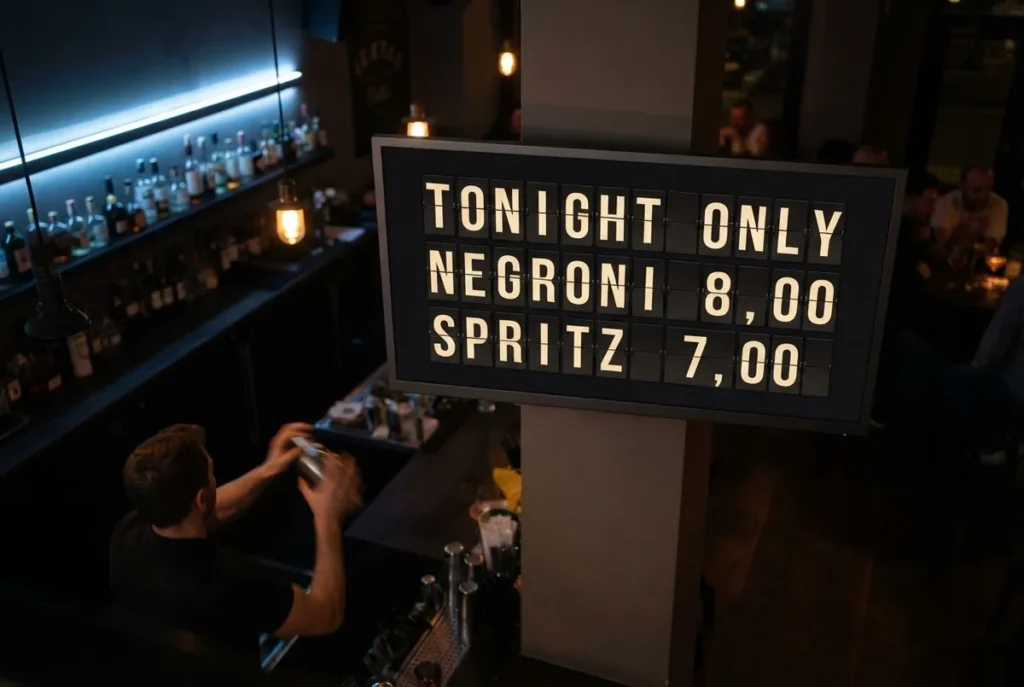
This is where split-flap-style digital signage has a real advantage. Text-first displays feel intentional in a bar setting. They do not compete with the room the way flashy modern screens often do. Instead, they add motion, mood, and that familiar click-clack energy while keeping the message clean.
3. Rotating day-of-week specials
Taco Tuesday, whiskey Wednesday, industry night, game-day pitchers – recurring specials are easier to remember when the signage changes with the calendar. A static sign can announce the concept, but dynamic scheduling makes it feel current every day.
This approach also reduces staff errors. If the display updates automatically, you are less likely to have a server explaining that the sign is technically up but the deal is only for tomorrow.
4. Limited-time countdown messaging
Scarcity works when it feels real. A sign that says “Frozen espresso martini tonight only” or “Last call for oyster happy hour at 6 PM” creates urgency without sounding forced.
The key is restraint. Not every promotion should feel like a countdown. Use this style for events, small-batch features, or inventory-driven offers where timing is genuinely part of the appeal.
5. Pairing signs that sell the second item
One of the most effective bar signage ideas is not about the drink alone. It is about the pairing. A crisp message like “House lager + pretzel special” or “Old fashioned + burger after 8” helps guests make a faster decision and often lifts average check size.
Pairing signs work best when they feel curated. Guests respond to combinations that sound like someone actually thought about them, not random items bundled for convenience.
6. Event-driven specials boards
Trivia nights, DJ sets, live music, playoff games, and holiday weekends all deserve their own specials messaging. These signs should connect the event to the offer so the promotion feels part of the experience, not an afterthought.
For example, a pre-game beer special and a post-show cocktail menu are two different moods. The signage should reflect that shift. Scheduling different pages across the evening keeps the room feeling active without adding work for staff.
7. A “what’s pouring now” display
If your tap list changes often, a live-style board is one of the best signage ideas for bar specials because it answers the question guests are already asking. It also creates room for subtle promotion, like flagging a featured draft or small-batch keg before it kicks.
This kind of sign is especially strong in beer bars and hybrid restaurant-bars where inventory moves quickly. Accuracy matters more than flourish here, so choose a format that can be updated instantly.
8. Bartender’s choice spotlight
People like ordering what the staff is excited about. A small display highlighting the bartender’s current favorite adds personality and gives hesitant guests an easy entry point.
This works best when the message sounds human. “Nina’s pick: spicy paloma” lands better than something generic. It gives the bar a voice while keeping the recommendation anchored in the team.
9. Late-night specials that appear only when relevant
A common mistake is showing every offer all day long. Late-night deals lose some of their pull if they are visible at noon. Time-based visibility makes promotions feel more immediate.
Digital scheduling is useful here because it lets your signage match the actual flow of service. Lunch, happy hour, dinner, and late-night all have different audiences. One board can handle all of them if the content changes at the right time.
10. Window signage for passersby
Interior signage helps once people are inside. Window-facing signage gets them through the door. This is especially valuable on busy streets where guests are making split-second decisions.
For window messages, keep it bold and minimal. Think “Happy Hour 4-6” or “$2 oysters until 6” rather than a full menu. A retro-inspired motion display can be particularly strong here because it reads as premium and unexpected, not like another generic promo screen.
11. Seasonal and weather-based specials
Some of the best specials are tied to mood. Cold snap? Hot toddy feature. Heat wave? Frozen drinks front and center. Rainy Thursday? Comfort-food-and-bourbon pairing.
This approach works because it feels timely instead of scripted. It does require a flexible signage system, though. If updating the message is a hassle, most bars simply stop doing it, and the idea never reaches its potential.
12. FAQ-style specials signage
Not every special needs a sales pitch. Sometimes the best sign answers the questions staff hear all night: What time does happy hour end? Are martinis included? Which drafts are discounted?
A clean FAQ-style panel can reduce friction at the bar and speed up ordering. It is not the most glamorous format, but it is often one of the most useful. When paired with a stronger feature board, it keeps service smooth without cluttering the main promotion.
Why format matters as much as the message
A great special can get ignored if the presentation feels messy. Chalkboards have character, and printed inserts are familiar, but both come with maintenance. Smudges, outdated pricing, inconsistent handwriting, and last-minute tape jobs all chip away at the look of the room.
That is why more bars are moving toward signage that keeps the warmth of classic display culture while removing the manual headache. A split-flap-style screen is not trying to imitate the glossy, image-heavy digital signage you see everywhere else. It is text-led, graphic in a different way, and much better suited to bars that want atmosphere as much as information.
For operators, the operational upside is just as important. If a special changes, the sign should change in seconds. If you want one message at 4 PM and another at 10 PM, scheduling should handle it. If multiple locations need consistent promotions, control should not depend on whoever has the neatest handwriting.
How to choose the best signage ideas for your bar specials
Start with your service style. If your bar thrives on high-volume happy hour, lead with entrance and window signage. If the room is more about discovery and premium pours, focus on behind-the-bar displays and rotating features. The best setup usually mixes one traffic-driving sign with one ordering sign.
Then look at how often your specials change. If it is once a month, simpler formats may be enough. If it is daily, or tied to events and inventory, you need something you can update without breaking the flow of service. This is where a system like Split Flap TV makes sense – buy a screen, download the app, and publish messages that feel designed rather than improvised.
Finally, protect the tone of the space. A neighborhood dive, a rooftop cocktail bar, and a boutique hotel lounge should not all sound the same. Good signage sells the special, but the best signage makes the room feel more like itself.
A bar special should feel like a moment, not an announcement. When the sign is clear, current, and built to match the atmosphere, guests notice – and they order accordingly.