
Best Digital Signage for Boutique Hotels
June 11, 2026 · Captain
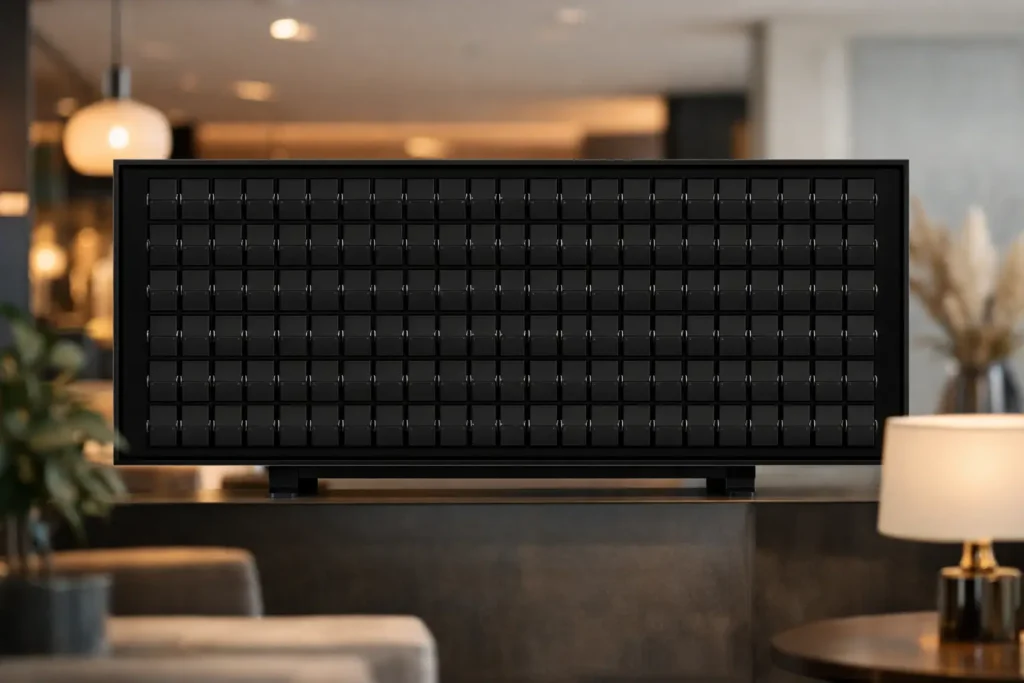
A boutique hotel lobby has about ten seconds to tell guests what kind of stay they are about to have. The scent, the lighting, the check-in desk, the music – and yes, the signage. That is why choosing the best digital signage for boutique hotels is not really an AV decision. It is a brand decision with operational consequences.
Boutique properties live or die on atmosphere. Guests notice when a welcome message feels intentional, when event updates are current, and when the elevator notice does not look like it was printed in a rush at the front desk. They also notice the opposite. A generic flat-screen slideshow can feel out of place in a carefully designed space, but handwritten signs and taped paper create their own problems fast.
The right system sits in the middle. It should look like it belongs in the hotel, help staff move faster, and make routine communication feel polished rather than improvised.
What makes the best digital signage for boutique hotels?
For a boutique hotel, digital signage has to do more than display information. It has to respect the room. That means aesthetics matter just as much as software, and sometimes more.
A large, flashy, animation-heavy screen may work in a sports bar or airport corridor. In a design-led hotel, it can feel loud. The best digital signage for boutique hotels usually leans toward restraint: clear messaging, thoughtful motion, and a format that complements interiors instead of fighting them.
That is where many buyers get tripped up. They shop by screen specs first and experience second. Brightness, size, and resolution all matter, but only after you know what role the signage is supposed to play. Is it there to reduce repetitive guest questions? Set a tone in the lobby? Promote the bar during off-peak hours? Guide people to a private event? Different jobs call for different display styles.
There is also a practical layer. Boutique teams are often lean. Front desk staff, managers, and food and beverage teams do not have time to rebuild content every day or troubleshoot a complicated content system. If updates are clunky, the signage gets ignored. Once that happens, the screen becomes decor at best and misinformation at worst.
The display style matters more than most hotels expect
Not all digital signage needs to behave like advertising. In boutique hotels, the strongest displays often feel more editorial than promotional.
A split-flap style display is a good example. Instead of trying to compete with every modern screen using video and visual overload, it does something more useful for hospitality spaces: it slows the message down just enough to be noticed. The classic click-clack motion has presence. It feels public, intentional, and oddly human. Guests look because it is different, but also because it feels trustworthy – closer to an arrival board or concierge message than a sales screen.
That distinction matters. Boutique hotels often want signage that can carry practical information without cheapening the environment. Text-led displays work well for this when the message is what matters: check-in guidance, breakfast hours, rooftop access, private event updates, Wi-Fi details, happy hour timing, or neighborhood recommendations.
There is a trade-off, of course. If your goal is high-impact video storytelling or image-heavy brand campaigns, a text-first format is not the right tool. But if your hotel needs elegant, frequently updated communication that fits a curated interior, a split-flap-inspired system can be a better match than a conventional commercial display running endless slides.
Where boutique hotels actually get value from signage
The best use cases are rarely the most complicated ones. Digital signage earns its place when it removes friction.
In the lobby, it can welcome guests, surface key hours, and answer common questions before they reach the desk. Near elevators, it can direct people to events or amenities without printed inserts taped to walls. In a bar or cafe, it can handle changing menus, specials, or service times with much more consistency than handwritten boards. For meeting rooms and private functions, it can switch messaging on schedule, which matters when one space hosts multiple groups in a day.
There is also a less obvious benefit: tone control. Good signage lets a hotel communicate more often without making the property feel cluttered. That matters for boutique brands that want to stay helpful without looking overly commercial.
A lot of operators start with one screen in the lobby and realize quickly that the value is not in having a screen. It is in being able to update messaging instantly from one place. If a brunch service changes, if a lounge closes for a private buyout, if weather affects rooftop access, staff should not have to chase down laminated signs.
What to look for before you choose a system
Software simplicity should be near the top of the list. If the content platform feels like a back-office enterprise tool, it is probably a poor fit for a smaller hotel team. You want scheduling, easy edits, and the ability to publish changes fast, ideally without specialized training.
Design flexibility matters too, but in a specific way. More templates are not automatically better. What helps is the ability to control layouts, pacing, colors, and message hierarchy so the display feels aligned with your property rather than copied from a retail environment.
Then there is hardware reality. Some hotels want a plug-and-play setup that can be installed with minimal effort. Others have a more custom design plan with built-in screens or specific mounting needs. Neither is wrong, but the best choice depends on how involved your rollout will be and who is expected to manage it after installation.
Sound is another judgment call. The split-flap click-clack effect can be memorable and atmospheric in the right setting, especially in a lively lobby or social space. In quieter properties, or near guest rooms, silent operation may be the smarter move. The point is control. Hotels should be able to tailor the experience to the space.
Why text-led signage works so well in boutique hospitality
Boutique hotels are full of micro-moments. A guest glances up while waiting to check in. Someone passing through the lobby wants to know when the bar opens. A couple heading to the elevator notices a jazz set starts at 8. These are not long attention spans. They are brief windows.
That is why concise, text-forward signage often performs better than elaborate layouts in hospitality settings. It communicates quickly. It respects the guest’s time. And when the typography and motion are handled well, it becomes part of the atmosphere rather than an interruption.
This is especially true in hotels with strong interior identity. Vintage cues, warm materials, artful lighting, and curated furniture do not naturally pair with generic corporate screen content. A retro-modern display style can bridge that gap. It brings digital convenience without losing character.
That is a big reason design-conscious operators are drawn to split-flap-inspired signage. It revives an old public-display language people already understand, then makes it easy to update from a modern app. You get the nostalgia, the theater, and the operational control, without the maintenance burden of mechanical boards.
A practical way to decide what fits your property
Before choosing any platform, map the messages your hotel changes most often. Not what sounds impressive in a demo, but what your staff actually updates in real life. If the list includes dining hours, event notices, room directions, amenities, service changes, and recurring guest FAQs, your signage needs to be fast to edit and easy to schedule.
Then look at your interiors honestly. If your property is bold and contemporary, a more conventional digital display might fit. If your space leans intimate, nostalgic, design-driven, or editorial, a softer, more distinctive format may carry the brand better.
Finally, think about ownership. Who will update the content on a busy Friday? If the answer is a front desk manager or general manager between other tasks, simplicity beats technical depth every time.
For many boutique hotels, the smartest option is not the most visually aggressive or technically complex. It is the one that makes daily communication feel elevated. A system like Split Flap TV stands out here because it treats signage as part of the guest experience, not just a screen on a wall. It turns changing information into something stylish, legible, and easy to manage.
The best digital signage for boutique hotels should make your space feel more considered, not more digital. If it can do that while saving your team time, guests will feel the difference before anyone says a word.