
How to Update Restaurant Specials Instantly
May 24, 2026 · Captain
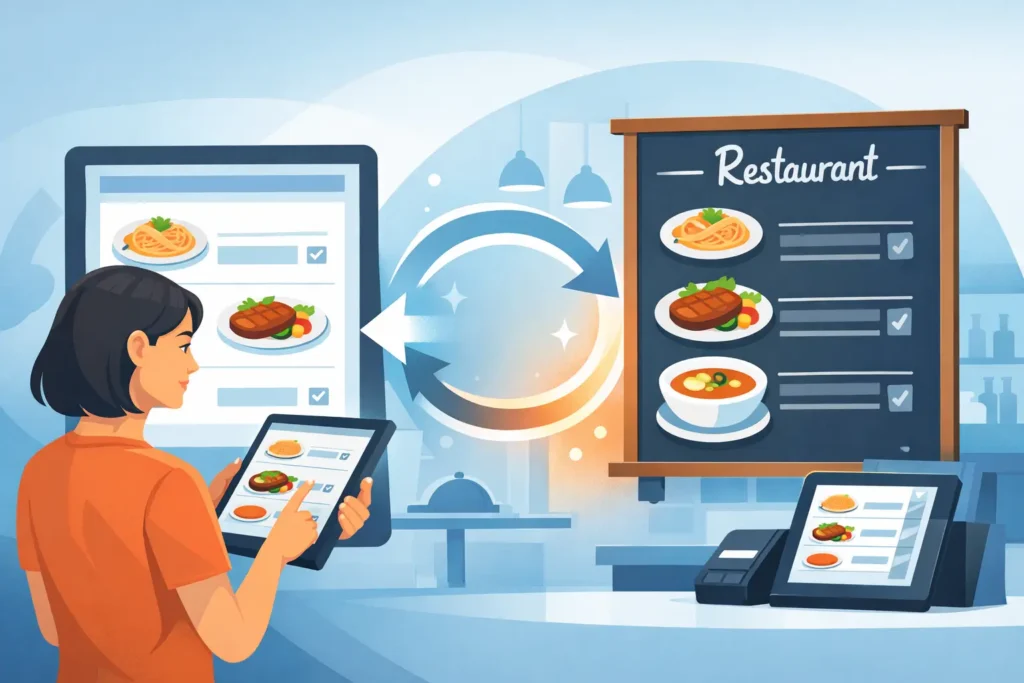
The lunch rush starts, the soup changes, the kitchen 86s the peach cobbler, and someone is still hunting for a dry-erase marker. If you are figuring out how to update restaurant specials instantly, the real problem is not design. It is timing. Specials only work when guests see the right message at the right moment, and staff should not have to stop service to tape up a new sign.
For a lot of restaurants, the old routine still looks familiar. A handwritten board by the host stand, a printed insert slid into a menu sleeve, maybe a small sign near the bar that gets updated when someone remembers. It works until it does not. The handwriting is rushed, the prices change, the item sells out, or the dinner shift inherits a lunch special still hanging in plain sight.
Instant updates fix that, but not every display system fits a restaurant floor. Large, flashy screens can feel out of place in a carefully designed dining room. Generic menu boards often look like office tech pasted into a hospitality setting. Restaurants need something faster than chalk and more elegant than standard digital signage. That is where a modern split-flap style display earns its place.
Why instant updates matter more than most restaurants think
Specials are usually treated like small details, but they shape traffic, margin, and pace. A good special can move high-profit items, use inventory smartly, and steer guests toward what the kitchen wants to sell that day. If the message is late or wrong, the opportunity disappears.
There is also a customer trust issue. When a guest reads one special at the entrance, hears another from the server, and sees a third on a table card, the room starts to feel disorganized. That kind of friction is subtle, but it chips away at the experience. Clean communication makes a restaurant feel more composed, and composed spaces tend to sell better.
From the staff side, manual updates create constant little interruptions. Someone has to print, erase, rewrite, tape, reposition, and answer the same questions all shift. When specials can be changed from an app in seconds, the team gets time back. More importantly, everyone works from the same message.
How to update restaurant specials instantly without adding chaos
The fastest system is the one your team will actually use during service. That sounds obvious, but plenty of restaurants install tools that are technically powerful and operationally awkward. If updating a special takes too many steps, it will not happen when the floor gets busy.
A practical setup usually has three parts. First, you need a display placed where guests naturally look – near the entrance, behind the bar, by the pickup counter, or visible from the dining room. Second, you need a simple content control system that works from a phone, tablet, or computer. Third, you need layouts built for quick edits, not for graphic design projects in the middle of a shift.
That is why text-led split-flap style signage works so well for specials. Restaurant specials are, at their core, short messages. Market Fish. Happy Hour Until 6. Oyster Night. Two for One Negronis. You do not need a full-motion ad campaign for that. You need clarity, speed, and a format people notice.
The split-flap format also changes the feel of the message. Instead of looking temporary or improvised, the special feels announced. The familiar click-clack motion draws the eye without turning the room into a billboard. It carries some of the old station-board theater, but with modern control behind it.
What a better specials workflow looks like
Imagine the kitchen decides at 4:12 p.m. that the mushroom risotto is tonight’s feature because a shipment came in strong. Instead of calling for a marker, the manager opens an app, selects the dinner specials layout, replaces the lunch line, and publishes it. Seconds later, the display updates at the host stand and bar.
If the item sells out at 7:40, it changes again. No crossed-out board. No awkward apologies. No server trying to stop the table before they order it.
That same workflow helps with drink specials, limited desserts, event nights, and weather-driven changes. Maybe patio cocktails move indoors when it starts raining. Maybe brunch extends another hour because traffic is heavy. Maybe you want to push hot cider when the temperature drops. Instant control lets the signage follow the actual shift instead of a plan made three hours ago.
The trade-off: instant updates still need discipline
There is a difference between flexible and messy. If you can change messaging at any moment, you also need a simple internal process so the display stays accurate. Otherwise, digital signage just becomes faster confusion.
For most restaurants, that means assigning ownership. One person per shift should have final say on live specials. It might be the manager, the bar lead, or a supervisor. The point is not hierarchy. The point is consistency. If everyone can edit freely, messages drift.
It also helps to define a few ready-made formats. Keep one layout for food specials, one for drinks, one for sold-out notices, and one for upcoming events. When the structure is set, updates become quick and polished instead of improvised.
This is where a cloud-managed split-flap display has an advantage over static boards. You are not starting from scratch every time. You are dropping new text into a system designed to publish fast, look intentional, and stay visually aligned with the room.
Why the display style matters as much as the software
Restaurants are not only selling food. They are staging an environment. A specials board sits inside that environment, so the look matters.
Handwritten signage can feel charming in the right space, but it often slips into clutter. Generic bright screens solve the update problem but can flatten the atmosphere, especially in restaurants that care deeply about interiors. The middle ground is something more interesting: a digital display that feels tactile, graphic, and public-facing.
That is the appeal of the split-flap aesthetic. It has heritage. People recognize it from transit halls, old airports, and classic public information boards. The motion suggests immediacy. The typography feels direct. And because it is mostly text, it avoids visual overload. In a restaurant, that balance is powerful. Guests notice it, read it, and remember it.
For operators, there is another benefit. Text-first displays force you to write better specials. Shorter lines. Cleaner offers. Less filler. That usually improves conversion because guests can understand the message in one glance.
How to update restaurant specials instantly across more than one area
Some restaurants need more than a single board. A bar may run one promotion while the dining room features another. A quick-service counter may need pickup instructions alongside daily specials. In those cases, the goal is not just speed. It is coordinated speed.
A centralized app-based system lets you manage multiple displays without walking the floor every time something changes. You can update one screen, all screens, or different zones based on service needs. That matters for restaurants with multiple rooms, changing dayparts, or operators who are not always on-site.
There is a practical limit, though. More screens mean more content decisions. If your restaurant is small, one well-placed display may outperform a network of screens with mixed messages. It depends on your layout, traffic flow, and how often your offers change.
The easiest path is usually the best one
The restaurants that keep signage current are rarely the ones with the most complicated systems. They are the ones with the lowest-friction setup. Plug in the screen. Open the app. Edit the message. Publish.
That simplicity is what makes a tool stick during real service. It is also what turns signage from a one-time décor decision into an everyday operating advantage. Split Flap TV was built around that exact tension: the visual charm of old split-flap boards with the practical control restaurants actually need now.
If your current specials process still depends on tape, markers, menu inserts, or someone remembering to rewrite the board before doors open, the issue is not effort. It is the format. Restaurants move too fast for static signs and too carefully for ugly ones.
The best specials display does two jobs at once. It gets the message out immediately, and it makes the room look more considered while doing it. That is a rare combination, and guests can feel the difference even if they never think about the technology behind it.
A good special should feel fresh the second it becomes true. Your signage should be able to keep up.