
Digital Signage for Hotel Breakfast Hours That Works
July 13, 2026 · Captain
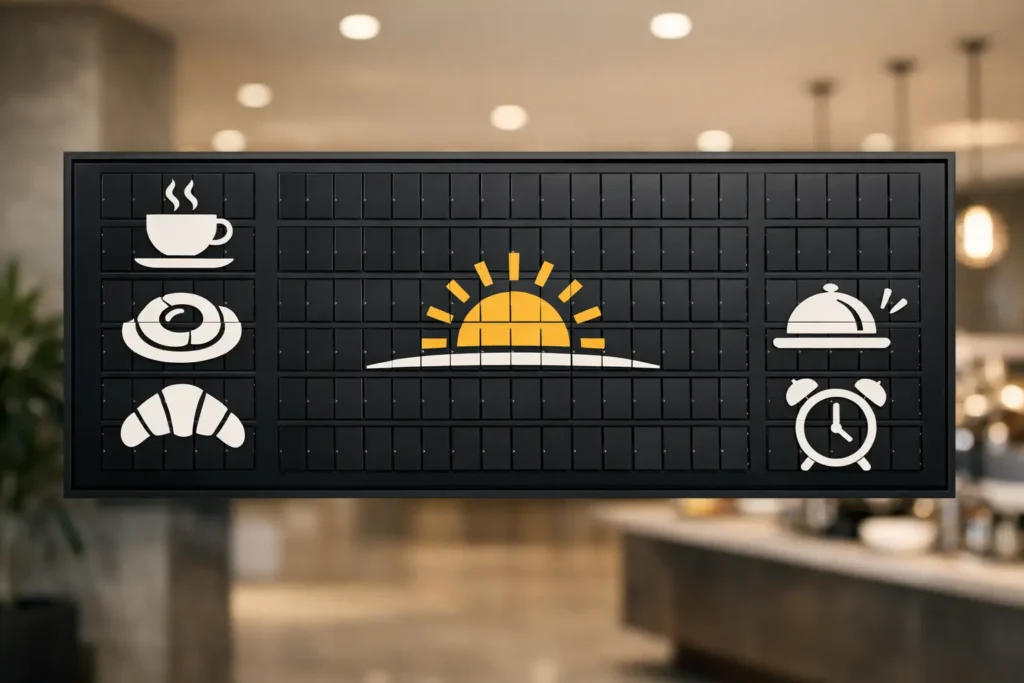
The breakfast rush has a predictable rhythm: guests arrive early, coffee is running low, the buffet needs attention, and someone asks whether breakfast ends at 10 or 10:30. Digital signage for hotel breakfast hours gives that answer a permanent, polished place to live – without taped notices at the elevator, handwritten cards by the buffet, or a front desk team repeating the same information all morning.
For boutique hotels and independent properties, breakfast signage is not a minor detail. It is one of the first operational experiences a guest has each day. A clear display helps the morning move more calmly. A memorable one makes the property feel considered.
Why Breakfast Hours Deserve Their Own Display
Breakfast is a moving service window, not a static amenity. Hours can differ on weekdays, weekends, holidays, and event dates. A breakfast room may close early for a private function. A limited menu may apply during quieter periods. If this information is not visible before guests reach the dining space, frustration starts before the coffee does.
The common workaround is a printed sign. It gets taped to the lobby wall, placed in a tabletop holder, or written on a small board that looks fine for one day and tired by the end of the week. The message may also be accurate only until the next schedule change.
A split-flap-style screen solves a different problem than a large, image-heavy advertising display. Its strength is concise public information: exact hours, useful reminders, and changing messages shown in a format guests can read at a glance. The familiar click-clack motion turns a simple line of text into a small moment of theater, while the format stays disciplined enough for a hospitality setting.
What Digital Signage for Hotel Breakfast Hours Should Show
The most useful breakfast display starts with the essentials. State the current service hours clearly, then give guests the one or two details most likely to affect their plans. For example, a screen might show Breakfast 6:30 AM to 10:00 AM, followed by Weekend Brunch 7:00 AM to 11:00 AM on the appropriate days.
From there, the message can rotate through practical notes. A hotel may announce that made-to-order eggs are available until 9:45 AM, direct guests to an overflow seating area, or remind them that room charges require a room number. These are small operational details, but they reduce the interruptions that pull staff away from serving guests.
The best content is not a full menu squeezed onto a screen. Split-flap signage is most effective when it reads like the old departure boards that inspired it: short, decisive, and easy to scan. Save long ingredient lists, elaborate promotions, and visual clutter for printed menus or other guest touchpoints.
Useful messages beyond the clock
A breakfast-hours screen can earn its place all day if the schedule changes with the venue. Before service, it can announce that breakfast opens soon. During service, it can show the closing time and a rotating hospitality note. After breakfast, it can direct guests toward coffee service, checkout information, local events, or the next dining option.
That flexibility matters because a screen should not become another object that staff must remember to turn off, replace, or rewrite. It should remain useful even after the buffet has been cleared.
Schedule the Routine, Keep Control for Exceptions
A hotel breakfast schedule is usually repetitive enough to automate and variable enough to require control. That combination is exactly where cloud-managed signage earns its keep.
Set a weekday schedule once, create a separate weekend version, and prepare a holiday page in advance. The display can switch from Good Morning, Breakfast Until 10:00 AM to Weekend Breakfast Until 11:00 AM without a staff member touching the screen. For operators managing several shifts or multiple properties, this removes a surprisingly common source of inconsistency.
But automation should not make the display rigid. If the kitchen needs to pause service, a private event changes the room access, or severe weather affects staffing, the message must be editable immediately. The right system lets an authorized manager publish a clear update from wherever they are, rather than asking an employee to find a marker and alter yesterday’s sign.
There is a trade-off here. Too many scheduled pages can make a display feel busy or confuse guests who only catch one message. In most breakfast areas, a small number of well-timed pages works better than an endless loop. Keep the critical information on screen long enough to be read from the entrance, then rotate supporting notes at a measured pace.
Design for Guests Carrying Keys, Phones, and Coffee
A breakfast sign competes with a lot: conversations, luggage, sunlight through windows, and the very real priority of finding caffeine. Design needs to respect that.
Place the display where guests naturally make a decision – near the breakfast-room entrance, by the elevator bank, or at the route from the lobby to dining. A screen hidden behind the buffet may help those already inside, but it will not prevent a late-arriving guest from making the trip after service has ended.
Keep type large. Use plain time formatting. If your property uses AM and PM, do not switch to 24-hour time on one screen simply because it looks more compact. Consistency beats cleverness. High contrast is generally more valuable than a highly decorative palette, especially in bright breakfast rooms.
The split-flap look adds character without requiring a flood of photography or motion graphics. Rows and columns, carefully chosen colors, page timing, and optional sound can be tailored to match a hotel that leans mid-century, industrial, contemporary, or quietly classic. The goal is not to turn the lobby into an airport terminal. It is to borrow the confidence of a public information board and make it feel at home in the property.
Consider sound with care
The signature click-clack is part of the appeal, but hotel acoustics vary. In a lively lobby or café-style breakfast room, the sound can add charm and draw attention to an update. In a quiet luxury property, near guest rooms, or during early service, silent animation may be the better choice.
This is not a feature that needs to be on all the time. Treat sound as part of the atmosphere, not an alarm. A visual display should still communicate perfectly when the room is noisy or the audio is off.
Give Staff Fewer Signs to Manage
Great guest communication usually starts as a staff benefit. When breakfast hours are current and visible, front desk associates field fewer basic questions. When seating instructions are shown clearly, attendants can focus on replenishing the buffet rather than directing traffic. When an exception is updated in one place, housekeeping, food service, and reception are less likely to share conflicting information.
That is why ownership matters. Assign one person or role to maintain the standard schedule, while giving a limited group the ability to make urgent changes. Agree on the language used for recurring situations. A message like Breakfast service ends at 10:00 AM is clearer than a clever phrase that guests have to interpret while watching the clock.
Before publishing, ask three simple questions: Can a guest understand this from several feet away? Does it answer a real question staff receives repeatedly? Is it still accurate if the viewer sees only this page? If the answer is no, revise it.
A Better Alternative to the Morning Sign Shuffle
Split Flap TV brings the character of classic Solari-style boards to modern TVs and tablets, making this kind of practical messaging feel deliberate rather than temporary. The screen can be prepared for the space, while the app handles layouts, pages, scheduling, and live updates without introducing mechanical split-flap maintenance.
For hotels, that balance is especially useful. A display can look like a design object in the lobby, yet still change when the breakfast team needs it to. It carries nostalgia, but it does not ask the staff to operate nostalgia.
Start with the question guests ask most often: What time is breakfast? Make the answer impossible to miss, then let the display handle the smaller details that make mornings run well. When the information is clear and the presentation has a little click-clack charm, breakfast begins with less confusion and a stronger sense that the hotel has thought of everything.