
Digital Menu Screens Versus Chalkboards
July 5, 2026 · Captain
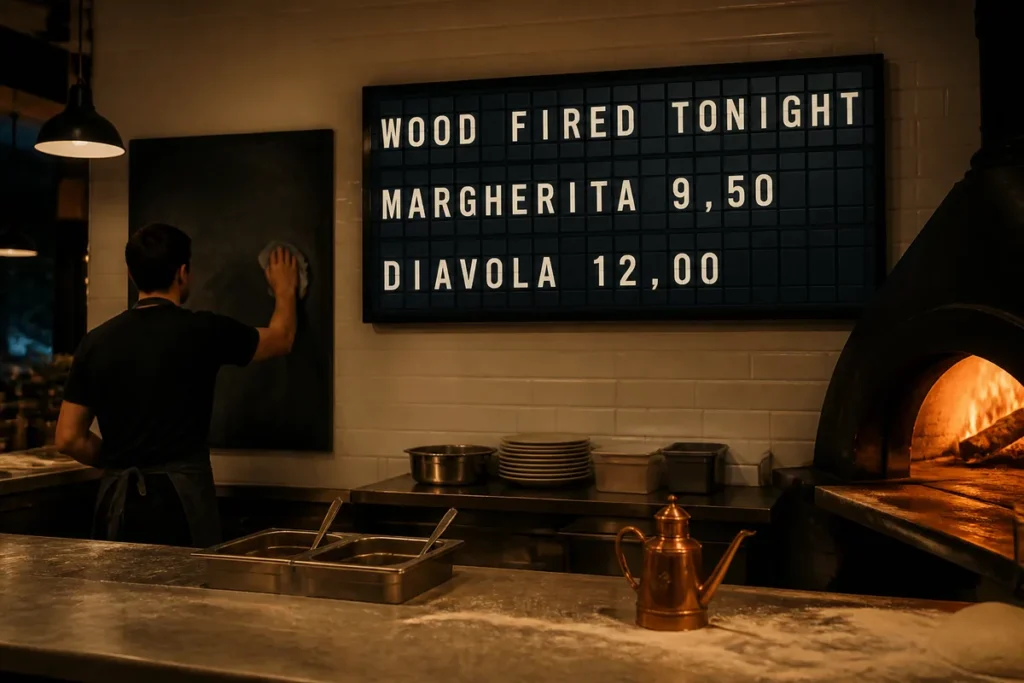
A lunch rush is a bad time to realize the chalkboard still says yesterday’s soup, the happy hour time is wrong, and nobody can read the bottom line from six feet away. That is where digital menu screens versus chalkboards stops being a style choice and becomes an operations decision.
For restaurants, bars, cafes, boutique hotels, and customer-facing shops, menu signage does two jobs at once. It has to look right for the room, and it has to stay accurate when the room gets busy. Chalkboards have charm. They can feel intimate, handmade, and local. But they also depend on legible handwriting, steady upkeep, and someone remembering to change them before customers start asking questions.
Digital menu screens solve a different set of problems. They make updates faster, they reduce repeated manual work, and they create a cleaner standard for information that changes often. The right choice depends on how often your content moves, how much visual polish matters to your brand, and whether your team has time to manage signs by hand.
Digital menu screens versus chalkboards: what really changes day to day
From a distance, the difference looks simple. One is analog and one is digital. In practice, the bigger difference is how each option behaves during a real week of service.
A chalkboard works best when your menu is fairly stable and your brand leans intentionally handmade. If the board changes once every few days, and someone on staff has good penmanship, it can absolutely do the job. In a wine bar with a short rotating list or a neighborhood cafe with a small pastry menu, that low-tech feel can support the atmosphere.
But the moment your team starts changing prices, specials, hours, sold-out items, promos, or service notes throughout the day, the chalkboard starts asking for labor. Someone has to erase, rewrite, fix spacing, clean smudges, and hope the result still looks polished. If that task gets delayed, the sign becomes outdated fast.
A digital menu screen is stronger when information needs to stay current without becoming a recurring chore. You can update content quickly, schedule changes in advance, and keep formatting consistent even when the message changes three times before dinner. That reliability matters more than most operators expect. Customers notice when signage feels current. They also notice when it does not.
The hidden cost is not the board – it is the maintenance
Chalkboards are often treated as the simpler option because they seem easy to put on the wall and start using. That part is true. What gets overlooked is the steady drip of time they consume.
Every change is manual. Every typo is public. Every redesign starts from scratch. If the person with the best handwriting is off that day, your menu quality drops with them. Even when the board looks good, it still demands attention. Dust, ghosting, streaks, and cramped rewrites all chip away at the effect.
Digital screens shift that work from repeated physical rewriting to content management. That means less labor on the floor and more control from a phone, tablet, or computer. For busy operators, that trade is often the whole point. You are not just choosing a display. You are deciding whether updates should interrupt service.
There is also a consistency benefit. Digital layouts keep spacing, alignment, and branding intact. Fonts do not get messier at the end of a long week. Colors stay consistent. Information remains readable. If your business cares about presentation, that consistency has real value.
Design matters, but the kind of design matters too
Some businesses resist digital signage because they picture loud motion graphics, glowing screens, or generic visuals that flatten the character of the space. That concern is fair. Not every digital display feels premium, and not every room wants the look of a modern billboard.
That is why the best comparison is not chalkboard versus flashy screen. It is chalkboard versus the right kind of digital display for your environment.
A design-forward digital menu can preserve atmosphere while improving control. Text-led formats, restrained motion, and thoughtful layouts feel very different from overstimulating screen content. In spaces where mood matters, elegance wins over spectacle.
This is where split-flap style displays have a distinct advantage. They keep the tactile, nostalgic theater people love about old transit and departure boards – the click-clack rhythm, the clean grid, the public-display energy – while giving operators digital control behind the scenes. That makes them especially appealing for venues that want to replace handwritten signage without losing personality. A board can still feel warm, memorable, and artful without being manual.
Readability is not a small detail
A menu sign is only as good as the distance from which it can be read. Chalkboards often struggle here, especially in dim lighting, crowded spaces, or rooms where guests need to scan quickly from a line.
Hand lettering can be beautiful up close and frustrating from the register. Thin strokes, inconsistent spacing, decorative flourishes, and glare all work against fast reading. That slows ordering and creates more clarifying questions for staff.
Digital menu screens usually perform better because they let you control contrast, hierarchy, spacing, and text size with precision. Items can be organized cleanly. Changes can be made without squeezing extra words into the last open corner. And if your content needs to shift by time of day, the layout can stay clear while the message updates.
This is especially useful in coffee shops, quick-service counters, bars with rotating pours, and hotel lobbies where information changes but guests still expect immediate clarity.
Where chalkboards still make sense
Chalkboards are not obsolete. They still work well in certain spaces, and pretending otherwise misses the point.
If your menu barely changes, your team enjoys the ritual of hand-lettering, and the board itself is part of the craft story, chalk can still be the right move. Some spaces benefit from a little imperfection. A bakery with a tiny daily list or a boutique shop sharing one short featured message may not need a digital system at all.
Chalkboards can also work as accent signage. A handwritten note near the register, a host stand message, or a small welcome board can add personality in a way that feels human and local.
The issue is not whether chalkboards are good or bad. It is whether they are being asked to do a job they are not built for. If your content changes often, if multiple team members touch the signage, or if accuracy matters throughout the day, chalk starts to feel less romantic and more fragile.
When digital is the better operational choice
Digital menu screens become the stronger option when your business runs on change. That includes seasonal items, limited runs, shifting inventory, breakfast-to-lunch transitions, event programming, service updates, and recurring promotions.
They are also better when brand presentation needs to scale. If you operate more than one location, or if different managers need access to the same content system, digital creates order. Everyone works from the same source. The message stays aligned. The customer experience becomes more consistent.
And then there is speed. If you sell out of an item, need to swap a draft list, or want to push a last-minute special, digital lets you act immediately. That speed protects the guest experience. Nobody likes ordering from a sign that no longer tells the truth.
For many operators, the ideal digital approach is not hyper-animated or visually loud. It is simple, elegant, and easy to manage. Buy a screen, download the app, publish the content, and update it when needed. That is a very different daily rhythm from chasing erasers and chalk dust.
Beyond Restaurants: Shops, Hotels, and Offices
The chalkboard question is not limited to food and drink. Boutiques and retail stores face the same pressure: store hours shift on holidays, new arrivals need promotion, and pickup instructions have to be visible. A chalkboard can say all of that, but it often looks temporary even when the message is important. A well-designed screen signals that the information matters.
Hotels and offices add another concern: consistency across several boards. Meeting room schedules, guest messages, directional notes, and recurring announcements written by hand vary from board to board. One looks great, another looks rushed, and a third is left unchanged too long. A cloud-managed screen keeps the voice and presentation controlled even when the content changes often, and the same content can be reused across days, rooms, or locations instead of being rewritten each time.
Small operational messages benefit too. A Wi-Fi password that gets smudged on a chalkboard, or a private event notice that stays up after the room is free again, are exactly the details a managed screen keeps clean and current.
What Customers Notice First
Customers notice accuracy first, then atmosphere. When signage answers common questions clearly and specials, hours, directions, and event details are current, people move through the space with more confidence and read the business as organized.
The visual impression comes next. Chalkboards can feel warm, but they can also read as informal or temporary. A text-based split-flap screen tends to feel quieter and more architectural than a typical promotional display: it frames information instead of competing with the room, and its motion invites a second glance without demanding one. For a boutique hotel lobby, a cocktail bar, or a design-conscious shop, the goal is not a louder screen but a more elegant one.
So which one should you choose?
If your sign is mostly static and your handwritten look is a genuine part of the brand, a chalkboard can still earn its place. It feels personal, and in the right setting, that matters.
If your menu changes regularly, your staff is stretched, or your space needs a cleaner and more elevated presentation, digital is usually the smarter long-term decision. Not because it is newer, but because it handles real-world changes with less friction.
And if you love the soul of old public boards but need the convenience of modern control, there is a middle path that feels especially compelling right now. Split-flap style digital displays give you the nostalgia, the click-clack charm, and the strong visual identity of classic boards, while removing the mess and repetition of hand-updated signage.
The best signage is not the one that looks good for five minutes after setup. It is the one that still looks right when the line forms, the menu shifts, and your team has something better to do than rewrite the wall.