
Cheap Split Flap Display Without Looking Cheap
May 24, 2026 · Captain
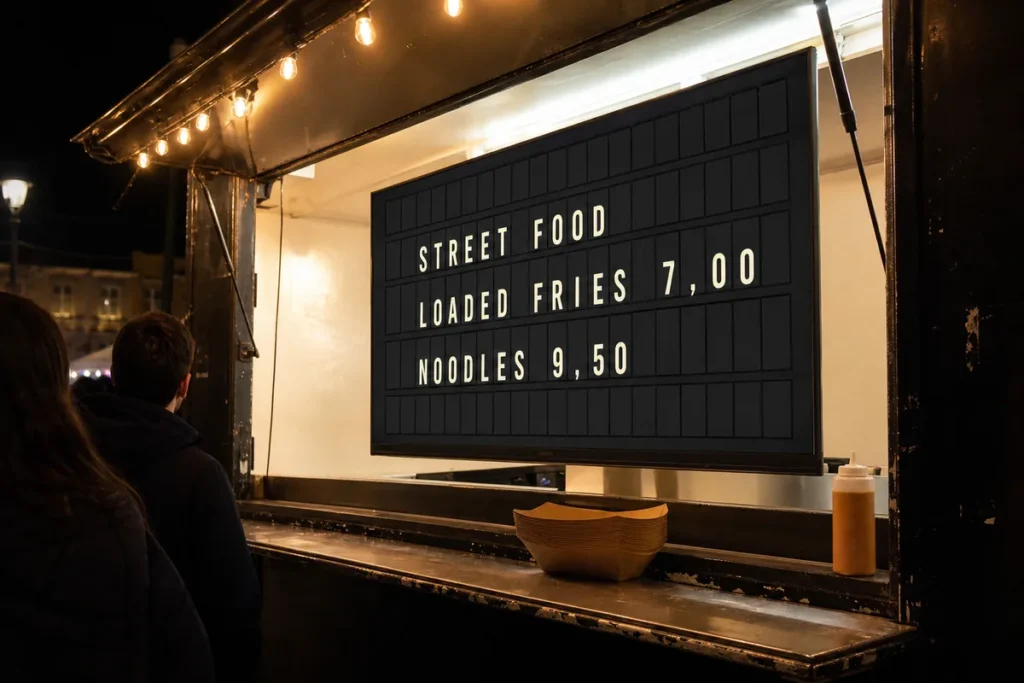
Most people searching for a Cheap Split Flap Display are trying to solve two problems at once: they want that unmistakable retro click-clack presence, and they do not want a signage system that becomes expensive to maintain the second it goes on the wall. That tension matters. A split-flap board is never just information. It is atmosphere, memory, and motion. But for a restaurant, hotel, shop, or office, it also has to work on busy days when the menu changes, the event room moves, or the Wi-Fi password needs to be shown before the next wave of guests walks in.
That is where the idea of “cheap” gets tricky. The lowest upfront option is not always the one that saves the most money over time. If your display looks flimsy, takes forever to update, or creates extra work for staff, it stops being a bargain pretty fast. For customer-facing spaces, the smarter question is usually this: how do you get the split-flap look and operational simplicity without paying for the headaches that came with old mechanical boards?
What people really mean by a cheap split flap display
In most cases, buyers are not asking for the absolute lowest-cost object they can find. They are looking for a display that feels distinctive, fits their space, and does not turn into a maintenance project. A coffee shop owner might need to swap specials twice a day. A boutique hotel might want to rotate welcome messages, breakfast hours, and event notices. An office manager might need a board in the lobby that always looks polished without relying on handwritten signs taped to a wall.
So “cheap” usually means one of three things. It can mean affordable to buy, affordable to run, or affordable to manage with a small team. The best option hits all three. That is especially true for split-flap style signage, because the aesthetic only works when the execution feels clean and intentional. A display that looks off-brand or is painful to update loses the very charm people came for.
Why old mechanical boards are expensive in all the wrong ways
The original split-flap boards earned their reputation honestly. They were dramatic, readable, and impossible to ignore in public spaces. They also came with the kind of physical complexity that businesses rarely want to deal with now. Mechanical parts wear down. Repairs need specialized knowledge. Content changes are slower. Installation is heavier and more involved. If something fails, you are not dealing with a quick app update. You are dealing with hardware.
That matters because most modern businesses do not need a museum piece. They need the effect. They want the nostalgia, the typography, the satisfying movement, and maybe even the sound. But they also need to update content between customers, across locations, or after hours without standing on a ladder or opening up equipment.
For that reason, a cheap split flap display in the smartest sense is often not mechanical at all. It is a digital system built to recreate the split-flap experience while removing the cost and friction of old machinery.
Cheap Split Flap Display options that actually make sense
There are a few ways businesses usually approach this.
The first is the DIY route. Someone tries to imitate a split-flap board using a standard screen, basic slideshow software, or a generic display app. This can appear inexpensive at first, but it often falls apart in the details. The typography feels wrong, the timing is off, the transitions lack that signature flap movement, and staff end up managing a workaround instead of a tool. It may display text, but it does not feel like a split-flap board.
The second is buying used or aging hardware. That can be tempting if the goal is authenticity. But used physical boards can carry restoration issues, uncertain reliability, and limited flexibility. If your messaging changes often, the romantic appeal fades quickly when operations get messy.
The third is a purpose-built digital split-flap solution. This is where cost and practicality align best for many businesses. You get the visual language people love, but on modern screens that are lighter, easier to deploy, and much easier to control. You can update messaging remotely, schedule content in advance, and tailor layouts to the actual job the display needs to do.
That third option is often the most affordable once you factor in labor, reprints, and the cost of bad signage. Not because it is the cheapest object, but because it is the least wasteful system.
What to look for if you want the retro effect without the retro hassle
A strong split-flap display should feel theatrical, but using it should feel simple. That means the design details matter just as much as the control system.
Start with authenticity of motion. Split-flap boards are memorable because of their rhythm. If the animation is stiff or generic, people notice. The visual cadence should feel deliberate, not like a slide transition pretending to be vintage.
Then look at layout flexibility. A good system should let you control rows, columns, pacing, colors, and multiple pages of content. A restaurant may need a compact board for happy hour specials. A hotel may need a more structured schedule format. A retail store may want a rotating mix of promotions, hours, and brand messaging. The display should adapt to the venue, not the other way around.
Ease of updating is the next big test. If a manager cannot change content quickly from an app, the display becomes another thing staff put off until tomorrow. The point of modern split-flap signage is not just looking great. It is reducing manual work.
Optional sound also matters more than people think. The click-clack is part of the emotional memory. In some spaces, that sound adds energy and turns a routine update into a small performance. In others, silence is better. The ability to choose is what makes the system usable across different environments.
The hidden costs most buyers forget
When businesses compare signage options, they often focus only on the purchase itself. But the real cost shows up in the surrounding work.
Printed signs need to be redesigned, reprinted, replaced, and often thrown away. Handwritten signs cost less in cash but more in polish. They can make even a carefully designed space feel improvised. Generic digital displays may be flexible, but if they look like every other screen in every other waiting room, they do very little for the atmosphere of the room.
A split-flap style display earns its keep when it handles repetitive communication with more elegance and less effort. Think about all the messages businesses repeat every day: today’s soup, last call, meeting room changes, brunch hours, welcome notes, event schedules, shipping cutoffs, house rules. If those messages change often, then convenience is not a minor feature. It is the whole value.
That is why a digital split-flap system can be a better answer than a traditional sign budget. It cuts down on the cycle of redoing the same information over and over, while giving the space a much stronger visual identity.
Who benefits most from a cheap split flap display
This style works best where information changes and presentation matters.
Restaurants and bars use it well because specials, hours, events, and service notes move constantly. Instead of cluttering the counter with paper signs, they can keep key messages in one place with a format customers actually notice.
Boutique hotels and hospitality spaces benefit because split-flap signage feels both functional and memorable. It fits naturally in lobbies, near check-in desks, or outside event rooms where a standard flat screen can feel too cold and a printed sign can feel too temporary.
Retail shops and service businesses get a similar advantage. Store hours, promotions, pickup notes, and seasonal messages all look more intentional when presented in a system that feels designed rather than improvised.
Offices are another good fit, especially where guest communication matters. A split-flap board can handle reception messaging, room schedules, and internal announcements without making the lobby feel overly corporate.
Related reading: How to Modernize a Split Flap Board
When the cheapest option is not the best fit
There are cases where a split-flap style display is not the right tool. If you need heavy graphics, video, or highly visual advertising, this format is not built for that. Its strength is text-led communication with a strong sense of character. That is part of its appeal. It does not try to be everything.
And if your messaging almost never changes, a static sign may be enough. But in spaces where updates are frequent and presentation carries business value, choosing a purpose-built split-flap format often makes more sense than patching together a lower-cost alternative that staff eventually avoid using.
A lot of businesses discover that the real luxury is not a flashy screen. It is being able to change the right message at the right time without disrupting the day.
A better way to think about value
The best cheap split flap display is the one that keeps the iconic look while removing the old friction. It should feel premium in the room, simple behind the scenes, and flexible enough to grow with your needs. That is why modern systems like Split Flap TV resonate with businesses that care about both aesthetics and operations. They revive the old-board magic without bringing back the maintenance burden.
If you are weighing your options, do not ask only what costs less to buy. Ask what looks right in your space, what your team will actually keep updated, and what helps customers get the message faster. That is usually where the real savings begin.