
Why Use Text Screens in Restaurants for Better Service?
July 31, 2026 · Captain
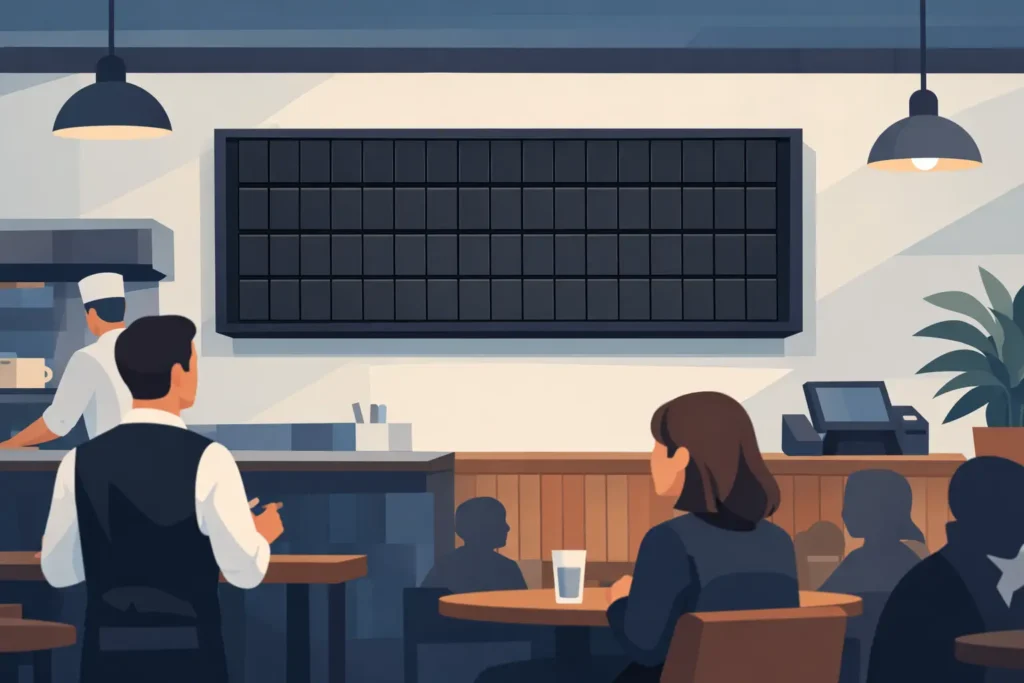
At 6:47 p.m., the dinner rush does not leave much room for a manager to cross out a special, tape up a new wait-time notice, and answer the same question about Wi-Fi for the tenth time. That is why use text screens in restaurants is not just a design question. It is an operations question. A well-placed text display gives guests the information they need at the moment they need it, while giving staff a cleaner, faster way to keep the room informed.
Unlike generic screens built around glossy videos and image-heavy ads, a text screen has a more focused job. It communicates. Menus, happy hour details, pickup instructions, upcoming events, table availability, and house rules can be presented with clarity rather than buried in a stack of printed signs. For restaurants where every detail affects the pace of service, that simplicity matters.
Why Use Text Screens in Restaurants?
Restaurants run on changing information. A dish sells out. A private event shifts to another room. The kitchen needs to pause online orders. Rain moves live music indoors. Printed signage handles these changes poorly: it takes time to create, it looks tired after a few edits, and it is easy for one outdated notice to remain on the wall long after it is relevant.
Text screens replace that cycle with a central message board that can change as quickly as the shift does. Instead of sending someone to find a marker or reprint a menu insert, a manager can publish an update from the app. The message appears where customers are already looking – at the host stand, bar, pickup shelf, dining room entrance, or counter.
That means fewer interruptions for the team. Guests can see the current wait time before asking. They can spot the limited cocktail list without flagging down a bartender. They can find the QR ordering instructions, restroom direction, or next trivia night while they wait. The screen does not replace hospitality. It clears away small points of friction so staff can spend more time delivering it.
Clear information can feel more welcoming
There is a practical difference between a message that exists and a message that gets noticed. A paper sign taped to a wall can technically communicate a policy, but it often reads as an afterthought. A dedicated display gives even routine information a sense of intention.
That changes the tone of the room. “Please order at the bar” becomes a useful part of the guest journey. “Tonight: live jazz at 8” becomes an invitation. “Patio closed due to weather” feels current, considerate, and far less likely to frustrate someone who walked in expecting an outdoor table.
The best restaurant signage does not shout. It reduces uncertainty. Guests are more comfortable when they understand what happens next, whether they are joining a waitlist, ordering at a counter, or collecting takeout.
A Better Fit for Fast-Changing Menus and Specials
Daily specials are one of the strongest reasons to use a restaurant text screen. They are valuable because they are timely, but that same quality makes them inconvenient to print. A handwritten chalkboard can be charming, yet it depends on someone with good handwriting, available time, and enough space to make changes legible. It can also drift away from the rest of the restaurant’s visual identity.
A text display keeps the spontaneity while giving it structure. Feature the catch of the day, a seasonal dessert, a new mocktail, or a limited batch of pastries in a consistent layout. When it sells out, remove it immediately. When the chef adds another item, publish it without redesigning the board from scratch.
This is especially useful for bars and cafes with dayparts. A single screen can welcome early coffee customers with breakfast offerings, shift to lunch service, promote happy hour in the afternoon, and announce evening entertainment later on. Scheduled pages let the display follow the rhythm of the venue instead of asking staff to remember every change manually.
For a restaurant with a stable, tightly curated menu and no daily variation, a text screen may not need to carry the entire menu. It can work better as a companion: show the day’s additions, ordering guidance, dietary notes, or what is coming up next. The goal is not to put every word from a menu onto a wall. The goal is to put the right words in the right place.
The Split-Flap Effect Makes People Look Up
People are used to ignoring screens. They have learned to filter out moving ads, muted television loops, and the familiar glow of a tablet at the counter. Text displayed in a split-flap style works differently because it borrows from a visual language people recognize from train stations, airports, old hotels, and city departures boards.
The flip of letters creates a small piece of public theater. It has rhythm. It signals that something is changing. With optional click-clack sound, the experience becomes even more tactile without adding mechanical hardware to maintain.
That retro charm is not decoration for decoration’s sake. It gives practical messages more presence. A changing happy hour line or a newly posted event catches the eye because the format feels alive. It also gives the restaurant a memorable detail guests may photograph, talk about, or associate with the space long after the meal.
Split Flap TV brings that classic Solari-style feeling to modern TV screens and tablets, so restaurants can get the visual character without the maintenance demands of a physical flip board. The result can feel at home in a neighborhood wine bar, a design-led cafe, a hotel lobby restaurant, or a busy counter-service spot that wants more personality than a standard digital sign.
Text-First Design Keeps the Message Useful
A text screen is most effective when it respects the limits of attention. Guests standing in line or walking past a host stand will not read a dense paragraph. They will read a headline, a price, a time, or one clear instruction.
Keep each page focused on one job. A specials page should make the special easy to identify. A waitlist page should tell guests what to do and what to expect. An event page should name the event, date, and time. If a message requires several sentences of explanation, it may belong in a menu, on a receipt, or in a staff conversation instead.
Hierarchy matters as much as wording. Use large type for the information guests need first, then supporting details beneath it. Leave breathing room. Avoid trying to make a text display behave like a flyer. The elegance of a split-flap-inspired layout comes from restraint: short lines, deliberate pacing, and a message that can be understood in a glance.
It is also wise to decide which information deserves a permanent place and which should rotate. Hours, Wi-Fi, and ordering instructions can appear regularly. A one-night-only promotion deserves a temporary page. Rotating too many messages too quickly can make the screen less useful, especially when guests only have a few seconds to look.
A Screen Can Support Staff, Not Create Another Task
New technology earns its place in a restaurant only if it reduces work. If updating a display requires a laptop, a designer, or a complicated setup process, it becomes one more item on an already long closing checklist.
The advantage of app-managed text screens is control from anywhere. A manager can prepare pages before service, schedule them for the right time, and make quick corrections when plans change. That makes the screen part of the operating routine rather than a special project.
A few simple habits keep it effective. Assign one person per shift to own urgent updates. Create reusable layouts for recurring moments such as brunch, happy hour, sold-out items, and private events. Review scheduled messages each week so yesterday’s promotion never becomes tomorrow’s confusion. These routines take minutes, but they protect the credibility of every message on screen.
There is a trade-off: a screen is only as accurate as the information published to it. If the kitchen 86s an item and nobody updates the display, the sign can create the exact problem it was meant to solve. The answer is not more complicated technology. It is a clear handoff between the people making operational decisions and the person managing the message.
Where Text Screens Earn Their Space
Placement determines whether the display becomes useful infrastructure or background decor. Near the entrance, it can set expectations around seating, wait times, and events. At the bar, it can highlight cocktails, food features, and entertainment. At a pickup area, it can direct guests, name order status procedures, and reduce counter congestion.
For restaurants with multiple zones, the same system can speak differently in each one. The host stand may need guest guidance. The dining room may need a quiet promotion for dessert or a coming event. The staff area may benefit from an internal reminder about a meeting or changed shift procedure. Not every message belongs in front of customers, but every message benefits from being timely and readable.
Start with the questions your team hears repeatedly during a shift. Then give those answers a permanent, polished home. A good text screen does not ask guests to work harder to find information. It makes the room easier to understand, one click-clack message at a time.