
Hotel Signage That Guests Actually Notice
July 25, 2026 · Captain
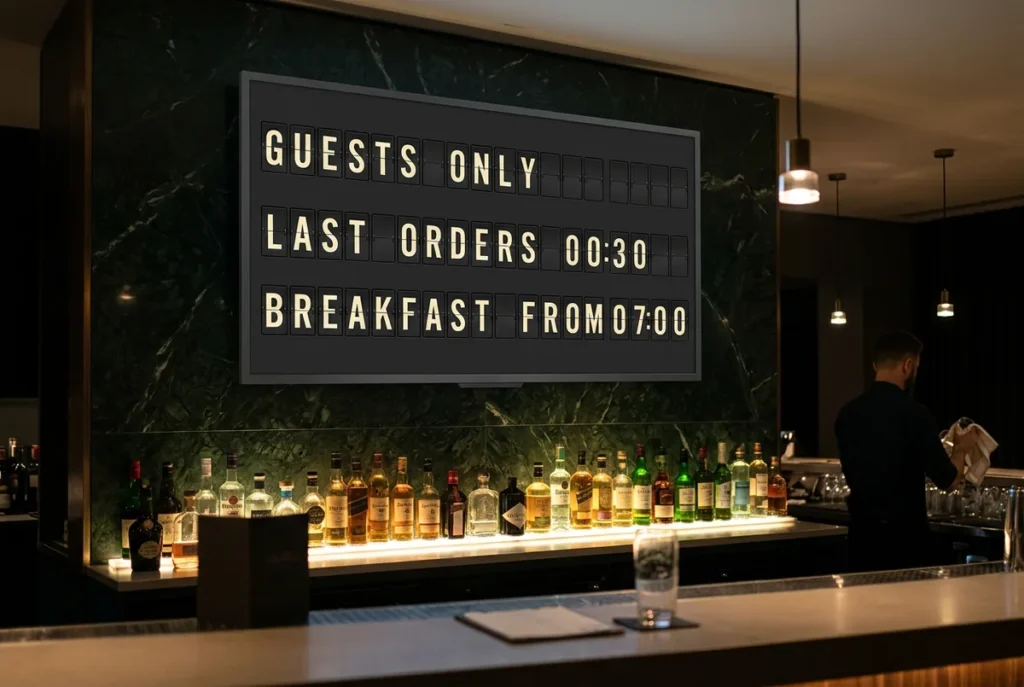
A guest should not have to stop at the front desk to ask where breakfast is served, whether the rooftop bar is open, or when checkout ends. Yet those questions often expose the weak points in hotel signage: a printed notice in a frame, a handwritten easel near the elevator, or a paper schedule that was accurate yesterday.
Good hotel signage does more than point people in the right direction. It lowers friction, sets the tone of the stay, and gives the property a more considered feel before a member of staff says a word. For boutique hotels and design-led properties, the right display can become part of the atmosphere rather than another piece of operational clutter.
Hotel signage is part of the guest experience
Hotels ask guests to absorb a surprising amount of information. Breakfast hours, valet instructions, Wi-Fi details, event locations, pool rules, happy hour, checkout reminders, local recommendations, and temporary changes all compete for attention. The problem is not a lack of information. It is deciding what guests need at a particular moment and presenting it in a way they will actually read.
A lobby is the clearest example. It is a transition space where arrivals look for orientation and returning guests look for reassurance. A display near reception can answer practical questions without making the desk feel like a command center. Near elevators, it can direct guests to a wedding reception, announce tomorrow’s yoga class, or let them know the restaurant is taking walk-ins.
The best signs are calm and specific. “Breakfast, 7-10:30 AM, Garden Room” is more useful than a crowded board listing every hotel amenity. “Private event in the Library tonight” prevents awkward wrong turns. Clear information feels like hospitality because it respects a guest’s time.
The difference between decor and direction
A beautiful sign that cannot be updated becomes a problem the first time plans change. A functional sign that clashes with the lobby can make an otherwise polished property feel improvised. Hotel operators need both: a display that belongs in the space and a way to manage messages without printing, laminating, and replacing materials every week.
That balance depends on the venue. A resort with multiple pools and restaurants may need several carefully placed information points. A 25-room urban hotel may get more value from one distinctive lobby board and a smaller display outside its bar. There is no universal signage map, but there should be a clear hierarchy: guide guests first, promote second, and decorate through the quality of the design.
Where split-flap hotel signage earns its place
Split-flap displays are not trying to replace the large, image-heavy digital screens used for video, immersive campaigns, or high-impact advertising. Their appeal is different. They turn short, changing text into a small public performance: letters flip into place, the board settles, and the message becomes hard to ignore.
That familiar click-clack rhythm carries the spirit of old train stations and airport departure boards into a hotel setting. It feels nostalgic without asking the property to install and maintain mechanical hardware. On a modern screen or tablet, the split-flap look can be updated from an app while preserving the theatrical character that made the original boards memorable.
This format works especially well for messages that are brief, timely, and useful. Think “Welcome, Smith Wedding,” “Jazz in the Bar, 8 PM,” “Pool Closed Until 2 PM,” or “Ask Us About Late Checkout.” A split-flap board gives these operational notices more presence than a printed sheet taped to the wall.
For hotels, that matters because the guest journey is full of small decision points. Where do I go? What is happening? Is this space open? A well-positioned board can answer without adding another sign holder, poster, or staff interruption.
Best use cases around the property
At the front desk, a split-flap display can carry arrival information, breakfast details, and a concise welcome message. It is particularly effective when staff need to change information during a busy shift but want the lobby to remain composed.
Outside a restaurant or bar, it can show opening hours, seating availability, a featured cocktail, or the night’s entertainment. Unlike a static menu board, it can move from brunch to dinner service in seconds. In meeting and event areas, it can identify the current function, direct attendees to the proper room, and switch between groups as the day progresses.
Elevator banks are another strong location. Guests naturally pause there, which makes it a useful place for reminders about checkout, spa appointments, seasonal experiences, or a temporary elevator change. The key is restraint. One clean message is more effective than six competing announcements.
Design the message before you choose the display
The temptation with any programmable display is to fill every line. Resist it. Split-flap signage is most elegant when treated like a headline system, not a bulletin board. Its visual language favors short phrases, clear timing, and deliberate pacing.
Start by identifying the questions your team answers repeatedly. If front desk staff explain breakfast hours dozens of times a day, that is a signage opportunity. If guests regularly wander into a private event, the issue is not guest behavior. The information simply is not appearing in the right place at the right time.
Then decide what should be permanent and what should change. A hotel name, restaurant location, or general directional cue may stay consistent. Event names, hours, weather-related updates, and sold-out notices should be easy to replace. This distinction prevents a display from becoming either too static to be useful or too busy to be readable.
Keep copy crisp and human
Guests read signs while walking, carrying bags, or talking to someone. Use familiar words and avoid internal hotel language. “Breakfast is in the Garden Room” beats “Morning F&B service relocated.” “The terrace is closed due to rain” is clearer than a vague apology.
Timing also matters. A message about morning coffee should not still be cycling at 9 PM. Scheduling allows a property to prepare the day’s communications in advance, then let the display shift as service changes. That is not merely a convenience for staff. It keeps the guest-facing environment accurate.
Make content control an operational advantage
Hotels change constantly. A group arrival shifts rooms, a private dinner takes over a space, a maintenance issue closes an amenity, or a storm changes outdoor plans. Printed signs create a lag between the decision and the message. That lag is where confusion begins.
Cloud-managed signage gives managers the ability to update a display from wherever they are, rather than hunting for a marker or asking someone to reprint a notice. With Split Flap TV, teams can publish messages, set schedules, adjust layouts, and build pages for different moments of the day from one app. The effect is polished, but the real value is practical: fewer stale notices and less manual work at the front desk.
Consistency is another advantage. If the lobby board, restaurant entrance, and event corridor all use the same language and visual system, the property feels organized. That does not mean every screen should show identical content. It means guests receive a coherent experience as they move through the building.
A more intentional alternative to the taped notice
Not every message deserves a screen, and not every hotel needs a display in every corner. Emergency instructions, legal notices, and detailed wayfinding often require traditional formats. A split-flap display is strongest when it carries the living layer of hotel communication: the information that changes, deserves attention, and benefits from a little theater.
Place it where guests naturally pause. Give it one job at a time. Write messages that can be understood in a glance, then schedule them to match the rhythm of the property. The result is not simply better hotel signage. It is a lobby, bar, or event floor that feels more alive, more informed, and far less dependent on the next handwritten sign.