
The way brands build and deploy creative campaigns has fundamentally shifted. Marketing studios have emerged as the go-to partners for businesses that need speed, expertise, and measurable results without the overhead of traditional agency relationships.
This guide breaks down everything you need to know about working with marketing studios in 2026, from understanding what they offer to choosing the right partner for your business.
What Is a Marketing Studio Today?
Marketing studios in 2026 are small, agile teams that combine strategy, design, and content production under one roof. Unlike sprawling agencies with separate departments for every discipline, studios operate as integrated units where founders and senior creatives work directly on your brand.
Marketing studios are typically smaller firms focused on tactical execution and craftsmanship. Studios tend to focus on high-quality, specialized output and direct collaboration with clients. Marketing studios prioritize high-quality creative execution over broad service offerings.
Studios tend to focus on high-quality, specialized output and collaborate closely with clients, ensuring direct teamwork and operational control across projects.
Modern marketing studios manage everything from social media campaigns and performance marketing to in-store experiences, environmental design, and digital signage. They create dynamic content that works across channels, whether that’s a billboard in Times Square or a TV screen behind your bar. Niche-specific brands often seek boutique studios with deep, relevant experience in their industry to ensure their messaging resonates authentically.
Split-Flap TV partners closely with marketing studios who want memorable, retro-inspired visual communication on everyday screens. Our software transforms standard televisions into nostalgic split-flap displays, giving studios a tool that captures attention without requiring custom hardware installations.
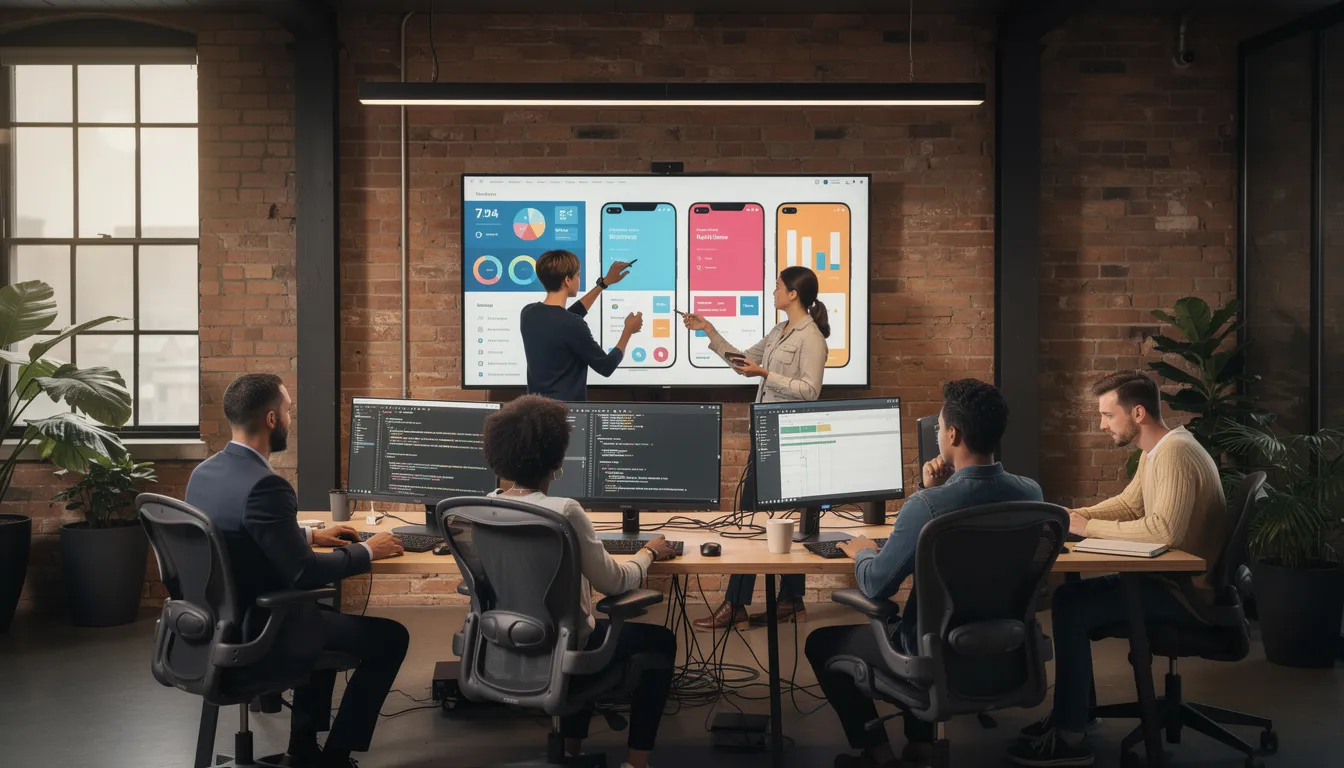
The key difference from traditional agencies comes down to structure. Agencies tend to operate in silos: account managers handle client communication, strategists develop plans, creatives execute, and media buyers place ads. Studios collapse these layers. You get direct access to the people doing the work, faster feedback loops, and campaigns that launch in weeks rather than months.
Why Brands Work With Marketing Studios Instead of Traditional Agencies
Between 2018 and 2024, businesses increasingly moved away from large retainer-based agencies toward smaller, specialized studios. Economic pressures, the need for faster execution, and advances in software tools made it possible for lean teams to deliver what once required dozens of people.
The benefits of this shift are concrete:
- Faster turnaround times: Studios deliver campaigns in weeks, not months. Without layers of approval and account management, concepts move from brief to launch quickly.
- Lower retainers: Monthly fees typically range from $1,500 to $3,000 for small to medium businesses, compared to agency retainers that often exceed $10,000.
- Cross-channel expertise: Studios handle social media, out-of-home advertising, in-store experiences, and digital signage within the same team, ensuring consistent messaging across every touchpoint.
- Direct access to senior creatives: You work with the people making the work, not junior staff translating briefs through multiple layers.
Consider a restaurant group with four locations that needs to refresh menus, window displays, and lobby screens before a seasonal launch. A traditional agency might require months of approvals, separate vendors for print and digital, and a substantial budget. A marketing studio can audit the brand, develop a concept, and deploy updated visuals across all locations within two to three weeks.
Many studios adopt tools like Split-Flap TV to bring standout content to regular TVs without installing custom hardware. Physical split-flap installations start around $15,000 for basic setups. With Split-Flap TV, studios offer similar retro aesthetics for under $50 per month plus the cost of commodity screens, keeping budgets accessible for SMEs.
Types of Marketing Studios
Marketing studios breathe life into brands with an almost artistic sensibility, each one expressing its own distinct personality and creative heartbeat. Some studios pulse with digital energy — their tone radiating excitement as they craft digital signage experiences, weave social media narratives, and create content that feels alive and immediate. These digital-first spaces speak the language of real-time connection, their approach warm yet precise, always seeking that perfect moment when brand and audience truly connect. Others embrace the timeless craft of traditional marketing — their voice carries the weight of classic storytelling, speaking through print campaigns and television advertising with an almost reverent appreciation for the tactile, the permanent, the beautifully crafted.
The most compelling studios today feel like creative alchemists, blending digital innovation with traditional wisdom in ways that feel both nostalgic and refreshingly modern. Their tone expresses confidence and curiosity — they speak of strategy development, creative production, and campaign execution with the enthusiasm of artists discussing their craft. These hybrid creators understand the emotional pull of free digital signage software, weaving it into their offerings with an intuitive sense of how brands yearn for visibility and meaningful engagement without the burden of overwhelming costs. When they integrate digital signage, their language becomes almost poetic — they describe dynamic, visually compelling content that doesn’t just display information but creates moments, elevates presence, and transforms ordinary touchpoints into storytelling opportunities.
Whether you’re drawn to the intimate, personal approach of a boutique team for that one special campaign — the kind that feels handcrafted and deeply intentional — or seeking a full-service partner whose voice resonates with ongoing dedication and creative partnership, today’s studios express themselves through software mastery, boundless creativity, and expertise that feels both professional and genuinely passionate. Their ability to adapt speaks to something deeper than mere flexibility — it’s an emotional intelligence that ensures every brand discovers not just a service provider, but a creative companion perfectly attuned to their unique marketing aspirations and engagement dreams.
Core Services Offered by Modern Marketing Studios
This section breaks down the typical services that marketing studios offer to SMEs, hospitality brands, retail businesses, coworking spaces, corporate offices, and other industries. Studios bundle these into packages that scale with your needs.
- Brand strategy and identity design: Logos, color palettes, typography systems, and comprehensive brand guidelines. Brand strategy involves defining a brand’s mission, voice, and visual elements to ensure consistency across platforms. Deliverables might include a full brand book, social media templates, and signage standards for new locations.
- Content production: Photography, video, copywriting, and graphic design for ongoing campaigns. Studios often provide quarterly content calendars that sync social posts with in-store screen updates.
- Performance marketing: Paid advertising on Meta, Google, and retargeting platforms, aligned to specific revenue goals like customer acquisition cost or lead quality.
- Experiential and environmental design: Physical touchpoints including retail displays, event visuals, window graphics, and wayfinding systems. This includes careful consideration of form—how different shapes, materials, and visual elements work together to create engaging and expressive branded spaces.
- Digital signage and in-location media: Menu boards, lobby welcome screens, live social counters, event schedules, and weather boards powered by software like Split-Flap TV. This service has become standard since around 2020, particularly for hospitality and retail clients.
- Campaign planning and execution: Full management of seasonal pushes, product launches, and promotional periods. For example, a studio might handle all visuals for a new bar opening in October 2026, including menu boards, promotional countdown timers, and social proof displays.
- Analytics and optimization: Monthly reporting tied to KPIs like dwell time, engagement rates, and conversion metrics.
Studios typically package these into monthly subscriptions. A common structure includes three campaigns per month, weekly content refresh on screens, and monthly analytics review. This model keeps the studio engaged as a true partner rather than a vendor handling one-off projects.
How Marketing Studios Use Digital Signage and Split-Flap TV
Digital signage has become a standard line item in marketing studios’ proposals since around 2020, especially for hospitality, food and beverage, and retail clients. Studios plan “screen-first” moments at high-traffic points: entrances, bars, check-in desks, elevators, and window displays, often leaning on reasons why Split-Flap TV is the future of digital signage to justify these investments.
The approach uses regular TVs rather than expensive proprietary hardware. A Samsung or LG display in your lobby becomes a communication tool when connected to the right software, especially when you follow a guide to digital split-flap displays for revitalizing space.
Split-Flap TV is a cloud-based app that turns any compatible TV into a nostalgic split-flap style board. It works with Samsung and LG webOS, Apple TV, Fire TV, Android TV, or any HDMI media player. The software mimics vintage airport departure boards from the 1960s, creating an aesthetic that stands out in modern spaces.
Setup is straightforward and truly plug & play:
- Connect your streaming device or smart TV to Wi-Fi
- Install the Split-Flap TV app
- Log into the cloud dashboard
- Select a template and customize your first board
- Push content live
The entire process takes under five minutes, so you can play around with the design and get your display running almost instantly. Users can create stunning, professional presentations using a rich library of templates and intuitive drag-and-drop tools. Many digital signage software options, including Split-Flap TV, support integration with over 140 apps, such as social media and data visualization tools, for enhanced content customization, and newer releases even enable Split-Flap TV with flipping pictures and graphics. The user-friendly content management system (CMS) features a drag-and-drop interface, making it easy for anyone to update and manage content.
Split-Flap TV offers a 7-day free trial with three subscription tiers: Economy for basic scheduling, Business for social integrations, and Cockpit for advanced analytics and multi-location control. As the perfect blend of nostalgia and modern technology, it brings global appeal to any business environment.
Concrete campaign examples include:
- Hotel lobby event schedule: A board displaying check-in times, local events for April 2026, and real-time weather synced to the location
- Bar happy-hour display: A rotating board with time-based triggers showing drink specials, countdown timers, and Instagram handles
- Retail arrivals board: A “New arrivals today” display synced with inventory data and time-of-day promotions
- Restaurant daily specials: Rotating menu items with weather-based drink suggestions
Unlike physical split-flap installations that start around $15,000 in capital expenditure plus ongoing maintenance, Split-Flap TV lets studios offer digital split flap displays as an affordable alternative for under $50 per month. This keeps barriers low for studios serving multi-location chains and enables rapid deployment of standout visuals.
Digital Signage Network: Connecting Screens for Maximum Impact
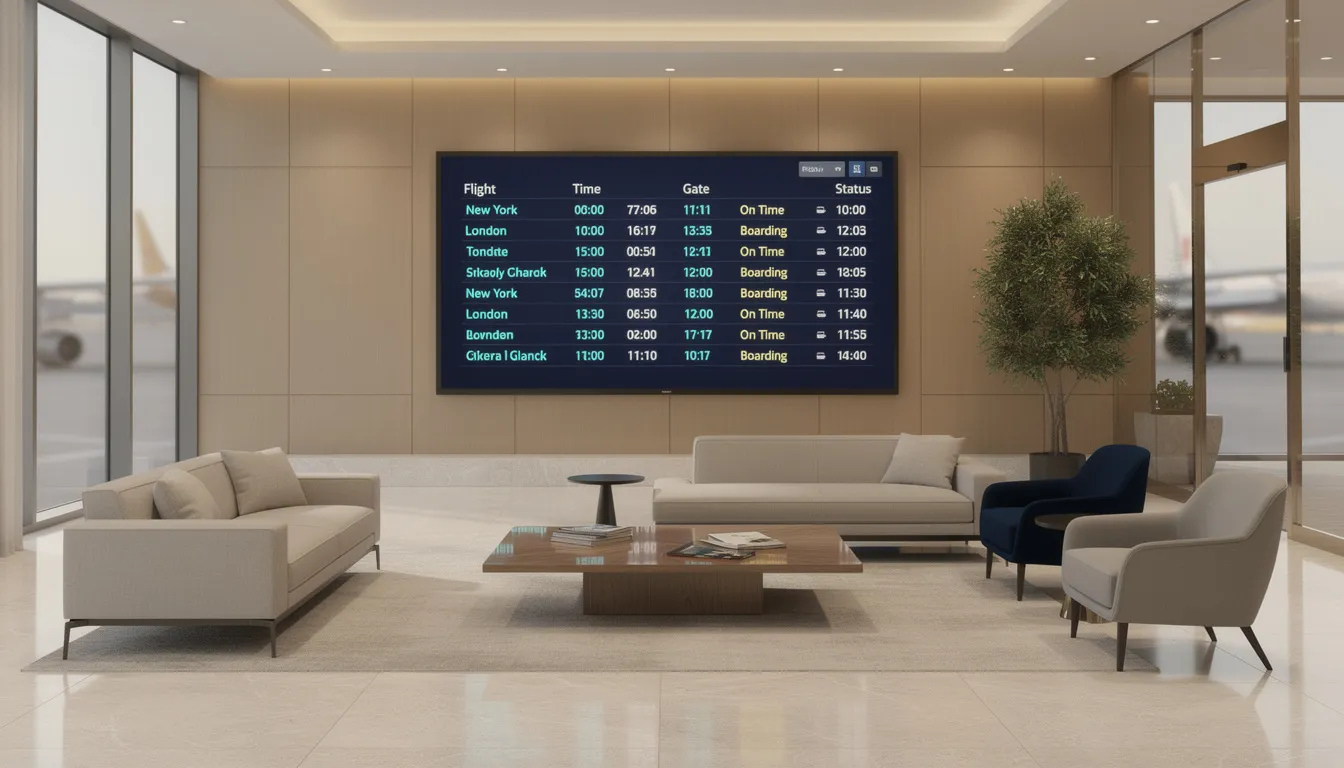
A digital signage network creates something almost magical — a constellation of connected experiences that transforms ordinary spaces into storytelling canvases. By weaving together screens across retail stores, restaurants, hotels, or public spaces, businesses craft dynamic narratives that don’t just capture attention but create those rare “wow moments” that linger in memory long after guests have left.
With thoughtful digital signage software and hardware, businesses discover the elegant simplicity of creation — designing, displaying, and orchestrating content that feels alive and responsive. This centralized approach means you can breathe new life into menus, spark excitement with fresh promotions, or share meaningful announcements across every touchpoint in real‑time, whether you’re standing in the space feeling the energy firsthand or managing the experience remotely from anywhere inspiration strikes. The beauty of this setup becomes especially profound for brands with multiple locations — each space tells the same authentic story while honoring the unique character of its environment.
A digital signage network doesn’t just deliver content — it awakens possibilities. Marketing teams find themselves empowered to dance with changing moments, respond to the pulse of their audience, and craft displays that feel personally curated for specific communities or times of day. The result is something beautifully human — an engaging, seamless experience that doesn’t just drive customer engagement but creates genuine emotional connections that naturally support your business aspirations.
Setting Up a Marketing Studio Tech Stack (Including Split-Flap TV)
A modern studio needs tools that support agile workflows across collaboration, design, analytics, and deployment. Here’s what a typical tech stack looks like in 2026.
Collaboration tools: Slack or Microsoft Teams for real-time communication with team members and clients. These platforms keep conversations organized and reduce email overload.
Asset management: Google Drive, Dropbox, or dedicated digital asset management (DAM) systems for organizing creative files. Studios working with multiple clients need robust organization to avoid errors and version confusion.
Design software: Figma for collaborative prototyping and wireframing. Adobe Creative Cloud for production-level design work. Many studios use both, depending on the project phase.
Analytics platforms: Google Analytics 4 for web performance. In-store traffic sensors and point-of-sale data for physical location insights. Studios increasingly connect these data sources to demonstrate campaign ROI.
Digital signage solutions: Split-Flap TV for retro-styled displays, plus generic signage players for straightforward content. The combination covers both aesthetic statement pieces and functional informational screens. Split-Flap TV offers an out-of-the-box setup, making installation quick and convenient for marketing studios, and can be paired with professional screen solutions managed remotely 24/7 when projects demand it.
Setting up a TV with Split-Flap TV takes under five minutes, following the same basic flow outlined in the Getting Started with Split-Flap TV guide:
- Plug in an Apple TV, Android TV, Fire TV stick, or compatible streaming device
- Download and install the Split-Flap TV app from the device’s app store
- Open the app and log into your Split-Flap TV dashboard via browser
- Enter the unique code displayed on your TV to pair the device with your account
- Browse templates and select a board style
- Customize with your content, fonts, and data integrations
- Push the board live to your connected screen
Split-Flap TV supports USB connectivity for direct device-to-computer communication, and is compatible with Linux for custom setups, including Raspberry Pi and other hardware. The system is modular, with each module—such as display modules or sensor modules—easy to assemble and expand. Pin headers and pins are included for connecting sensors and electronic parts, and sensors like hall-effect sensors are used for calibration and fault monitoring. Power efficiency is a key feature, and installation may require power tools such as a drill, along with a level and pencil. Always perform error checking and validation during setup to prevent design issues, and refer to Split-Flap TV guides for installation, boards, and more as needed.
Key facts about Split Flap display installation and features:
- Installation involves mounting backers to the wall and hanging each module in the correct location.
- Required tools include a level, pencil, and power drill with various drill bit sizes.
- Customization options include different sizes, colors, and the ability to add symbols or custom designs to the flaps.
- Split Flap displays can be paired with interactive technology for enhanced user engagement and real-time information.
- Designed to be energy-efficient and built with sustainable materials, making them a long-lasting signage option.
- Inspired by classic departure boards historically found in airports, offering nostalgic appeal.
- Unique movement and sound attract attention and create memorable experiences.
- Displays can be customized in various sizes and finishes to fit different branding needs.
- Built to last, with some displays capable of operating for over 250 years with proper use.
As of 2026, Split-Flap TV supports scheduling by date and time zones, so studios can plan content weeks ahead. You can set different playlists for weekdays versus weekends, integrate live social media counters or weather feeds, and manage multiple screens from a single dashboard.
A recommended “getting started” flow for studios:
- Create a client-specific board set with branded colors and messaging
- Define playlists for different times and days
- Connect external data sources like weather APIs or social counters
- Document the setup process in your studio’s internal SOPs for repeatability
- Train relevant team members on the dashboard interface
This approach enables deployments across dozens of screens with centralized control, making it practical for studios serving multi-location clients.
Working With a Marketing Studio: Process From Brief to Live Campaign
The typical lifecycle moves through discovery, strategy, creative development, production, deployment, and ongoing optimization. Here’s how it breaks down with concrete timing.
Week 1: Discovery workshop and brand audit Studios gather assets and technical details early. This includes screen sizes and locations, operating hours, existing CMS or POS integrations, and Wi-Fi availability. For digital signage projects, they document which TVs are already installed and what devices or operating systems are in use.
Weeks 2-3: Strategy and concept development The team develops moodboards, messaging frameworks, and creative concepts. For Split-Flap TV deployments, this phase includes choosing split-flap themes and crafting short, punchy board messages. The retro format demands concise copy that reads well in limited rows.
Week 4: Production and deployment Designers finalize assets. Copywriters polish board messages. Content goes live across web, social, and in-location screens. Studios coordinate launch timing so all channels activate simultaneously.
Ongoing: Optimization and refresh Monthly analytics reviews track performance. Studios adjust messaging based on what’s working. Screens get refreshed weekly or bi-weekly to keep content relevant.
For a real-world scenario, consider launching a new cocktail menu in a bar in June 2026:
- Week 1: Discovery call covering menu details, target audience, and technical specs for existing screens
- Week 2: Moodboard development with split-flap themes, color palettes, and sample board layouts
- Week 3: Final copywriting for menu boards and social teasers
- Week 4: Deploy countdown boards teasing the launch date, schedule social posts, and prepare day-of messaging
- Launch day: Activate full menu boards with rotating drink features and Instagram handles
- Week 5+: Monitor orders, gather feedback, and refresh boards based on popular items
This process works because studios handle strategy and execution together. There’s no handoff between teams where details get lost. The result is campaigns that launch faster and perform better because every element is coordinated.
Pricing Models: How Marketing Studios Package Services and Screens
Studios in North America and Europe commonly use retainers, project-based fees, and hybrid models. Understanding these structures helps you evaluate proposals and compare options.
Monthly retainers typically start around $1,500 to $3,000 for small to medium brands. This covers ongoing campaigns, social media management, and on-location screen content. Higher tiers include more deliverables, faster turnaround, and dedicated account support.
Project-based fees work for one-off initiatives like brand launches, seasonal campaigns, or venue openings. Expect $5,000 to $10,000 for a comprehensive launch package including strategy, design, and deployment.
Hybrid models combine a smaller monthly retainer with project fees for larger initiatives. This keeps the studio engaged while providing flexibility for bigger pushes.
Studios bundle Split-Flap TV subscriptions into their pricing in two ways:
- Pass-through: The actual subscription cost (under $50 per month) appears as a line item, with the studio handling setup and management
- White-label: The studio includes it within a “digital experience” or “in-location media” fee, marking up slightly for their management services
Sample packages:
|
Package |
What’s Included |
Typical Price Range |
|---|---|---|
|
Launch Package |
One-off project: brand audit, campaign concept, production, and deployment across 2-3 channels |
$5,000 – $10,000 |
|
Always-On Content |
Monthly retainer: social management, 3 campaigns per month, weekly screen refreshes |
$1,500 – $3,000/month |
|
Multi-Location Signage |
For chains with 5+ venues: centralized dashboard management, scaled content production, monthly analytics |
$3,000 – $6,000/month |
|
The cost advantage compared to physical split-flap hardware is significant. A traditional split-flap wall installation starts around $15,000 in capital expenditure, plus ongoing maintenance and the inability to update content remotely. Split-Flap TV on existing TVs keeps CAPEX low while preserving the retro charm. Studios can offer the aesthetic impact without requiring clients to make major hardware investments. |
|
|
Case Study Snapshots: Marketing Studios Using Split-Flap TV
These mini case studies illustrate how marketing studios deploy Split-Flap TV for real client success. While details are anonymized, the patterns reflect actual industry implementations.
NYC Restaurant Group (4 Locations)
A restaurant marketing studio in New York City deployed Split-Flap TV across four locations in Q3 2025. Each venue received screens displaying rotating daily specials, Instagram handles with live follower counts, and weather-based drink promotions. When temperatures exceeded 85°F, boards automatically featured iced drinks and refreshing cocktails.
Results: Bar orders increased by 25% during the first month. The social media integration drove a measurable uptick in Instagram follows. The studio managed all four locations from a single dashboard, scheduling content by time zone and day of week.
Key features used: Scheduling, social counters, weather integration, multi-location control.
Lisbon Boutique Hotel
A boutique hotel studio in Lisbon installed Split-Flap TV boards in the lobby and elevator areas. The displays mimicked classic airport arrival boards, showing event schedules, check-in times, local recommendations, and real-time weather. The nostalgic aesthetic aligned perfectly with the hotel’s vintage-inspired décor.
Results: Guest satisfaction scores improved by 18% in post-stay surveys, with multiple guests specifically mentioning the lobby displays. The boards became a conversation piece and appeared in numerous guest Instagram stories.
Key features used: Date/time displays, custom messaging, weather integration.
Berlin Coworking Space
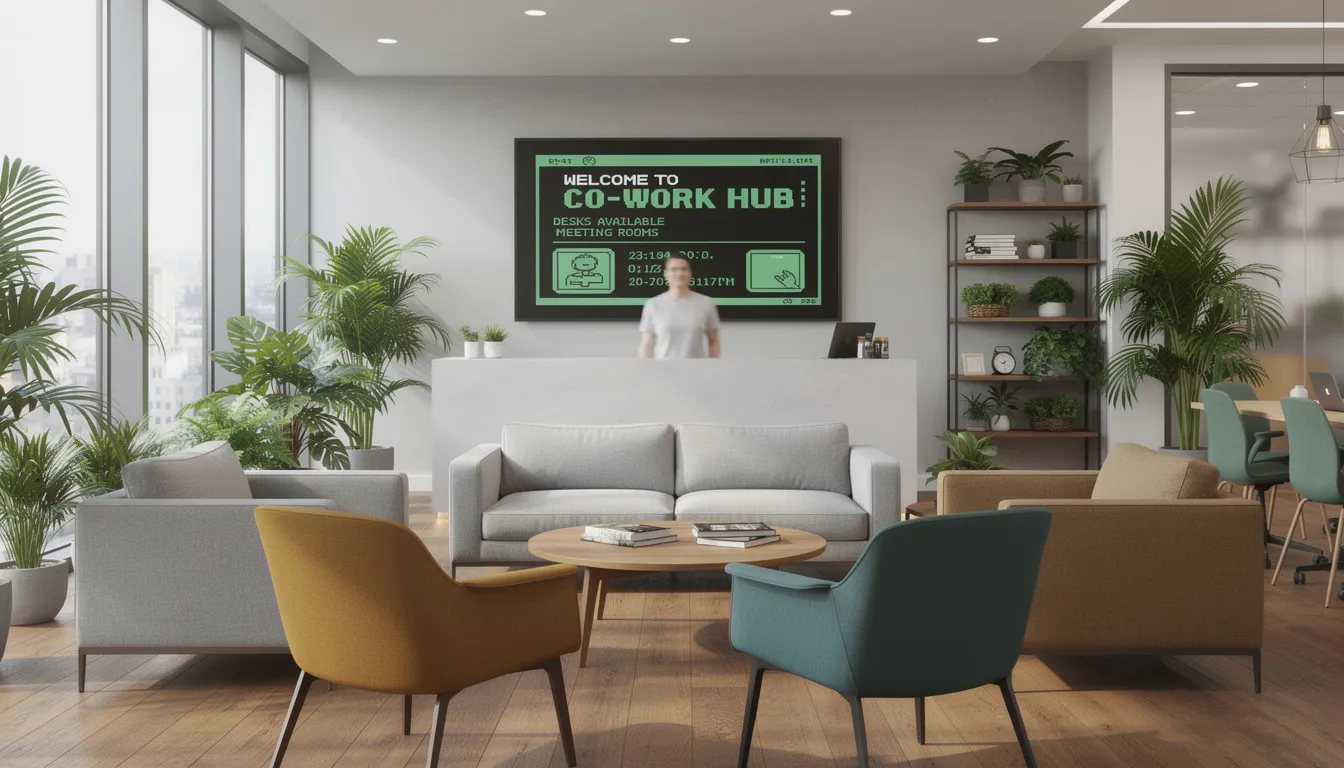
A coworking-focused studio in Berlin used Split-Flap TV in reception areas to show real-time occupancy status, Wi-Fi credentials, meeting room availability, and community announcements. Members could glance at the board and immediately know which spaces were open.
Results: Community engagement increased by 30%, measured through event attendance and member feedback. The boards reduced front desk questions about basic information, freeing staff to focus on member experience.
Key features used: Real-time data feeds, scheduling for business hours, custom templates.
Measuring Success and ROI in Marketing Studio Campaigns
Understanding the magic that unfolds from your marketing efforts feels deeply satisfying — and measuring that wonder goes far beyond simply launching a campaign into the world. For digital signage initiatives, tracking those meaningful moments through engagement rates, conversion rates, and customer retention creates a beautiful tapestry of insights that reveal what truly resonates with human hearts.
Digital signage allows businesses to witness the delightful dance of metrics — the number of eyes that pause in appreciation, the gentle interactions with displays that spark curiosity, and the sales that bloom from dynamic content that speaks to something deeper. By embracing video tags and thoughtful tracking tools, you can gather precious stories about how your content creates those “wow moments” with your audience. This treasure trove of human connection helps you craft marketing messages that feel authentic and alive, ensuring they align with your brand’s soul and nurture genuine, lasting engagement.
Ultimately, the dream is to create displays and campaigns that don’t just capture fleeting attention but deliver those meaningful business results that make hearts race with excitement. By lovingly reviewing these human stories hidden in the metrics, businesses can refine their marketing services with intention and grace, celebrate their investments with confidence, and continue weaving compelling content that supports something truly lasting — success that feels as warm and real as the human connections it creates.
How to Choose the Right Marketing Studio for Your Business
Selecting the right marketing studio requires evaluating capabilities, experience, and fit. This checklist applies whether you own a bar, restaurant, retail shop, hotel, or office.
Portfolio evaluation:
- Look for real-world screen work, not just web and social examples
- Ask to see in-location installations: menu boards, lobby displays, event signage
- Evaluate whether their aesthetic matches your brand direction
Digital signage expertise:
- Does the studio have experience with tools like Split-Flap TV?
- Can they show live examples of screen campaigns they’ve built?
- Do they understand the technical requirements: Wi-Fi, devices, and screen compatibility?
Industry alignment:
- Has the studio worked with businesses in your industry?
- Do they understand the specific challenges of hospitality, retail, or corporate environments?
- Can they reference relevant case studies or client success stories?
Questions to ask:
- “Can you show me a live example of a screen campaign you built?”
- “How would you integrate Split-Flap TV into my existing TVs?”
- “What does your monthly reporting look like?”
- “Who on your team would I work with directly?”
- “What’s your typical timeline from brief to launch?”
Red flags to watch:
- No clear process or timeline documentation
- No examples of in-location work in their portfolio
- Pushing expensive custom hardware when standard TVs already exist in your space
- Vague answers about who handles strategy versus execution
- Unwillingness to provide client references
Decision checklist:
- [ ] Portfolio includes relevant screen and signage work
- [ ] Team demonstrates familiarity with digital signage tools
- [ ] Pricing is transparent and within budget
- [ ] Process is documented with clear milestones
- [ ] References or case studies are available
- [ ] Cultural fit feels right for a long-term partnership
The right studio becomes a true partner for your brand, not just a vendor. Take time to evaluate options and prioritize studios that can deliver frequency-driven messaging across all your customer touchpoints.
Studio Culture and Values: What Sets Leading Studios Apart
The most exceptional marketing studios are defined not merely by their services, but by something far more profound—their culture and the emotional heartbeat that drives every creative decision. Leading studios cultivate environments where creativity doesn’t just exist; it thrives with an almost magnetic energy. Teams are encouraged to explore breakthrough technologies (like cutting‑edge digital signage and next‑generation media player innovations) to craft marketing solutions that don’t just stand out—they create “wow moments” that resonate deeply with audiences.
Meaningful partnerships form the soul of these studios. By working intimately with clients, they develop an almost intuitive understanding of each brand’s unique DNA and creative challenges, allowing them to deliver services that feel less transactional and more transformative. This human‑centered approach, combined with an unwavering commitment to staying ahead of industry evolution, ensures that every project is executed with the kind of precision and care that creates lasting impact—not just temporary impressions.
In these dynamic environments, every team member becomes part of something larger than themselves. Whether brainstorming breakthrough concepts, refining content with meticulous attention to detail, or orchestrating campaigns that feel alive and purposeful, the collective creative energy leads to services that consistently transcend expectations. It’s this dedication to meaningful innovation, authentic teamwork, and partnership‑driven excellence that sets exceptional studios apart and fuels their continued creative evolution.
Innovation and R&D: Staying Ahead in a Rapidly Evolving Market
In the beautifully chaotic world of marketing, innovation and research and development feel almost magical — essential ingredients for that special kind of staying ahead that makes hearts race. Leading studios pour genuine passion into exploring new digital signage solutions, lovingly experimenting with different operating systems, devices, and software to discover those wonderfully effective ways to create content that truly speaks to people.
By crafting customizable modules for digital signage — each one thoughtfully designed and personally meaningful — studios offer their clients something deeper: real flexibility and heartfelt personalization in their marketing campaigns. This warm commitment to R&D means studios can gracefully adapt to fresh trends, seamlessly integrate those exciting latest features, and deliver content that doesn’t just capture attention but creates those precious moments of genuine connection and engagement.
Whether it’s tenderly testing new hardware, carefully refining software interfaces with an artist’s touch, or boldly exploring emerging technologies that spark wonder, studios that prioritize innovation carry themselves with a confidence that feels both professional and deeply human. Their willingness to explore with curiosity, adapt with grace, and push boundaries with respect ensures that clients always experience the most advanced and beautifully effective tools — solutions that don’t just lead to business success, but create those lasting impressions that make people smile.
Future Trends: Where Marketing Studios and Digital Signage Are Headed
Looking ahead to 2026-2030, marketing studios and screen-based marketing are evolving rapidly. Here’s what to expect.
AI-assisted creative production is handling 80-90% of repetitive tasks in forward-thinking studios. This doesn’t replace human creativity but accelerates production. Studios are adding roles like prompt directors and automation architects to their teams, freeing senior creatives for strategic and conceptual work.
Real-time data on screens is becoming standard. Expect to see live social counters, local weather, sales milestones, and inventory updates displayed dynamically. Split-Flap TV already supports many of these integrations, and the range of data sources will only expand.
Nostalgic aesthetics delivered through digital tools continue to resonate. Retro boards, neon-inspired designs, and analog-influenced visuals create emotional connections that pure digital minimalism often lacks. Tools like Split-Flap TV make these aesthetics accessible without the cost and limitations of physical components.
Hybrid physical-digital environments are the emerging standard. Classic interiors featuring brick, wood, and vintage décor pair beautifully with digital split-flap style boards. The contrast creates spaces that feel both timeless and modern.
Multi-location deployments at scale will become routine. Centralized dashboards let studios schedule content to dozens of TVs across cities from a single interface. Major events like UEFA Euro 2028 or the 2028 Olympics will drive demand for coordinated screen campaigns that activate across all locations simultaneously.
Smaller, nimbler studios will continue outpacing large holding companies. Original work, white-glove service, and founder-level involvement create value that sprawling agencies struggle to match. The best studios will balance AI efficiency with human connection, delivering both scale and personalization.
The message is clear: digital signage isn’t a nice-to-have anymore. It’s a fundamental channel for reaching customers where they are. Marketing studios that master this medium will lead the industry.
Key Takeaways
- Marketing studios offer faster turnaround, lower costs, and more direct creative access than traditional agencies
- Digital signage has become a standard service offering, particularly for hospitality, retail, and office environments
- Split-Flap TV transforms standard screens into nostalgic display boards for under $50 per month, avoiding $15k+ hardware investments
- Studios typically charge $1,500-$3,000 monthly retainers for ongoing campaigns, including screen management
- The right studio partnership delivers consistent brand experiences across social, web, and in-location screens
- AI-assisted production and real-time data integration are shaping the future of studio work
Whether you’re launching a new venue, refreshing an existing space, or simply looking for a better way to connect with customers, marketing studios offer the agility and expertise that modern businesses demand.
Ready to explore what retro-inspired digital signage can do for your space? Try Split-Flap TV free for 7 days and see how easy it is to create engaging content that transforms any screen into a conversation piece.