
How to Schedule Messages by Time of Day
April 14, 2026 · Captain
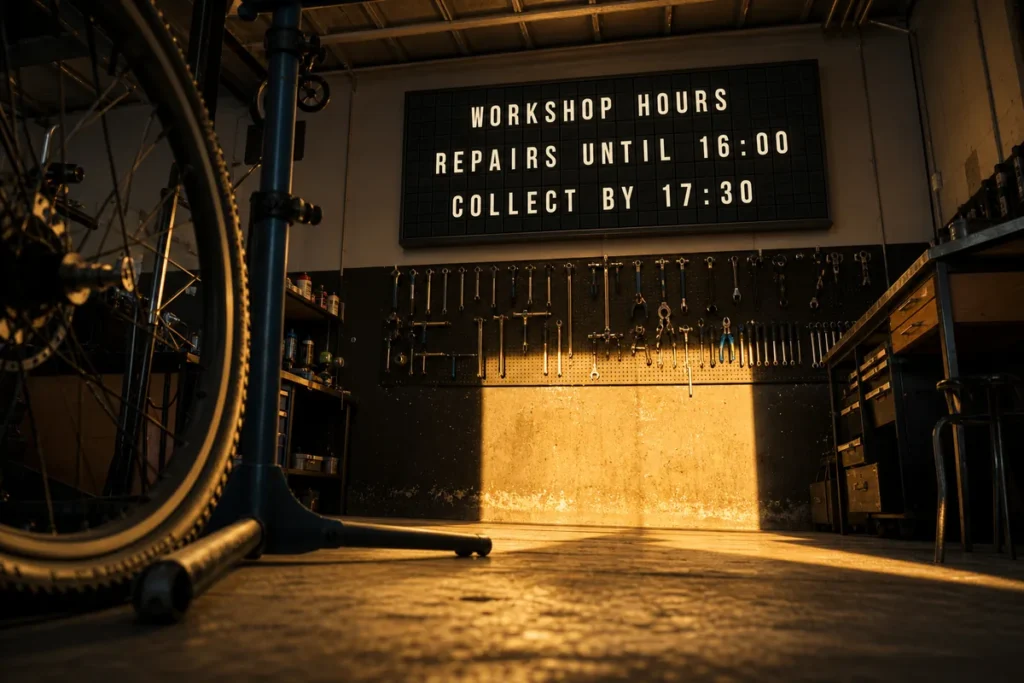
The 8:00 a.m. message your guests need is rarely the same one they need at 5:30 p.m. Morning traffic wants hours, coffee specials, and quick direction. Evening traffic wants happy hour details, event info, or a last call reminder. If you are figuring out how to schedule messages by time of day, the goal is simple: show the right words at the right moment without asking your staff to keep changing signs all day.
That matters even more when your signage is part of the atmosphere. A split-flap display has presence. The click-clack motion pulls attention in a way taped paper signs never will, but the real value is operational. Once your messaging is scheduled well, your display stops being one more task during a busy shift and starts acting like a reliable front-of-house tool.
Why time-of-day scheduling works so well
Most customer-facing businesses repeat the same cycle every day. A cafe opens with breakfast and Wi-Fi information, moves into lunch promos, then shifts to afternoon pickup reminders. A boutique hotel may want check-in details in late afternoon, local recommendations in the evening, and breakfast hours overnight. An office lobby might rotate visitor instructions during the day and after-hours access notes at night.
The common thread is timing. People only notice signage for a few seconds, so relevance matters more than volume. A well-timed message feels helpful. A mistimed one feels stale, even if the design is beautiful.
This is where time-of-day scheduling earns its keep. Instead of relying on one generic message all day, you create a rhythm that matches how your space actually operates. That reduces confusion, cuts down on repetitive staff questions, and keeps the display feeling alive rather than decorative.
How to schedule messages by time of day without overcomplicating it
The best scheduling setups are usually simple. Start by looking at your day in blocks, not in dozens of tiny changes. Most businesses can cover their needs with three to five time windows. For example, you might have open to 11 a.m., 11 a.m. to 2 p.m., 2 p.m. to 5 p.m., and evening service.
For each block, ask one practical question: what do people most need to know right now? That answer should shape the message.
A coffee shop in the morning might show breakfast specials, mobile order pickup, and house rules. By midday, the focus could shift to sandwich specials and seating availability. In late afternoon, the display might highlight tomorrow’s hours or an upcoming event. The point is not to say everything. The point is to say the most useful thing for that moment.
When operators get stuck, it is usually because they try to build the perfect schedule before publishing anything. A better approach is to map the customer journey first, then assign content to those natural peaks. Time-of-day scheduling works best when it follows the real flow of the room.
Build your schedule around business moments
Opening hours
Your opening block should handle the questions people ask right away. Are you open? What is being served now? Where do guests order, check in, or wait? If your team spends the first hour of the day answering the same two questions, those answers belong on the board.
This is also a good place for operational clarity. Think pickup instructions, breakfast service times, front desk details, or a note about limited seating. Early-day messaging benefits from being direct and calm.
Midday traffic
Midday is often the highest-volume period, which means your display should do less explaining and more guiding. Promote the high-priority offer, call out a key menu item, or direct people toward the next step. If people are scanning quickly while standing in line, short text beats crowded layouts every time.
For split-flap-style signage especially, restraint looks better and reads better. A few well-chosen lines feel premium. Too much copy turns a striking board into background noise.
Afternoon slowdown
The afternoon window is useful for softer messaging. This can be a good time for upcoming events, later service reminders, or brand-building moments that would get ignored during the lunch rush. If your mornings are transactional and your evenings are promotional, the afternoon can bridge the two.
It is also a smart place to add messages that reduce friction later. A reminder about happy hour start times at 3 p.m. can drive earlier intent than the same message shown only at 5 p.m.
Evening and close
Evening messaging often needs to do two things at once: create atmosphere and set expectations. This is where scheduled signage can feel especially polished. Feature event details, evening specials, check-in notes, or closing-time reminders in a way that matches the tone of the space.
Near close, practical updates matter more than promotion. If the kitchen stops taking orders at a certain time, if the bar has a final seating window, or if the lobby doors lock after hours, schedule that message before the confusion starts.
Match the message to the format
Not every screen should behave like a modern ad display stuffed with movement and layers. Split-flap messaging has a different strength. It is text-led, memorable, and theatrical in a restrained way. That means scheduling should respect the medium.
Use short phrases, clear sequencing, and intentional pacing. If you rotate multiple pages during one time block, make sure each page earns its place. A breakfast promo, a Wi-Fi note, and opening hours may all be useful, but if they cycle too quickly or compete for attention, readability suffers.
There is always a trade-off between variety and clarity. More pages give you more chances to say something useful. Fewer pages make each message easier to absorb. In busy environments, clarity usually wins.
Common mistakes when scheduling by time of day
One of the biggest mistakes is writing schedules around internal convenience instead of customer behavior. A team may think in terms of shift changes, but guests think in terms of what they need when they walk in. Those are not always the same thing.
Another common issue is setting a schedule once and never revisiting it. A message that made sense in winter may miss the mark in summer. Weekend traffic may behave differently from weekday traffic. If your business changes tempo across the week, your schedule should reflect that.
There is also the temptation to cram every update into the board because digital signage feels flexible. It is flexible, but that does not mean every message deserves airtime. If a piece of information is rarely useful, burying your best message under it weakens the whole system.
How to tell if your schedule is working
You do not need a formal analytics stack to evaluate time-of-day messaging. Start by watching what happens in the space. Are customers still asking questions your display should already answer? Are staff members pointing to the screen? Are people noticing specials earlier in the day? Are fewer handwritten signs appearing near the register?
Good scheduling often shows up as less friction. Staff spend less time repeating themselves. Guests feel more certain about what to do next. The room looks more composed. That last part matters. Clean, timely signage signals that the business is paying attention.
If you want to improve results, change one variable at a time. Adjust timing before rewriting every message. Or shorten the copy before adding another page. Small changes make it easier to see what actually helps.
A practical setup most businesses can use
If you want a strong starting point, create four daily blocks and assign one primary purpose to each: orientation in the morning, conversion at midday, transition in the afternoon, and expectation-setting in the evening. That framework covers a surprising amount of ground.
From there, refine based on your business. Restaurants may lean heavily on service windows and specials. Hotels may prioritize guest flow and amenities. Offices may focus on visitor guidance and internal communication. The system stays the same, but the content changes with the environment.
With a platform like Split Flap TV, that schedule can live behind a display that feels both nostalgic and sharply current – the familiar split-flap charm up front, cloud-based control behind the scenes. That combination is what makes scheduled signage so useful. You get the visual drama of an iconic public board without the daily maintenance of manual updates.
The best time-of-day schedule does not shout. It clicks into place, keeps the room informed, and lets your space feel considered from open to close. When your messages change with the day, your signage stops lagging behind your business and starts moving with it.