
A Guide to Split Flap Style Messaging
June 19, 2026 · Captain
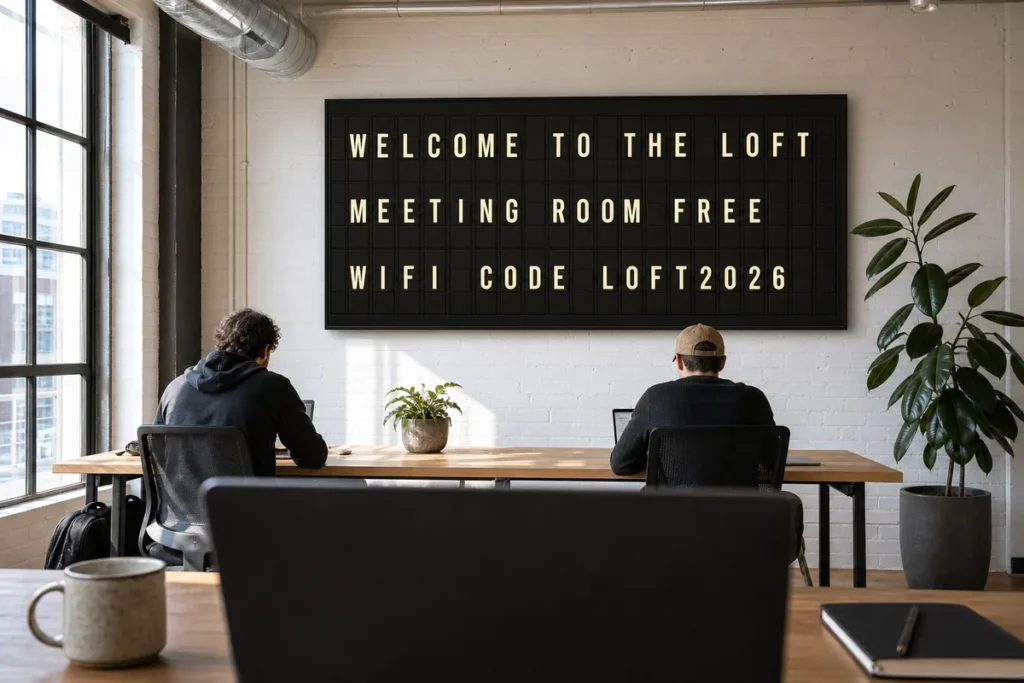
The best split-flap messages feel like they belong in the room. You notice them from across the space, hear the implied click-clack in your head, and understand the point in a second or two. That is the real value behind a guide to split flap style messaging – not just making text move, but making information feel intentional, memorable, and easy to act on.
For customer-facing businesses, that matters more than ever. A lobby sign that answers the same three questions every day reduces interruptions. A menu board that updates in minutes beats taped-over pricing. A welcome display that looks considered, not improvised, quietly raises the standard of the whole space. Split-flap style messaging works when nostalgia and utility show up together.
What split-flap style messaging does best
Classic split-flap boards were never about showing everything. They were about showing the right thing, clearly, with rhythm and presence. That principle still holds.
Split-flap style messaging is strongest when the message is short, text-led, and useful at a glance. Think hours, specials, arrivals, wayfinding, event schedules, room directions, Wi-Fi details, happy hour timing, or a rotating sequence of brand statements and practical updates. It is not built to behave like flashy modern signage packed with motion graphics. Its charm comes from restraint.
That limitation is also a strength. When a display format forces you to simplify, people actually read it. In a busy cafe, boutique hotel, or office reception area, that can be more valuable than a screen trying to do five things at once.
A guide to split flap style messaging starts with one question
What does this sign need to help people do?
That sounds basic, but it is where most messaging goes wrong. Operators often start with what they want to say rather than what visitors need to know. A split-flap board rewards discipline. If the display is greeting guests near the entrance, the priority may be orientation. If it sits behind the counter, the priority may be current offerings. If it lives in a hotel lobby, it may need to balance welcome messaging with useful local or on-site information.
Once you know the job of the screen, the wording gets easier. Instead of writing broad promotional copy, you can write messages that reduce friction. “CHECK IN AT DESK.” “KITCHEN OPEN UNTIL 10.” “WIFI PASSWORD AT REGISTER.” “MEETING ROOM B THIS WAY.” Those lines are plain, but they do real work.
Write for distance, not just style
This is where split-flap style messaging becomes a design tool, not just a content container. The audience usually sees the display while walking, waiting, or scanning a room. They are not settling in to read a paragraph.
Good split-flap copy tends to be brief, high-contrast, and easy to parse in one glance. Short words often outperform clever ones. A line like “TODAY’S SPECIAL” lands faster than “CHEF’S SEASONAL FEATURE,” even if the second sounds more refined. That does not mean your brand voice disappears. It means clarity leads and personality follows.
There is also a trade-off between charm and speed. A playful phrase may fit your space beautifully, but if it delays understanding, it may belong on a secondary page rather than the first frame customers see. The most effective setups often pair a practical headline with a more expressive follow-up message.
Keep each screen focused
A split-flap layout should not feel crowded. If you are working with multiple rows and columns, use that structure to create hierarchy. Lead with the key fact, then support it.
For example, a coffee shop might use the top rows for “ORDER HERE” and the lower rows for “OAT MILK AVAILABLE” or “ASK ABOUT PASTRIES.” A hotel might lead with “WELCOME GUESTS” and follow with “BREAKFAST 7-10 AM.” The point is not to fill every character. Negative space, even in a text grid, helps the message breathe.
Choose rhythm carefully
One of the pleasures of a split-flap display is motion. The flip effect creates anticipation and draws the eye. But too much cycling can make the board harder to use.
If people need stable information, leave messages on screen long enough to be read twice. If you rotate pages, keep the sequence logical. Hours, specials, and service notes should not appear in a random jumble. A clean cadence feels premium. A frantic one feels decorative in the wrong way.
The best use cases for split-flap style messaging
The format shines in spaces where changing information meets strong atmosphere.
Restaurants and bars can use it for specials, hours, featured drinks, trivia nights, and service notes. Boutique hotels can use it for welcome messaging, breakfast hours, event schedules, and local tips. Retail shops can surface promotions, fitting room guidance, return policy reminders, or pickup instructions. Offices can handle guest welcomes, meeting room directions, company announcements, and shared-space etiquette without resorting to laminated signs and tape.
In each case, the display is doing two jobs at once. It communicates information and signals taste. That matters because customers do not separate operations from brand as neatly as businesses do. If your signage feels messy, the experience feels messy. If your signage feels considered, the space feels more composed.
How to build a strong message set
A useful guide to split flap style messaging should deal with the system, not just the sentence. Most businesses need more than one message. They need a small library that can shift by time of day, day of week, or event.
Start with your evergreen messages. These are the details people ask for constantly: hours, ordering instructions, Wi-Fi notes, restroom directions, or recurring offers. Then add your timely messages, such as daily specials, private event notices, holiday hours, or meeting schedules. Finally, add a layer of brand messaging if it supports the moment rather than interrupting it.
That order matters. Utility first, then freshness, then atmosphere.
Scheduling is where this becomes genuinely practical. Morning messaging can differ from evening messaging. Weekday office traffic needs different prompts than weekend hospitality traffic. A board that changes automatically saves time, but it also keeps the display credible. When signs are current, people trust them.
Design choices that change the feel
Split-flap style is distinct enough that small design choices have a big effect. Row and column counts influence pacing. Fewer, larger lines feel bold and public. More rows can feel editorial or timetable-like. Color choices shape the mood. Timing controls shape whether the board feels stately, playful, or urgent.
There is no single correct setup. A cocktail bar may want a darker, moodier palette and slower transitions. A bakery may benefit from brighter contrast and faster rotation between specials. An office lobby may need a cleaner, quieter tempo that reads as polished rather than theatrical.
Sound is another judgment call. The click-clack effect is part of the appeal, but it depends on the environment. In some spaces it adds delight and theater. In others, especially quieter professional settings, it may work best as an occasional accent rather than a constant layer.
Where businesses overdo it
The biggest mistake is treating split-flap like a novelty prop. Nostalgia gets people to look once. Relevance gets them to keep using it.
That means avoiding overloaded copy, too many rotating pages, and vague brand slogans that never answer a real question. It also means resisting the urge to make every message witty. A little personality goes a long way. “HAPPY HOUR 5-7” is usually more effective than a line that tries too hard to sound clever.
Another common issue is forgetting who updates the system. The best signage strategy is one your team can maintain during a busy shift. If changing content feels like a chore, accuracy slips. A better approach is to build a display system around simple templates, clear categories, and schedules that reduce manual work.
Why this format keeps working
There is a reason split-flap boards still turn heads. They create a small public moment. The motion, the structure, the old-school orderliness – it all signals that what is being shown matters.
That effect is especially powerful now because so much visual communication feels disposable. A split-flap style display feels chosen. It gives plain text a kind of ceremony, which is rare and useful in customer-facing spaces.
That is why businesses keep returning to it, from neighborhood hospitality spots to polished urban interiors. The format carries cultural memory, but it also solves everyday problems. It replaces handwritten clutter with something cleaner. It replaces reprinting with quick updates. It turns routine information into part of the environment.
If you are building your own approach, start small and stay intentional. Pick the messages people need most, write them with discipline, and let the display do what it has always done best – make simple information feel worth noticing.