
Coworking Spaces: How Shared Offices and Split-Flap Style Displays Transform Modern Work
April 20, 2026 · Kurt Dupont
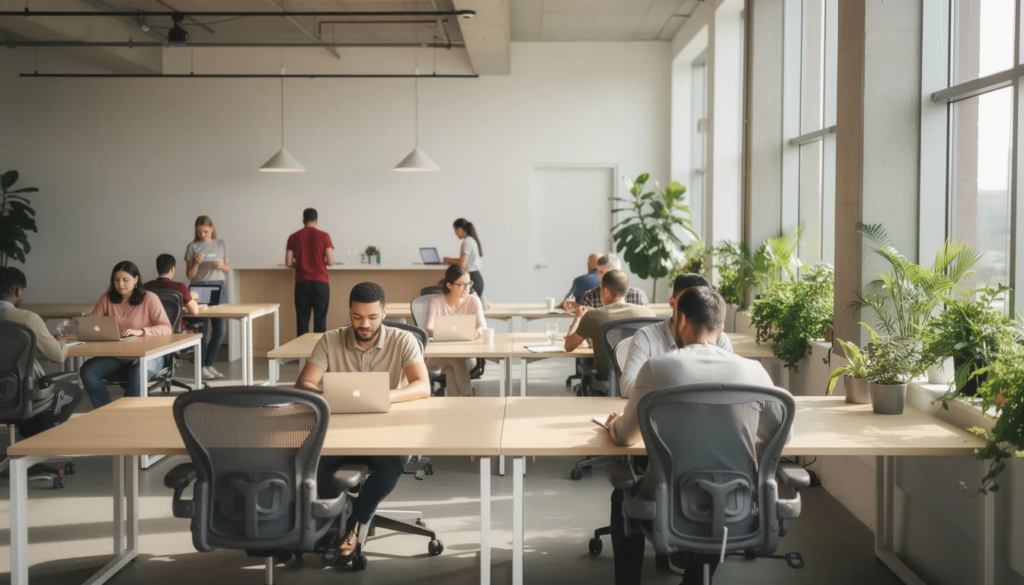
Coworking spaces are shared, flexible, and fully equipped office environments designed for freelancers, entrepreneurs, remote workers, and businesses of all sizes to work individually or collaboratively. This article is crafted for freelancers, startups, remote workers, and business owners who want to understand how coworking spaces—and the use of digital signage—can help them save costs, boost productivity, foster community, and streamline communication in today’s evolving work landscape.
Understanding coworking spaces and digital signage matters because these environments offer a flexible work solution that adapts to your needs, whether you’re a solo entrepreneur seeking networking opportunities, a startup scaling your team, or a remote worker looking for a professional setting. Digital signage, including nostalgic split-flap style displays, enhances the coworking experience by providing real-time updates, event schedules, and community announcements, making it easier to stay informed and engaged.
This comprehensive guide covers the major benefits, considerations, and features of coworking spaces—including cost savings, flexibility, community, networking, productivity, amenities, internet speed, security, privacy, membership types, and the use of digital signage—so you can make informed decisions about your workspace.
What Is Coworking?
Coworking spaces are shared, flexible, and fully equipped office environments designed for freelancers, entrepreneurs, remote workers, and businesses of all sizes to work individually or collaboratively. Unlike traditional offices tied to a single organization, coworking spaces operate as flexible hubs where anyone can rent access to professional workspace and amenities.
Options for workspace in coworking environments include hot desks, dedicated desks, and private offices. Hot desks offer open seating where members grab any available spot on a first-come basis. Dedicated desks provide reserved seating for those who want the same workspace every day, often with lockable storage. Private office suites accommodate teams needing enclosed rooms with doors. Meeting rooms serve groups for client calls, brainstorming sessions, or team standups. Phone booths give members quiet spots for calls without disturbing others. Communal lounges and kitchens round out the environment, encouraging casual interaction.
Most coworking spaces operate on a BYOD (bring your own device) model. Members show up with their laptops, tablets, or other devices, while the space provides high-speed internet, printing facilities, coffee services, and booking infrastructure for shared resources. This setup keeps overhead low and lets people work exactly how they prefer.
The industry saw notable growth after COVID-19 reshaped work patterns between 2020 and 2022. As companies adopted hybrid policies and reduced traditional office footprints, coworking became a strategic alternative. The global market reached approximately $20.96 billion in 2025, with around 42,000 spaces worldwide projected to grow to 44,000 by 2026.
Many operators have also invested in digital infrastructure to manage modern member expectations. Booking apps, keyless access via mobile devices, and lobby displays using services like Split-Flap TV, a modern split-flap display platform help spaces communicate efficiently and create memorable first impressions.
Flexibility
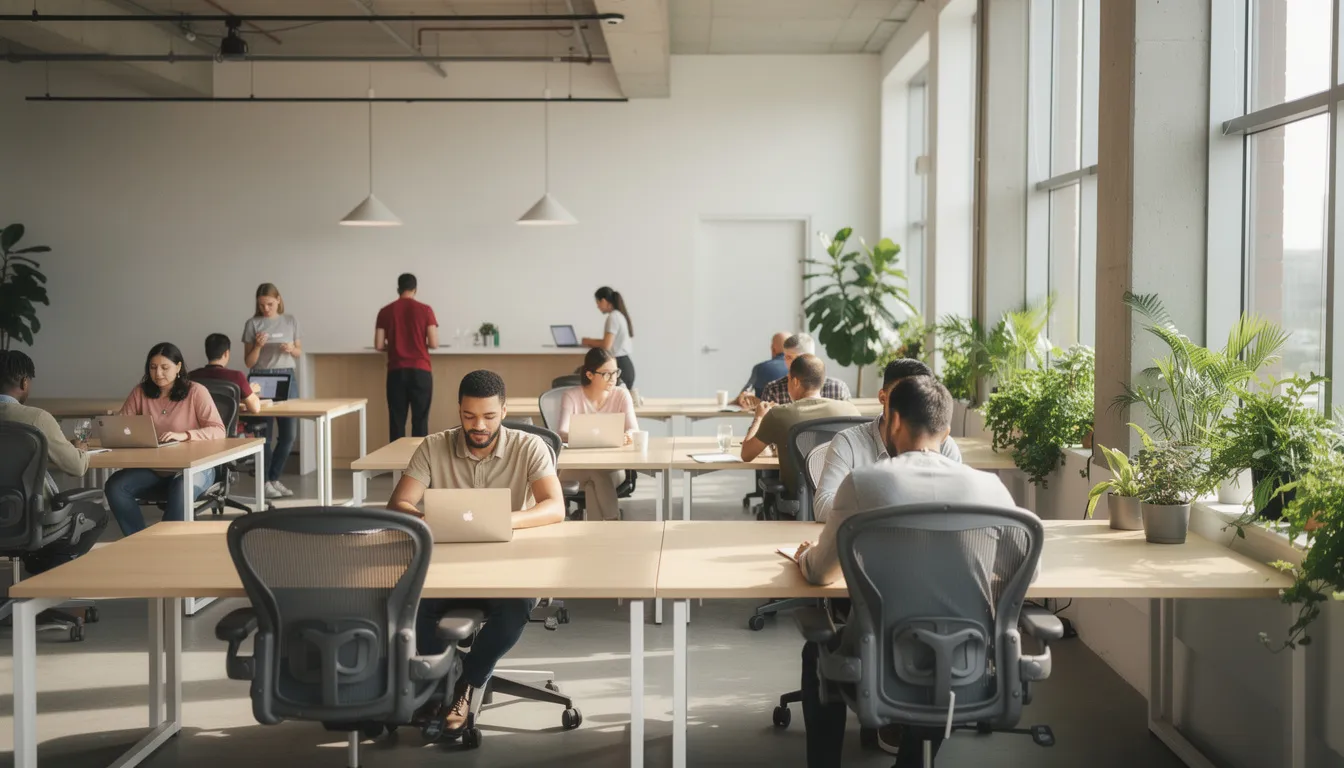
Flexibility sits at the heart of why coworking appeals to so many different types of workers and organizations. Coworking spaces provide a flexible work environment that can adapt to the needs of freelancers and small businesses.
Traditional commercial leases lock tenants into 3–10 year agreements with significant upfront costs and limited ability to adjust. Coworking contracts, by contrast, typically run month-to-month or on short terms, letting members scale up or down as their needs change.
Consider a growing startup. A founding team of two might begin with hot desk memberships, paying only for flexible seating. Six months later, after hiring three more people, they upgrade to a cluster of dedicated desks with reserved spots. A year in, they transition to a small private office within the same building—no lease renegotiation, no moving trucks, no build-out costs. This kind of fluid scaling would be nearly impossible in a traditional office setting.
Many spaces extend flexibility further with day passes for occasional users, part-time memberships for those who only need access a few days per week, and 24/7 access options for teams working across time zones or unusual schedules. Operators frequently reconfigure floor layouts, and dynamic content on digital displays can instantly update desk maps and wayfinding information when changes happen.
Transitioning from flexibility, let’s explore how coworking spaces foster a sense of community.
Sense of Community
Beyond desks and internet access, community is what transforms a coworking space from a generic office into a place members genuinely want to spend time. Coworking spaces foster a sense of community among members, helping to replicate the social interactions often missed in remote work.
Spaces often host regular events—such as:
- Weekly coffee mornings
- Monthly skill-share sessions
- Launch parties for member companies
These gatherings recreate the casual hallway interactions that remote workers lost when they left traditional offices after 2020.
Operators use physical noticeboards and digital signage to keep the community informed. A retro-style split-flap display in the lobby might announce a member’s birthday, celebrate someone landing a big client, or remind everyone about Thursday’s lunchtime workshop. Research suggests 88% of coworking members report reduced feelings of isolation, and 80% actively seek help from peers in their space. In fact, 83% of members report feeling less lonely and 89% report being happier due to their involvement in coworking spaces.
Imagine walking into your coworking space on a Monday morning. The split-flap board near the entrance clicks and flips to reveal: “WELCOME BACK / COFFEE CHAT 9:30 / ROOFTOP TERRACE.” You grab a coffee, head upstairs, and end up in a conversation with a UX researcher who gives you feedback on a project you’ve been stuck on. That kind of spontaneous connection is exactly why community keeps members renewing long term.
After understanding the importance of community, let’s look at the networking opportunities coworking spaces provide.
Opportunity for Networking
Shared kitchens, lounges, and hot-desk areas naturally create chances to meet people you’d never encounter in a traditional office. Networking opportunities in coworking spaces can lead to meaningful connections and potential business collaborations.
A software developer waiting for the coffee machine might strike up a conversation with a freelance marketer at the next desk. That chat leads to an introduction to a startup founder looking for technical help. Three months later, they’re working together. These organic networking events happen constantly in well-designed coworking environments.
Many spaces amplify these opportunities by curating member directories or displaying rotating member spotlights on front-desk screens. A digital signage board might show: “MEMBER SPOTLIGHT / SARAH CHEN / BRAND STRATEGY / DESK 14B”—prompting curious neighbors to introduce themselves.
The key to effective networking in coworking is keeping interactions informal and friendly rather than aggressive selling. Nobody wants their coffee break interrupted by a pitch. The best connections happen when people genuinely help each other, with 65% of coworking members reporting they’ve passed work or referrals to others in their space. In fact, 82% of members expand their professional network after joining coworking spaces.
With networking covered, let’s see how coworking spaces can boost productivity and creativity.
Increased Productivity and Creativity
Leaving home—and its many distractions—for a professional environment can dramatically improve focus and routine. Working in a coworking space can enhance productivity and creativity by exposing individuals to diverse perspectives and ideas.
At home, the refrigerator calls. The laundry pile grows. Family members interrupt. A dedicated workspace with clear boundaries between “work mode” and “home mode” helps many people concentrate better. Studies suggest 85% of coworking members feel more motivated than when working from home.
Good coworking spaces support productivity with practical features, such as:
- Quiet zones with low-noise policies for deep work
- Phone booths and call rooms for private meetings
- Booking systems for meeting rooms to prevent scheduling conflicts
- Clear house rules about noise, phone etiquette, and shared kitchen cleanup
Beyond focus, exposure to other industries and disciplines sparks creativity. A graphic designer overhears a conversation about supply chain logistics and gets an idea for visualizing data differently. A consultant watches a video editor’s workflow and discovers a new collaboration platform. Some operators use digital displays to show daily schedules, deadlines for shared resources, and even inspirational messages that help members stay on track throughout the day.
Now that we’ve discussed productivity, let’s examine the cost savings and financial considerations of coworking spaces.
Lower Costs
Coworking members share costs that would otherwise fall entirely on a single company or individual. This results in significant savings compared to operating a private office.
Rent, utilities, cleaning, reception, internet, furniture, printers, meeting room technology—all these expenses get distributed across dozens or hundreds of members. The result is significant savings compared to operating a private office.
For example, a small startup with four people might face $150–200 per square foot in build-out costs for a traditional office, plus ongoing expenses for cleaning, utilities, and reception. Instead, that same team can rent four dedicated desks in a coworking space for a predictable monthly fee that bundles everything together.
Research indicates coworking can save $11,000–$13,000 per employee annually compared to traditional leases in major cities when accounting for all hidden costs. Amenities like coffee, front-desk services, and managed IT are included, turning variable expenses into a single, predictable line item.
Even technology infrastructure costs less in a shared model. Digital signage solutions like Split-Flap TV can replace expensive custom LED installations with simple TVs running affordable software subscriptions—an option that benefits both operators and members looking for cost effective communication tools.
With cost savings in mind, let’s consider the potential downsides of coworking spaces.
Potential Downsides of Coworking Spaces
Coworking isn’t perfect for everyone, and understanding the trade-offs helps you make an informed decision.
- Noise and distractions are the most common complaints. Open-plan areas mean you’ll hear phone calls, conversations, keyboard clatter, and occasional events happening nearby. Even with quiet zones and house rules, some people find it difficult to concentrate in shared environments.
- Branding and control are limited compared to a fully private office. You can’t paint the walls your company colors, hang custom artwork wherever you want, or control the music playing in common areas. Members must follow shared aesthetics and community guidelines.
- Competition concerns occasionally arise. If your startup shares a space with a company in a very similar niche, you might feel uncomfortable discussing strategy or sensitive projects in public areas. For roles involving confidential client data—lawyers handling NDAs, therapists, financial advisors—open seating may not provide adequate privacy.
- Social overload can affect some members. Not every personality thrives in high-energy community environments. Quieter zones and private office options can mitigate this, but not all spaces offer them.
These downsides aren’t deal-breakers for most people, but they’re worth evaluating honestly before committing to a membership.
Understanding these challenges, let’s look at how much coworking spaces typically cost.
How Much Do Coworking Spaces Cost?
Pricing varies significantly based on location, amenities, and membership type.
- Hot desk memberships—flexible seating in open areas—typically range from $100–$250 per month in smaller cities and secondary markets. In major hubs like New York, San Francisco, or London, expect $300–$600 or more for similar access.
- Dedicated desks cost more, reflecting reserved seating that’s yours every day, often with lockable storage underneath. Prices might run 30–50% higher than hot desk rates in the same location.
- Private office pricing depends on capacity and building location. A two-person office might start around $800–1,200 monthly in a mid-tier market, while a ten-person suite in a prime downtown location could exceed $5,000.
Extras influence total cost significantly. Meeting room credits let you book conference spaces, but exceeding your included hours means additional charges. Mail handling, printing allowances, and premium coffee services may be bundled or billed separately. Technology services—fast internet, meeting room displays, lobby screens running tools like Split-Flap TV—are often included but occasionally appear as add-ons in larger coworking chains.
The median U.S. coworking membership sits around $225 per month, with day passes averaging $30 for occasional users who don’t need full-time access.
Now that you know the costs, let’s discuss what to consider when choosing a coworking space.
What to Consider When Choosing a Coworking Space
Finding the right space requires more than comparing prices. The details of daily experience—atmosphere, noise levels, communication systems, and how staff treats members—make a significant difference.
Before committing, follow these steps:
- Physically tour at least two or three spaces during typical working hours.
- Pay attention to how information flows. Are announcements clear? Can you easily find meeting rooms? Does digital signage help or is it absent entirely?
- Observe the environment, amenities, and staff interactions.
- Imagine your typical workday unfolding in each environment before committing.
These seemingly small factors shape whether you’ll enjoy showing up every day.
Location
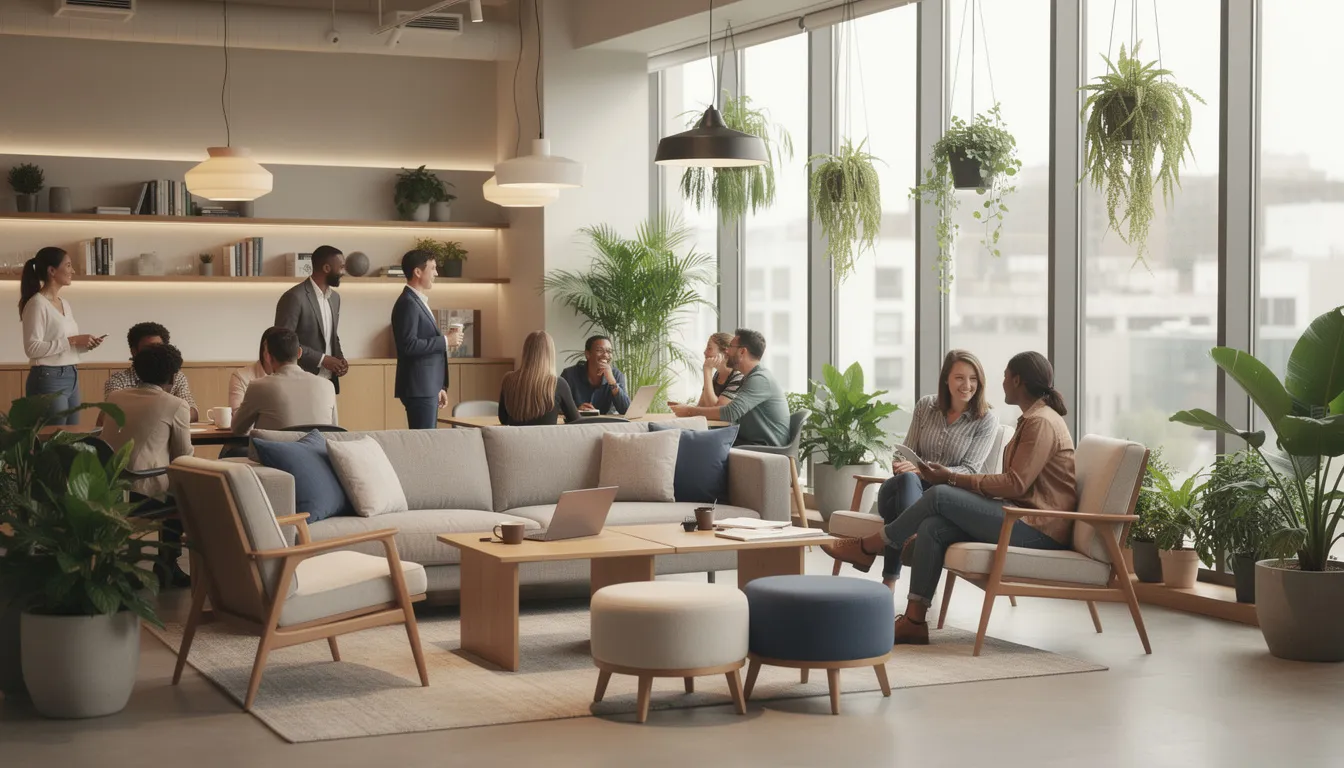
The address of your workspace affects your daily routine, client perceptions, and practical logistics.
Consider:
- Commute time during rush hour
- Proximity to public transportation
- Parking availability and costs
- Neighborhood safety and amenities
A central business district location near train stations and transportation hubs might offer prestige and easy client access but could mean a longer commute from residential areas. Neighborhood spaces in converted warehouses or suburban districts often sit closer to where members actually live, aligning with the growing “15-minute city” trend.
Think about who needs to visit you. If clients regularly come to your workspace, a downtown address may matter. If your team works autonomously and rarely hosts visitors, proximity to home might be more valuable.
For large multi-floor coworking hubs, digital wayfinding displays help visitors quickly navigate to the right office or meeting room—worth noting when evaluating larger spaces.
Amenities
Amenities offered by a coworking space can significantly influence the overall experience and cost.
Essential amenities include:
- High-speed internet
- Meeting rooms with screens for presentations
- Printers and scanners
- Phone booths or call rooms for private conversations
- Secure lockers for equipment
- Well-maintained kitchen facilities with coffee and refrigerators
- Reliable climate control
- Robust power backup and electricity provisions
Modern extras may include:
- Podcast rooms with professional audio equipment
- Event venues for workshops and networking events
- Bike storage with showers for cycling commuters
- Wellness rooms for meditation or nursing mothers
- Child-friendly zones for parents
Access to high-speed internet, printers, scanners, and, in some cases, refreshments is commonly available in coworking spaces.
Well-managed digital signage makes daily life smoother. A display in the lobby showing meeting room bookings, current wi-fi credentials, and community updates reduces confusion and support requests. Split-Flap TV on a lobby television can handle exactly this kind of real-time content, rotating through useful information throughout the day.
When comparing spaces, clarify which amenities are included in your membership tier versus charged separately. A cheaper base rate with expensive add-ons might cost more than a slightly pricier all-inclusive option.
Office Environment and Atmosphere
Some coworking spaces feel corporate and minimalistic—neutral colors, glass partitions, quiet professionalism. Others lean toward creative and artistic vibes with exposed brick, colorful murals, and startup energy. Neither is inherently better; the question is which environment helps you do your best work.
Lighting significantly impacts focus and mood. Natural light through large windows generally beats harsh fluorescent overhead fixtures. Music volume matters too—some people thrive with background beats while others need silence. Decor choices like plants, artwork, and interesting visual elements such as retro-inspired split-flap displays create character without clutter.
Visit during typical peak times, usually mid-morning or early afternoon on weekdays. Observe noise levels, crowding in common areas, and whether the atmosphere feels energizing or distracting. Trust your instincts about whether you’d enjoy spending eight hours a day in this environment.
Flexibility
Membership flexibility matters more than you might initially realize.
Check whether you can change plans easily—upgrading from hot desk to dedicated desk, or moving into a private office as your team grows. Understand minimum terms, notice periods for cancellation, and security deposit requirements. Some spaces lock members into multi-month commitments while others offer true month-to-month arrangements with flexible memberships.
Access hours vary significantly. Standard 9-to-5 access works for some, but teams collaborating across time zones or working non-traditional schedules need 24/7 entry.
Hybrid teams may value multi-location access across a digital signage network of coworking spaces in different cities. If your company has remote employees scattered geographically, membership programs offering access at dozens or hundreds of locations provide significant value.
Ask how the space handled membership changes during 2020–2022 when the pandemic disrupted normal operations. Spaces that worked with members during that difficult period likely demonstrate fairness and responsiveness you can rely on in the future.
Privacy
Different membership levels offer vastly different privacy experiences.
- Hot desk areas provide minimal privacy—you’re in an open environment where anyone can see your screen and hear your conversations.
- Dedicated desks offer slightly more consistency but still exist in shared zones.
- Only fully enclosed private office suites deliver complete visual and acoustic separation.
Consider your actual work requirements. Do you regularly handle confidential client calls? Work with sensitive financial or health data? Discuss strategy your competitors shouldn’t overhear? Professionals like lawyers, consultants, and therapists often need more controlled environments than open coworking provides.
Some operators offer privacy-focused phone booths and meeting rooms bookable through apps, with availability displayed on digital room-schedule screens throughout the space. Before committing, physically test these booths. Do doors close properly? Does sound insulation actually work? Are booking systems reliable and intuitive?
Internet Speed
Reliable, high-bandwidth internet is non-negotiable for modern work.
Video calls, large file uploads, cloud-based collaboration tools, and screen sharing all demand consistent connectivity. A beautiful space with spotty internet becomes unusable quickly.
During your tour, run a quick speed test on both the guest wi-fi network and, if the operator permits, the member network. Check both download and upload speeds—many people focus only on download but upload matters equally for video calls and cloud backups.
Coworking spaces that also run digital displays and room-booking screens demonstrate they handle multiple simultaneous network demands well. If the lobby display updates smoothly while dozens of members stream video calls, the underlying infrastructure is probably solid.
Ask about redundancy. Does the space have backup internet lines for outages? In locations where connectivity problems are common, this matters significantly.
Security
Physical and digital security both deserve attention.
Most coworking spaces provide:
- Keycard or app-based access control
- Staffed reception during business hours
- CCTV in public areas
- Lockable storage for equipment—either personal lockers or desk drawers
Digital security is equally important. Guest and member networks should be segmented so visitors can’t access internal systems. Password policies for shared devices like printers and presentation computers should be sensible. Front-desk digital displays should avoid exposing sensitive information; well-configured tools like Split-Flap TV can show anonymized schedules or community announcements without revealing confidential details.
Evaluate your comfort level honestly. Would you feel safe leaving your laptop overnight? Could a visitor easily wander into member-only areas? Trust your instincts during tours.
Budget
Creating a realistic monthly budget prevents surprises.
Start with the base membership fee, then add likely meeting room overages if your included hours won’t be enough. Factor in printing costs if you produce significant paper documents. Include commuting expenses—transit fares, parking fees, or fuel costs.
Compare coworking to traditional office alternatives honestly. Traditional leases involve hidden costs that coworking bundles together: cleaning services, utilities, furniture depreciation, front-desk staff, and equipment maintenance. Setup costs for traditional offices run $150–200 per square foot versus essentially zero upfront for coworking.
Different scenarios require different thinking:
- A solo freelancer might spend $225 monthly for a hot desk membership plus occasional meeting room fees, totaling around $250–300 including coffee and incidentals.
- A three-person startup could spend $1,000–2,000 total for dedicated desks with storage, meeting room credits, and mail services.
- A ten-person remote team hub might allocate $5,000 or more monthly for a combination of private office space and flexible hot desks for visiting employees—still potentially saving significantly versus a traditional lease.
Check whether pricing includes technology extras like digital meeting screens, display software for announcements, or premium internet tiers, or if those features cost additional fees.
Ease of Commuting
Commute time impacts daily energy, punctuality, and whether team members actually use the space consistently.
Evaluate practical factors:
- Nearby bus and train lines
- Parking costs and availability
- Cycling routes
- Whether the building offers bike racks and showers for active commuters
Central locations may cost more but save time and provide easier access for clients and partners.
Do a test commute at actual rush hour before signing up. The difference between a theoretical 20-minute trip and a realistic 45-minute slog through traffic changes the calculus significantly.
Extra Costs
Understand what falls outside your base membership.
Common extra charges include:
- Meeting room hours beyond your included quota
- After-hours building access
- Event space rental
- Premium coffee or alcohol
- Postal services like mail forwarding or package acceptance
- Lockers
- Parking passes
- Specialized equipment access like podcast studios and video production rooms
Larger coworking chains occasionally bill digital signage solutions for internal branding and communication as separate add-ons rather than included infrastructure.
Request a full price sheet before committing. Ask for examples of what a typical member’s all-in monthly spend looks like after extras. Transparency here indicates how the operator treats members generally.
With these considerations in mind, let’s now explore how digital signage and split-flap style displays enhance coworking spaces.
How Coworking Spaces Use Digital Signage and Split-Flap Style Displays
Modern coworking spaces are communication hubs, not just desk providers. Managing information flow for dozens or hundreds of members—plus visitors, delivery drivers, and cleaning staff—requires more than occasional email blasts.
Digital signage transforms ordinary televisions into dynamic information centers. Platforms like Split-Flap TV as the future of digital signage show how digital signage systems can be managed through centralized content management systems (CMS), enabling remote updates and real-time data integration. Announcements, safety information, room schedules, community celebrations, and wayfinding guidance can all appear on screens throughout a space, updating in real time without printing costs or manual poster changes.
Split-Flap TV offers a distinctive approach by recreating the nostalgic split-flap display aesthetic—those mechanical letter boards from 1960s train stations and airports—on modern hardware. Digital signage hardware includes display devices, playback devices, and mounting systems, while software is responsible for content creation, scheduling, and management. Operators can install the software on smart TVs, media player devices, or tablets, then manage rotating messages, events, weather information, and social media counters from any browser. Digital signage can be set up quickly, often in under five minutes, by simply plugging the device into a screen via HDMI and connecting it to the local network.
Digital signage solutions can transform any screen or TV into a dynamic platform to engage customers and employees, and can be tailored to fit different industries. Digital signage can be used to display rotating messages, schedules, weather, and social counters in a visually engaging manner, using images and larger displays for maximum impact. Interactive digital signage allows users to interact directly with displays using input methods like touch, gestures, or voice, improving convenience and user experience. Digital signage can incorporate audience analytics, IoT sensors, or AI-driven personalization to enhance content delivery and engagement, and it is widely used in various environments including corporate buildings, educational institutions, and public spaces. Content can be updated via cloud-based platforms for centralized control or through direct interfaces on-site, depending on the system’s configuration, and networked digital signage systems enable remote updates, scheduling, real-time data integration, and dynamic content delivery. Digital signage can enhance communication and engagement within shared work environments by providing real-time updates and information. Digital signage solutions can be integrated with various applications to showcase dynamic content across multiple screens. Digital signage systems can be either networked or standalone, with networked systems managed through centralized content management systems. Operators can manage digital signage content and settings easily from a computer, smartphone, or app, offering convenience and flexibility. Digital signage is designed to capture attention and engage different audiences, including customers, in public and commercial settings.
The result combines practical communication with memorable visual identity. A lobby screen clicking through announcements in modern split-flap style displays captures attention and creates a conversation starter that generic digital displays simply can’t match.
Real-Time Messaging for Members
Coworking managers juggle constant communication needs. Welcome messages change daily. Room assignments shift. Last-minute events get announced. Fire drills need coordination.
With Split-Flap TV’s getting-started platform, operators can update display content from any browser using an intuitive interface. Change the welcome message in the morning, add a “Quiet Hours 2-4 PM” notice after lunch, and post a “Fire Drill at 3:00 PM” alert before departure—all from a laptop or phone without touching the physical screen.
Multiple screens across lobbies, corridors, and common areas can connect to the same Split-Flap TV content management and guides system, delivering consistent messaging throughout the space. Integrations with date, time, weather, and social media follower counts keep displays fresh and relevant without manual updates.
Imagine a lobby with a large television running Split-Flap TV. As members arrive, the board clicks through: “GOOD MORNING / TODAY’S EVENTS / YOGA 12:30 / ROOFTOP.” Later it shifts to: “QUIET HOURS / 2-4 PM / FOCUS MODE.” The mechanical flip aesthetic feels warm and distinctive compared to generic scrolling text.
Community, Events, and Culture Displays
Community building requires consistent, visible communication. Split-flap style boards excel at highlighting the human elements that make coworking special.
Member spotlights can rotate throughout the day: “WELCOME NEW MEMBER / ALEX RIVERA / PRODUCT DESIGN / DESK 7A.” Birthday celebrations appear naturally: “HAPPY BIRTHDAY / MARIA SANTOS / STOP BY KITCHEN FOR CAKE.” Workshop reminders count down: “PITCH PRACTICE / TOMORROW 5PM / ROOM 2B.”
A retro aesthetic board in the kitchen or café area becomes a recognizable part of the space’s brand—something members photograph and share on social media, extending reach without advertising spend.
Scheduling features let operators pre-program weekly or monthly content. Set up the Thursday lunch talk announcement once, and the board automatically updates as events approach. Plan an entire month of member birthdays and let the system handle timing. This automation frees community managers to focus on personal interactions rather than poster logistics.
Wayfinding, Room Schedules, and Hybrid Teams
Large coworking campuses with multiple floors or buildings present navigation challenges for visitors and new members alike.
Split-flap style display boards near elevators, lobbies, or reception areas can show real-time room and event allocation. Messages like “MEETING / ACME MARKETING / ROOM 3B / 10-11 AM” help visitors find their destination without constantly asking staff. “WORKSHOP / DESIGN THINKING / FLOOR 3 EAST / ALL DAY” guides attendees to the right location.
Hybrid teams using coworking spaces a few days per week benefit from coordination displays. A board showing “IN TODAY / SARAH / JAMES / PRIYA / DESK AREA C” reinforces who’s present and where to find them. This simple visibility reduces the friction of distributed team coordination.
Clear, dynamic content on signage makes the entire guest experience more polished. Front-desk staff spend less time giving directions. Members feel informed. The space operates more smoothly while projecting professionalism.
Example messages that might appear on a Split-Flap TV board:
- “WELCOME / VISITING TEAM FROM INITECH / FLOOR 2 CONFERENCE”
- “ROOM 4A / AVAILABLE AFTER 2PM / BOOK AT RECEPTION”
- “TODAY’S WIFI / NETWORK: MEMBERS / PASSWORD: WORKSPACE2025”
- “HYBRID DAY / MARKETING TEAM / DESKS 12-18”
With digital signage covered, let’s look at how private office solutions fit into coworking spaces.
Private Office Solutions in Coworking Spaces
For professionals and teams who crave a deeper sense of sanctuary, coworking spaces offer private office solutions that beautifully marry two essential human needs: the quiet focus that feeds creativity and the warm buzz of community connection. These private offices feel like personal retreats—carefully crafted spaces for companies navigating confidential projects, hosting intimate client conversations, or simply seeking that precious calm away from the energetic rhythm of open collaboration areas.
Flexible memberships allow businesses to breathe and grow with their private office space as their story unfolds, whether it’s a cozy single-person sanctuary or an expansive office where a growing team can flourish together. Customizable layouts mean companies can shape their workspace to mirror their unique rhythm, express their authentic brand personality, and create the security that lets them work with confidence. Meanwhile, members enjoy effortless access to shared amenities—lightning-fast internet that never disappoints, printing services that just work, and those meaningful networking events where real connections spark—making it feel natural to weave relationships with other companies and professionals who share this vibrant ecosystem.
Private office solutions in coworking spaces create that rare secure haven where intellectual property and sensitive conversations are truly protected, while still embracing the magic of collaborative energy that flows through the community. This thoughtful blend of privacy, adaptability, and human connection makes private offices an inspired choice for businesses seeking both independence and belonging within a workspace that feels alive and purposeful.
Now, let’s explore how coworking space design can further enhance the member experience.
Coworking Space Design: Creating Inspiring Work Environments
The design of a coworking space transcends mere aesthetics—it’s about crafting an environment that ignites wonder, sparks meaningful connections, and nurtures that childlike excitement of discovery.
Thoughtful coworking space design weaves together:
- Natural light that dances across surfaces
- Ergonomic seating that cradles creativity
- Modern decor that whispers stories of innovation
This creates a welcoming atmosphere where members feel that delightful sense of possibility, where ideas bloom naturally and collaboration feels effortless.
Digital displays become magical storytellers in these spaces, transforming cold walls into vibrant canvases of community life. By embracing free digital signage software and split-flap TV ideas from our blog, coworking operators can celebrate member achievements, showcase upcoming events, and share community news that pulses with real‑time energy.
These digital signage platforms don’t just add a modern touch—they become the heartbeat of the space, a living platform for human connection where members share their dreams, their struggles, their triumphs, finding kindred spirits who speak their creative language.
A well‑designed coworking environment becomes a stage for serendipity, where spontaneous conversations bloom like wildflowers and dynamic communities flourish. Whether it’s a cozy lounge that cradles brainstorming sessions like a favorite armchair, or a vibrant wall featuring rotating digital displays that tell ever‑changing stories of human ambition, every element is chosen with the tender care of a curator building a home. By honoring both form and function with equal reverence, coworking spaces transform into sanctuaries of inspiration—places where innovation doesn’t just survive, but dances with joy.
Next, let’s see how free digital signage software can support these environments.
Free Digital Signage Software for Coworking Spaces
Adopting free digital signage software is a genuinely smart choice—kind of a delightful discovery for coworking spaces seeking that perfect balance of cost-effectiveness and meaningful member connection.
There’s something deeply satisfying about digital signage software that lets operators craft, schedule, and refresh content with such intuitive ease across their entire environment. Whether it’s creating those warm welcome moments for new members, building anticipation around upcoming events, or sharing those essential real-time details like weather updates and wi-fi credentials—the experience feels both effortless and purposeful.
Free digital signage software works with such seamless elegance across different operating systems and hardware—there’s a real appreciation for how simple installation becomes, how naturally it scales across as many screens as your space needs.
The interface feels genuinely intuitive, almost like it anticipates what staff need, allowing them to update messages with that satisfying immediacy that keeps members and visitors connected to the freshest information.
Multi-screen support creates something beautiful—content that’s thoughtfully tailored for different zones, whether it’s the welcoming lobby atmosphere, the focused energy of meeting rooms, or the relaxed vibe of lounges—all without those additional software costs that can drain operational joy.
By embracing these meaningful features, coworking spaces can deliver digital displays that feel engaging, informative, and genuinely appealing—creating those memorable moments that enhance the member experience while keeping operational costs refreshingly low.
The ability to manage content in real-time, combined with support for such a wonderful range of devices, makes free digital signage software feel less like a tool and more like an essential companion for any modern coworking business that values authentic connection.
Let’s now discuss how to build a digital signage network in shared offices.
Building a Digital Signage Network in Shared Offices
Creating a digital signage network in shared offices becomes something almost magical—a way to weave together stories, connections, and a sense of belonging that transforms sterile spaces into vibrant communities.
By thoughtfully integrating digital signage software with carefully chosen displays and media players, shared offices can craft an experience that feels both purposeful and delightfully engaging, where every screen becomes a window into the heartbeat of the community.
A digital signage network offers something beautifully orchestrated—the ability to create moments of connection that feel both intentional and organic. Every screen, whether greeting members in the lobby with warm welcomes, sharing community celebrations in the kitchen, or enhancing meeting spaces with inspiring content, becomes part of a larger story that members genuinely want to be part of.
Using free digital signage software, shared offices can create content that doesn’t just inform but truly resonates—promoting upcoming gatherings that people anticipate, highlighting achievements that make everyone smile, and fostering announcements that feel like conversations rather than broadcasts, all while maintaining an approach that feels both authentic and sustainable.
The beauty of digital signage networks lies in their ability to grow naturally with the community—new split-flap installations across different environments becoming seamless extensions of an already meaningful experience.
This approach creates something rare in today’s digital world: technology that genuinely enhances human connection rather than replacing it. By building a thoughtful digital signage network, shared offices cultivate an environment where members don’t just stay informed—they feel truly seen, valued, and part of something larger than themselves, creating a community that feels both supportive and wonderfully alive.
Finally, let’s look at how events and community activities bring coworking spaces to life.
Coworking Space Events and Community Activities
Events and community activities pulse through any successful coworking space like lifeblood—transforming sterile office environments into vibrant ecosystems where human connection flourishes.
The magic happens when networking events, workshops, and seminars create those spontaneous moments of discovery—when strangers become collaborators, when shared knowledge sparks unexpected innovations, and when professional relationships bloom into lasting friendships that extend far beyond conference room walls.
Types of events and activities include:
- Networking events
- Workshops and seminars
- Volunteer days
- Themed potlucks
- Game nights
Community activities breathe soul into these spaces—volunteer days that unite members around meaningful causes, themed potlucks where aromas mingle with animated conversations, game nights where laughter echoes through corridors and barriers dissolve naturally.
Digital signage and free digital signage software become the storytellers of this community—not merely displaying information, but crafting anticipation and wonder. These displays pulse with life throughout the space, sharing event details that spark curiosity, reminders that build excitement, and highlights that celebrate shared experiences.
The screens become conduits of connection, generating that palpable energy that makes members pause, engage, and participate. When coworking spaces embrace this human-centered approach to community building, they create something extraordinary—vibrant ecosystems where members don’t just work alongside each other, but truly thrive together, both professionally and personally, in ways that feel authentic and deeply meaningful.
By understanding the full spectrum of coworking space benefits, considerations, and features—including cost savings, flexibility, community, networking, productivity, amenities, internet speed, security, privacy, membership types, and digital signage—you can make the best choice for your work style and business needs.