
Startup Coffee Shop: Step-by-Step Guide to Opening in 2026
May 20, 2026 · Kurt Dupont
Opening a coffee shop has never felt more achievable—or more competitive. US coffee shop revenue surpassed $11 billion in 2023, and roughly 65% of American adults drink coffee daily. The specialty coffee movement shows no signs of slowing, with the market growing at 3-5% annually through 2026, driven by premiumization and third-wave culture emphasizing single-origin beans and craft brewing methods.
A startup coffee shop is typically an independent, first-time café—not a franchise. Think under 1,500 square feet, fewer than 10 employees, and an owner who’s deeply involved in daily operations. These ventures are born from common motivations: escaping corporate jobs, channeling a genuine love for specialty coffee, or building a “third place” where neighbors become regulars.
This guide is a practical roadmap for starting a coffee shop, walking you step-by-step from idea to opening day. It covers the entire process of starting a coffee shop, including how to validate your market, build a solid business plan, secure funding, design your space, and launch with confidence. We’ll also explore a unique angle that can set your shop apart: incorporating analog-digital design elements like a split-flap TV style menu board to create a memorable brand experience that drives both word-of-mouth and impulse purchases.
Your Roadmap to a Successful Startup Coffee Shop
Starting a café carries real risk—industry data suggests a 50% first-year closure rate for underplanned ventures, while top performers achieve $1,500 per square foot in annual sales versus the industry average of $800. The difference often comes down to following a clear sequence rather than improvising.
Here’s your roadmap in seven stages:
- Clarify your why and niche – Define your personal motivations and the specific type of café you’ll build
- Validate your market – Research demographics, foot traffic, and competition before committing
- Build your business plan – Create financials, operations plans, and risk assessments that satisfy lenders and landlords
- Secure funding – Combine personal savings, loans, and potentially investors to reach your startup budget
- Find location and design – Negotiate a lease and design a space that balances efficiency with experience
- Set up operations – Source equipment, suppliers, and staff while establishing standard procedures
- Launch and grow – Execute a strategic grand opening and iterate based on real data
This guide draws on proven strategies for successfully starting and running a coffee shop, ensuring each stage is based on methods that have worked for others in the industry.
You don’t need previous barista experience to succeed, but you do need a willingness to learn and use data—sales, foot traffic, margins—to make decisions. The sections that follow will deepen each roadmap step with concrete examples, typical timelines in weeks and months, and rough cost ranges to help you plan realistically.
Define Your “Why” and Your Niche
Before you sign a lease or price an espresso machine, write down your personal reasons for opening a coffee shop. These reasons will drive your brand, inform your hiring decisions, and sustain you through 60-hour weeks in the first year. Are you building a legacy? Creating flexible work for yourself? Filling a gap in your neighborhood?
Your “why” directly shapes your coffee shop concept. Consider these concrete examples:
- Building a laptop-friendly café near a university town, designed for students and remote workers who need power outlets and quiet zones
- Creating a kid-friendly neighborhood spot with 7am-3pm hours, featuring high chairs, a small play corner, and parent-friendly seating
- Launching a specialty take-out bar near a transit hub, optimized for commuters who want quality coffee in under 90 seconds
A niche is simply the specific market you’re targeting and the format you’ll use to reach them. Options include third-wave specialty bars, drive-thru stands, mobile carts, plant-based cafés, zero-waste coffee shops, or late-night espresso bars. The independent coffee shop sector captures roughly 45% market share by offering personalized experiences that chains can’t replicate.
Quick exercise: List three things you dislike about existing local cafés. Maybe service is slow, the Wi-Fi cuts out, or there’s nowhere quiet to work. Turn each complaint into an opportunity for your own coffee shop.
Finally, align your niche with your lifestyle and budget. A weekday commuter window with limited seating requires far less capital than a community lounge hosting open-mic nights and art shows. Be honest about how many hours you want to work and what kind of customers energize you.
Market and Competition Analysis for Your Coffee Shop Startup
Analyzing your local market first can save tens of thousands of dollars in rent and build-out mistakes. The goal is simple: confirm there’s room for a new concept before you commit capital.
Your 7-day research plan:
- Days 1-2: Walk the target neighborhood at 7am, noon, and 5pm. Count pedestrians, observe traffic patterns, and note which businesses draw crowds.
- Days 3-4: Visit 5-10 competitors during different hours. Order drinks, observe operations, and take notes. Pay special attention to each existing coffee shop—analyze what works well for them and where there may be gaps or unmet needs in the market.
- Days 5-6: Talk to at least 20 potential customers—people on the street, in nearby offices, or at community events. Ask what they wish existed.
- Day 7: Compile findings and identify gaps.
When visiting other cafés, evaluate:
- Average drink price and menu depth
- Busiest hours and typical wait times
- Seating types (bar, tables, lounge)
- Wi-Fi quality and any time limits
- Music volume and overall atmosphere
- Customer demographics (age, attire, solo vs. groups)
Look up local demographic data from city or census websites. Key metrics include median age, daytime population versus residential population, and the mix of offices, retail, and housing. A neighborhood with 10,000 daily office workers and limited coffee options presents a different opportunity than a residential area with weekend-focused foot traffic.
Mini-case comparison: A 900 sq ft shop near a light-rail station with 15,000+ daily commuters might focus on grab-and-go service, early hours, and a streamlined menu. A 1,600 sq ft corner unit in a residential area might invest in comfortable seating, weekend brunch items, and evening events. Same city, completely different concepts.
Get a Complete Picture of the Local Coffee Market
Start by mapping all coffee providers within a practical radius—typically 1-2 miles in a dense city or 5-10 miles in suburban areas. Google Maps is your primary tool in 2026, but also walk the streets to catch spots that don’t show up online.
For each competitor, record:
- Shop name and type (chain vs. independent)
- Estimated seating capacity
- Opening and closing hours
- Signature drinks or unique offerings
- Visible customer volume at 8am, noon, and 3pm
Don’t overlook non-obvious competitors. Bakeries with espresso service, co-working spaces offering free coffee, and gas stations with branded machines all compete for coffee drinkers in different ways. Note which brands appear strongest—those with consistent lines, strong online reviews, and distinctive atmospheres—and analyze what drives their success.
Perform a Detailed Competitor Analysis
Create a simple comparison sheet with columns like “Average ticket size,” “Menu depth,” “Primary customer type,” and “Service speed.” This doesn’t need to be fancy—a spreadsheet or even a notebook works fine.
Visit at least one competitor during peak hours (Monday 8-9am) and off-peak (Tuesday 2-3pm). Time how long customers wait. Count how many staff members are working. Note what people order most frequently.
Learn from failures: Search for cafés that closed in the last 3-5 years. Check local news, Yelp reviews of closed locations, or landlord listings. Common failure patterns include rent hikes the business couldn’t absorb, poor differentiation from nearby competitors, and underestimating labor costs.
The goal of competitor analysis is identifying gaps. Maybe no shop opens before 7:30am near a commuter station. Perhaps no café offers a quiet, no-music zone for focused work. These gaps become your opportunities.
Clarify Your Positioning and Price Point
Brand positioning—whether you’re “accessible specialty,” “eco-minded local hangout,” or “fast, tech-driven grab-and-go”—influences every downstream decision: menu design, interior style, and marketing tone.
Pick a primary target customer group. This might be 25-40-year-old remote workers, parents with small children, or downtown office staff on 15-minute breaks. Then identify a secondary group who will visit less frequently but still contribute revenue.
Pricing varies significantly by market. In a mid-market US city, cappuccinos typically range from $3.50-$4.50. Premium downtown areas can command $5.50 or more—but you’ll need to justify that price with quality, speed, and experience. Developing a sound pricing strategy is essential; it should consider both prevailing market rates and your unique value proposition. When setting prices, be sure to account for the cost of goods sold to avoid underpricing your offerings. Regularly evaluating and adjusting your pricing strategy is necessary to ensure profitability as costs and market conditions change.
Visible differentiation matters. Customers should sense what makes you different within seconds of walking in. One effective approach is installing a unique digital split-flap TV coffee shop menu wall—those vintage mechanical-looking boards with flapping letters that evoke nostalgia while displaying real-time specials. These retro-modern displays have shown 20-30% increases in impulse purchases at trendy Seattle and Portland spots, and they create Instagram-worthy moments that amplify word-of-mouth.
Create a Startup Coffee Shop Business Plan and Budget
Banks, investors, and even landlords typically require a structured business plan before approving a lease or loan in 2026. Think of it as your blueprint for the first three years.
Your business plan should include these main sections:
- Executive Summary – A 1-2 page overview written last but placed first
- Concept & Market – Your niche, target audience, and competitive landscape
- Operations – Daily procedures, staffing, and supplier relationships
- Marketing – Pre-launch and ongoing customer acquisition strategies
- Financials – 3-year projections including startup costs, monthly expenses, and break-even analysis
- Risk Plan – Potential challenges and mitigation strategies
The small business administration offers free templates and mentoring through local small business development centers. These resources can save you weeks of formatting and ensure you don’t miss critical sections.
Key cost line items to address:
- Rent and common area maintenance (CAM)
- Build-out and renovation
- Espresso machine and grinders
- Refrigeration and dishwashing equipment
- Furniture and fixtures
- Initial inventory (beans, milk, pastries, paper goods)
- Permits and licenses
- Insurance
- POS system and technology
- 3-6 months of operating cash reserve
Ballpark figures for North America: A small seated café typically requires $80,000-$250,000 in startup costs, while a kiosk or cart might range from $50,000-$120,000. These numbers vary dramatically based on city, build condition, and equipment choices.
Executive Summary and Concept Overview
Your executive summary should be 1-2 pages maximum. Write it last—after you’ve worked through all other sections—but position it first in the document.
Include:
- Location concept: For example, “1,200 sq ft corner unit in Portland, Oregon, targeting remote workers and neighborhood families”
- Brief competitor overview: Who you’re up against and why you’ll win
- Key financial highlights: Total startup budget, projected monthly revenue, and estimated break-even month
- Opening timeline: Such as “target soft opening in Q4 2026”
Clarity matters more than creativity here. Investors and lenders should understand your entire business in under 5 minutes.
Startup Budget and Financial Projections
Walk through creating a basic startup budget that separates one-time costs from monthly recurring costs.
One-time costs:
|
Item |
Typical Range |
|---|---|
|
Commercial espresso machine |
$6,000-$18,000 |
|
Grinders (2-3 units) |
$800-$2,500 each |
|
Initial furniture package |
$5,000-$20,000 |
|
POS system and hardware |
$1,000-$4,000 |
|
Build-out and renovation |
$30,000-$100,000 |
|
Initial inventory |
$10,000-$20,000 |
|
Permits and deposits |
$5,000-$15,000 |
|
Monthly recurring costs: |
|
|
Item |
Typical Range |
|---|---|
|
Rent |
$3,000-$10,000 |
|
Labor (25-35% of sales) |
Varies |
|
Inventory replenishment |
25-30% of sales |
|
Utilities |
$500-$1,500 |
|
Insurance |
$300-$600 |
|
Marketing |
5-10% of revenue |
|
Calculate your break even point by dividing fixed monthly costs by your average gross margin per drink. If fixed costs are $12,000/month and you make $3 profit per drink on average, you need 4,000 drinks monthly—or about 133 per day. |
|
Model at least three scenarios for your first 12 months: conservative (50% of target), likely (75% of target), and optimistic (100%+ of target). This helps you understand your financial projections under different conditions and plan your cash flow accordingly.
“Runway” is how many months you can operate if revenue falls short. Most experts recommend 3-6 months of operating expenses in reserve to avoid costly mistakes during slow periods.
Legal Setup, Permits, and Risk Protection
Permits can take 30-120 days depending on your city, so legal steps must start early—ideally as soon as you’re seriously considering a specific location.
Logical order of tasks:
- Choose your legal structure (LLC, S-Corp, etc.)
- Register your business name and legal entity
- Obtain an EIN (Employer Identification Number in the US)
- Open a business bank account
- Apply for necessary licenses and permits
Typical permits required:
- Business license (city or county)
- Food service or restaurant permit (health department)
- Health department approval and inspections
- Fire inspection and certificate
- Building permit for any construction
- Outdoor seating permit (if applicable)
- Music licensing for playing recorded music (ASCAP, BMI)
Regulations vary significantly by country, state, and municipality. Contact your local health department and small business office for current 2025-2026 requirements.
Consult an attorney or accountant for structure choice. An LLC typically offers liability protection without the complexity of a corporation. Have any lease reviewed by an attorney to identify hidden costs, exclusivity clauses, and restrictions that could affect your coffee shop ownership long-term.
Licenses, Permits, and Inspections
Each major permit involves different agencies and timelines:
- Business license: Issued by city or county, typically renewed annually, costs $50-$500
- Food service permit: Issued by county health department after plan review and inspection
- Health department approval: Requires floor plan submission, equipment specifications, and proof of food safety training
- Fire inspection: Conducted by local fire marshal, focuses on exits, hood systems, and extinguishers
- Building permit: Required for any structural changes, electrical work, or plumbing modifications
The basic health inspection process involves three stages: plan review of your layout (4-8 weeks in some cities), initial inspection before opening, and ongoing periodic inspections thereafter.
Documentation you’ll need includes:
- Floor plan showing plumbing, equipment placement, and traffic flow
- Complete menu with preparation methods
- Food handling procedures and safety protocols
- Proof of food safety certification (like ServSafe)
Real-world timing example: Some US cities take 6-8 weeks just to review plans before construction can begin. Build this into your timeline to avoid costly mistakes.
Keep a calendar of renewal dates and maintain daily logs (temperature checks, cleaning schedules, equipment maintenance) to pass inspections smoothly.
Insurance and Liability Coverage
Key policies for aspiring coffee shop owners include:
- General liability: Covers customer injuries, property damage, and related legal costs
- Property insurance: Protects equipment, inventory, and fixtures from fire, theft, or weather damage
- Product liability: Covers claims related to food or beverages you serve
- Workers’ compensation: Required in most states if you have employees
- Business interruption coverage: Replaces lost revenue during covered closures
Concrete scenario: A burst pipe floods your shop on a Friday night, forcing you to close for two weeks of repairs. Business interruption insurance covers your ongoing fixed and variable costs plus lost profit during that period—potentially saving your business from bankruptcy.
Obtain at least two quotes from insurance brokers experienced with restaurants or cafés in your region. Many landlords require specific minimum coverage amounts (often $1 million in general liability), so review these requirements before signing your lease.
Location, Lease, and Coffee Shop Design
Location, location, location isn’t just a cliché—a strong physical location can partially compensate for average marketing, but exceptional marketing can’t save a poor location.
Key location factors to evaluate:
- Daily foot traffic (aim for 10,000+ pedestrians in urban areas)
- Visibility from main streets and sidewalks
- Nearby anchors (schools, offices, transit stops, gyms)
- Parking availability and the option for a drive through to enhance accessibility and convenience
- Neighborhood safety perceptions
- Competition density
Three common formats compared:
|
Format |
Size |
Seating |
Startup Cost |
Best For |
|---|---|---|---|---|
|
Kiosk |
100-300 sq ft |
0-4 seats |
$50,000-$120,000 |
High-traffic grab-and-go |
|
Small seated café |
800-1,400 sq ft |
20-40 seats |
$100,000-$200,000 |
Neighborhood regulars |
|
Community café |
1,400+ sq ft |
40+ seats |
$200,000-$350,000 |
Events, co-working, lounging |
|
Drive through |
Varies |
Limited or no seating |
$80,000-$250,000 |
Maximum convenience and quick service |
|
When evaluating the physical shell, look for existing plumbing, proper venting capability, adequate electrical capacity (200-amp service minimum for commercial espresso machines), and previous restaurant build-outs that reduce your renovation costs. |
|
|
|
|
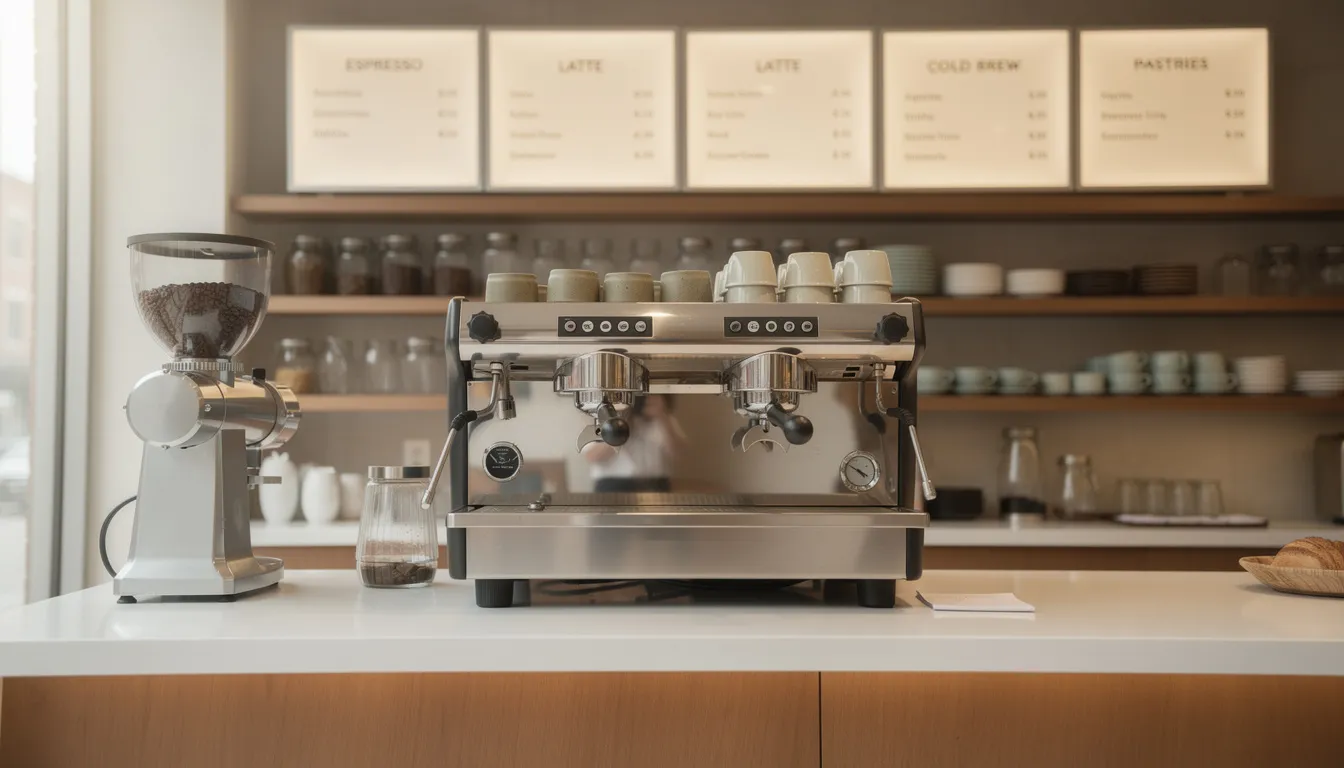
Design for both efficiency and experience. Your bar flow should minimize barista walking distances, while customer areas need thoughtful lighting, acoustics, and décor. Unique elements—like a central digital split-flap display menu that animates specials and event announcements—transform functional spaces into destinations.
Choosing and Negotiating the Right Space
Understanding lease concepts is extremely important before negotiation:
- Base rent: Your monthly payment per square foot
- CAM (Common Area Maintenance): Additional fees for shared spaces, parking lots, landscaping
- Percentage rent: Some leases require a percentage of revenue above a threshold
- Lease term: Typically 5 years with a 5-year renewal option
Tenant Improvement Allowances (TIAs) are landlord contributions toward build-out costs—often $10-$50 per square foot. Always negotiate for TIAs, especially in spaces that need significant work.
Example math: A 1,200 sq ft space at $30 per sq ft per year equals $36,000 annually, or $3,000 monthly in base rent. Add $400/month for CAM and you’re at $3,400 before utilities.
Hire a commercial real estate broker familiar with restaurants—their commission is typically paid by the landlord. Have your attorney review any lease before signing.
Verify that zoning allows a café and that neighboring uses (residential units, quiet businesses) are compatible with your planned hours. Early morning or late evening operations can create conflicts that affect your long term success.
Interior Layout, Flow, and Ambience
Map out distinct zones in your space:
- Entry and queue area: Where customers enter and wait in line
- Ordering and pickup counter: The primary interaction point
- Barista bar: Where drinks are prepared (ideally visible to customers)
- Seating zones: Mix of options for different needs
- Restrooms: Accessible and well-maintained
- Back-of-house: Storage, prep, and office space
Line-of-sight design matters. Customers should see the menu, counter, and at least one attractive visual anchor upon entering—whether that’s a pastry case, a split-flap menu display, or a beautiful espresso machine.
Seating mix for a 1,000-1,400 sq ft space:
- 4-6 bar seats along a counter or window
- 6-8 small two-top tables (12-16 seats)
- 1 communal table (6-8 seats)
- 2-3 soft seating pieces (4-6 seats)
- Total: 26-36 seats
Lighting, music, and finishes create your atmosphere. Bright lights and upbeat music encourage turnover. Warm lighting, softer music, and comfortable seating invite lingering. Match these choices to your target audience and business model.
Don’t forget practical infrastructure. Plan electrical outlet placement along walls and floor boxes for laptop customers. Design your Wi-Fi setup to handle 20-30 simultaneous connections during peak hours.
Equipment, Technology, and Split-Flap TV Menu Ideas
Equipment decisions are long-term commitments that directly impact drink quality, consistency, and service speed. Most coffee shops keep their espresso machines for 7-15 years.
Essential brewing equipment categories:
- Espresso machine (your centerpiece investment)
- Grinders (at least 2-3 for different purposes)
- Batch brewer for drip coffee
- Hot water tower for tea and Americanos
- Refrigeration (under-counter and reach-in)
- Dishwasher (commercial-grade)
- Water filtration system
- Ice machine (if serving cold drinks)
New vs. used equipment considerations:
|
Option |
Pros |
Cons |
|---|---|---|
|
New |
Warranty, latest features, reliability |
Higher upfront cost |
|
Used |
40-60% savings |
Unknown history, limited warranty |
|
Leased |
Lower upfront cost, included maintenance |
Higher total cost, no ownership |
|
Core technologies for a 2026 coffee shop: |
|
|
- POS system with inventory tracking and reporting
- Reliable Wi-Fi for customers and operations
- Music streaming service with commercial license
- Security cameras
- Staff scheduling app
- Online ordering integration (optional but increasingly expected)
Now for the memorable element: a split-flap TV style display. This wall-mounted digital split-flap display system shows your menu, rotating specials, loyalty offers, or live social feeds in a retro, attention-grabbing format. Those audible clicks as letters flip draw eyes and create Instagram-worthy moments. Trendy spots in Seattle and Portland have reported 20-30% increases in impulse purchases when featuring daily specials on attention-grabbing split-flap TV signage.
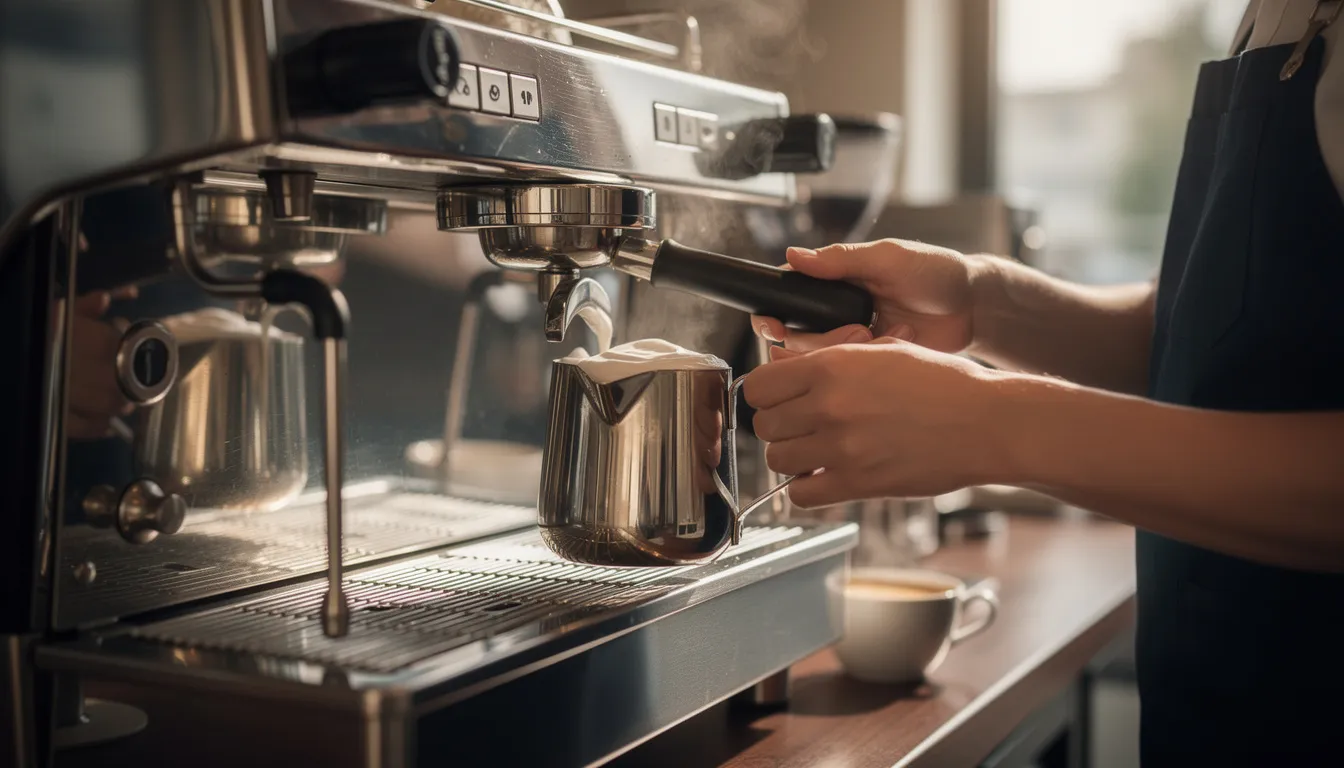
Choosing Your Coffee Equipment
Your espresso machine choice depends on expected peak volume:
- 1-group machine: Suitable for very low volume or backup
- 2-group machine: Handles up to 150-200 drinks during peak hours
- 3-group machine: Necessary for 300+ drinks per hour
Budget $6,000-$18,000 for a quality commercial machine. Brands vary in features and support, so prioritize local service availability—a broken machine on a Saturday morning needs same-day repair.
Grinders are equally important as the espresso machine. Plan for at least two grinders (espresso and decaf) and possibly a third for alternative blends or filter coffee. Budget $800-$2,500 per grinder for commercial quality.
Water filtration protects your equipment and stabilizes taste. A basic system includes carbon filtration for chlorine and a softener to prevent scale buildup. Budget $500-$1,500 initially plus $200-$400 annually for replacement cartridges.
Always allocate budget for backup equipment. An extra grinder or manual brewing gear (V60, AeroPress, Chemex) lets you continue delivering consistent quality during equipment issues.
POS, Data, and the Split-Flap TV Experience
A modern pos system offers features specifically relevant to cafés:
- Real-time inventory tracking
- Built-in loyalty programs
- Mobile ordering integration
- Gift card management
- Tipping functionality
- Simple reporting dashboards
- Staff time tracking
Use POS data to refine your menu. Identify slow sellers that waste prep time and ingredients. Track which drinks peak at different hours. Some café operators report that Square POS analytics helped them cut theft by 15% through better inventory controls.
Related reading: POS for Coffee Shop: The Complete 2026 Guide
The split-flap TV menu concept in detail: Whether you install a genuine mechanical split-flap board or a large digital split-flap TV display running split-flap style animations, this format creates visual interest while serving functional purposes. The display can update throughout the day—breakfast items at 7am, lunch specials at 11am, afternoon picks at 2pm.
Beyond prices, use the split-flap TV for brand storytelling display for storytelling:
- Origin information for featured coffee beans
- Daily quotes or conversation starters
- Event announcements (open mic night, latte art throwdown)
- Real-time loyalty milestones (“Congratulations to our 10,000th customer!”)
Place it above the bar or along a feature wall where it becomes your most photographed element. This consistent branding reinforces your identity and, with highly customizable split-flap display content, drives organic social media campaigns without paid advertising.
Menu Development, Suppliers, and Staffing
A focused, well-executed coffee shop menu beats an oversized one, especially in your first 6-12 months. Simplicity enables consistency, reduces waste, and speeds up training. Deciding to offer food is also a key way to increase revenue and provide a more complete customer experience, as food options can complement your beverage selection and encourage longer visits.
Core menu structure:
- 6-8 espresso-based drinks (latte, cappuccino, americano, mocha, etc.)
- 2-3 batch brew options (regular, decaf, and a featured single-origin)
- 4-6 tea selections
- 3-6 food items (pastries, simple sandwiches, or grab-and-go snacks)
- Seasonal specials (1-2 rotating items)
Building supplier relationships:
- Coffee beans: Partner with a local roaster who offers training and consistent supply. Expect to pay $10-15 per pound for quality beans.
- Bakery: Identify 1-2 local bakeries for fresh pastries. Markups of 300-500% on food are standard.
- Dairy and alternatives: Build relationships with several suppliers to ensure reliable delivery of milk, oat milk, and other alternatives.
- Paper goods and supplies: Budget 5-10% of sales for cups, lids, napkins, and cleaning supplies.
Staffing structure for a small café (7am-4pm, 7 days):
- Owner-operator (covering shifts plus management)
- 1 lead barista (full-time)
- 3-4 part-time baristas
- Total: 5-7 team members
Training covers both technical skills (espresso extraction at 25-30 seconds, proper milk steaming) and hospitality fundamentals (greeting guests warmly, handling complaints gracefully, remembering regulars’ names). Plan for 1-2 weeks of training before opening day.
Designing a Smart, Profitable Menu
Menu engineering means strategically designing your menu to maximize both sales and margins.
Key principles:
- Highlight high-margin items visually (your signature drinks, not basic drip)
- Keep descriptions clear and concise—customers spend seconds scanning
- Limit total options to maintain speed and consistency
- Price strategically based on perceived value, not just cost-plus
Create at least one signature specialty drink that customers can’t get elsewhere. This might be a honey-lavender latte, a seasonal cold brew tonic with house-made syrup, or a unique coffee offerings featuring beans from a specific farm. This differentiation gives people a reason to choose your shop over chains.
Food mix recommendations:
- 80% grab-and-go items (muffins, croissants, breakfast sandwiches)
- 20% made-to-order if kitchen space allows
- At least one plant-based milk option (oat milk has become essential)
- At least one gluten-friendly pastry
- Clear allergen labeling
Use your split-flap TV menu to visually feature limited-time drinks. Rotating seasonal offerings weekly or monthly gives regulars a reason to keep coming back and trying new things.
Finding and Training the Right Team
The best baristas share specific qualities:
- Hospitality mindset (genuine enjoyment of serving others)
- Reliability (showing up on time, every time)
- Curiosity about coffee and willingness to learn
- Comfort with repetitive work during busy rushes
- Physical stamina for standing and moving constantly
Recruitment methods that work:
- Local job boards (Indeed, local coffee-specific job sites)
- Word-of-mouth through the local community and coffee scene
- Social media posts showcasing your concept and culture
- Recruiting experienced baristas from other local businesses (ethically)
Structure your training program for at least 1-2 weeks before opening:
- Week 1: Drink standards, equipment operation, opening/closing procedures
- Week 2: Shadow shifts, customer interaction practice, problem-solving scenarios
Ongoing training rhythms ensure professionalism:
- Weekly calibration sessions (15 minutes to taste espresso and adjust)
- Monthly team meetings to address issues and share feedback
- Quarterly coffee tastings with your roaster
- Annual refreshers on service standards
Engage your team in creative decisions. Let them help name seasonal drinks or curate content for the split-flap TV display. Ownership breeds loyalty.
Marketing, Community, Grand Opening, and Growth
Marketing for an independent coffee shop in 2026 is mostly local and storytelling-driven—not big-budget advertising campaigns. Your goal is exceptional customer service combined with consistent branding that makes people want to talk about you.
Pre-launch and first-90-days marketing plan:
|
Timeline |
Activities |
|---|---|
|
3 months before opening |
Launch Instagram, start documenting build-out, tease concept |
|
2 months before |
Engage with local businesses, begin partnership conversations |
|
1 month before |
Announce opening date, run countdown content, capture email signups |
|
1 week before |
Host friends-and-family soft opening, gather feedback |
|
Opening week |
Grand opening event, launch loyalty program, push for reviews |
|
First 30 days |
Daily social posting, respond to all reviews, refine based on data |
|
Days 31-90 |
First menu refresh, initial event (latte art throwdown, local artist showcase) |
|
Your brand extends beyond your logo. It’s your tone on social media, how you handle complaints, the playlist you curate, and how your shop “feels” at 8am on a Tuesday. Consistency builds trust. |
|
Community involvement creates loyalty. Host small events—open mic nights, book clubs, photography walks that start at your shop. Partner with nearby local businesses for cross-promotion. Support local causes that align with your values. Many successful business owners recommend sharing your journey and learning from the experiences of other coffee shop business owners, whose stories and advice can provide valuable guidance as you grow.
When demand proves consistent—typically 12-18 months after opening—consider growth: adding a second location, launching a roastery component, or extending hours based on proven customer interest.
Digital Marketing and Loyalty
Focus on 1-2 platforms where your target market actually spends time. For most coffee shops, that’s Instagram and either TikTok (younger demographics) or Facebook (broader local community).
Content that works:
- Real photos of drinks being made (not stock images)
- Short videos of latte art or busy morning rushes
- Behind-the-scenes of suppliers and team members
- Customer features (with permission)
- Seasonal drink announcements
Create a simple website with hours, location, your coffee shop menu, and online ordering details if you offer pickup. This becomes your Google presence foundation.
Launch a basic loyalty program through your POS system. A points-per-purchase model (free drink after 10 visits) is simple and effective. Loyalty programs typically boost retention by 20-30%. Promote it on your split-flap TV display and print it on receipts.
Capture emails through Wi-Fi sign-ins or opening week signup sheets. Send a monthly newsletter featuring new menu options, upcoming events, and behind-the-scenes stories.
Concrete launch offer example: “First 100 customers during opening weekend receive a stamped loyalty card with 2 free drinks loaded.” This drives urgency and immediate return visits.
Grand Opening Strategy and First-Year Growth
Plan a soft opening 5-7 days before your official launch. Limit hours, invite friends and family, and focus on testing systems and gathering feedback. Most successful business launches identify operational issues during soft opening rather than discovering them on day one.
Set a specific grand opening date—a Saturday in late spring or early fall often works well—and promote it for 2-4 weeks in advance through social media campaigns, local community boards, and neighborhood flyers.
Grand opening event ideas:
- Live acoustic music from local artists
- Latte art throwdown competition
- Free drip coffee for the first hour
- Charity tie-in benefiting a local school or food bank
- Ribbon cutting with local officials
After opening, review data at 30, 90, and 180 days:
- 30 days: Are systems working? What’s breaking?
- 90 days: Which products sell? Which don’t? Are staffing levels right?
- 180 days: Refine menu, adjust hours, plan first major seasonal change
Encourage ongoing innovation to run a coffee shop successfully. Rotate seasonal drinks announced via your split-flap TV display. Collaborate with local roasters or bakers for limited-edition items. Test small extensions—maybe evening dessert service on weekends—if demand appears.
Conclusion: Turning Your Startup Coffee Shop Vision into Reality
You’ve mapped the journey from initial idea to opening day: defining your purpose, validating the market through careful planning and analyzing demographics, building a solid business plan with realistic financial projections, securing funding through personal savings and loans, finding the right location, designing an efficient and welcoming atmosphere, equipping and staffing your space, and finally launching with a strategic grand opening.
Success in coffee shop ownership comes from consistent execution. Serve delicious coffee every time. Provide genuine hospitality that makes people feel seen. Maintain disciplined finances with weekly reviews of cash flow. And stay willing to iterate based on customer feedback and sales data.
Memorable details transform a simple café into a beloved neighborhood institution. Whether it’s a distinctive modern split-flap TV display alternative to traditional boards that catches every eye, rotating local art on your walls, or a signature drink that becomes synonymous with your brand—these elements create stories customers want to share.
Choose a realistic timeline. Most aspiring coffee shop owners need 9-12 months from serious planning to opening day. Treat each section of this guide as a practical checklist, and work through them systematically rather than scrambling to save money by skipping steps.
Opening a startup coffee shop is demanding. The biggest challenges include high equipment costs, intense competition, and the relentless daily grind of operations. But with careful planning, clear differentiation, and a genuine commitment to your local community, your dream coffee shop can become a thriving business—a daily ritual for hundreds of people who choose your space, your coffee, and your vision over every other option.
The best time to open a coffee shop was ten years ago. The second best time is now. Start with step one, and keep moving forward.
Introduction to the Coffee Industry
The coffee industry is booming, offering exciting opportunities for entrepreneurs looking to open a coffee shop. With the global coffee market expanding year after year and 65% of Americans enjoying coffee daily, the demand for high-quality coffee experiences is stronger than ever. This surge in coffee consumption, especially for specialty and craft beverages, makes the coffee shop business an appealing venture for those ready to dive in. However, success in this competitive landscape requires more than just a love for coffee—it demands careful planning, a solid understanding of the coffee industry, and a commitment to building a business that stands out. Whether you dream of creating a cozy neighborhood spot or a bustling urban café, understanding the industry’s dynamics is the first step toward turning your vision into a thriving reality.
Coffee Industry Trends and Insights
Staying ahead in the coffee industry means keeping a close eye on emerging trends and evolving customer preferences. In recent years, coffee shop owners have seen a surge in demand for sustainable and eco-friendly practices, from compostable cups to ethically sourced coffee beans. Specialty drinks like cold brew, nitro coffee, and creative espresso-based beverages continue to capture the attention of adventurous coffee drinkers. Additionally, the rise of online ordering, delivery services, and mobile apps has transformed how customers interact with their favorite coffee shops. For coffee shop owners, embracing these trends isn’t just about following the crowd—it’s about meeting the expectations of a new generation of customers who value convenience, quality, and environmental responsibility. By integrating sustainable practices and innovative menu options, coffee shop owners can attract a loyal customer base and ensure their business remains relevant in a rapidly changing coffee industry.
Related reading: Innovative Coffee Shop Pricelist: Revolutionizing the Menu Display with Split-Flap TV
Related reading: Ideas for Coffee Shop: 30+ Concepts to Inspire Your Next Café
The Coffee Shop Business Model
A thriving coffee shop business is built on more than just great coffee—it’s the result of a well-crafted business model that brings together quality, service, and atmosphere. Coffee shop owners must start with a clear coffee shop concept that sets them apart from the competition, whether it’s a focus on single-origin beans, a unique interior design, or a menu filled with creative drinks and food pairings. Developing a comprehensive business plan is essential, as it helps define the target market, analyze competitors, and outline strategies for delivering exceptional customer service. Understanding your target customer allows you to tailor your offerings and create a welcoming atmosphere that keeps people coming back. In a crowded market, a distinctive coffee shop concept and a commitment to quality can transform a new venture into a beloved local business.
Understanding Coffee Shop Ownership
Owning a coffee shop is both a rewarding and demanding journey. Aspiring coffee shop owners need more than just a passion for coffee—they must be ready to invest significant time, energy, and resources into their business. Startup costs can be substantial, covering everything from equipment and renovations to staffing and inventory. Delivering consistent quality is key, as customers expect every cup to meet high standards. Exceptional customer service and a welcoming atmosphere are what turn first-time visitors into regulars. For those willing to put in the work, coffee shop ownership offers the chance to build meaningful connections within the community and create a space that reflects their values and vision. With careful planning and a focus on delivering consistent quality, aspiring coffee shop owners can overcome challenges and build a business that stands the test of time.
Coffee Shop Operations
Running a successful coffee shop involves juggling many moving parts, from sourcing premium coffee beans to managing staff schedules and keeping a close eye on finances. Coffee shop owners must ensure that daily operations are streamlined and efficient, aligning with the overall goals of the business. This means carefully managing both fixed and variable costs—such as rent, utilities, payroll, and inventory—to maintain healthy profit margins and ensure long term success. Smart inventory management and building strong relationships with suppliers can help reduce variable costs and improve cash flow. Additionally, investing in staff training and clear operational procedures ensures that every customer receives the same high level of service and quality with each visit. By focusing on operational excellence, coffee shop owners can create a thriving business that delivers a memorable coffee shop experience day after day.