Walk into any modern airport, coffee shop, or retail store, and you are immediately bombarded by screens. High-definition LED walls, scrolling tickers, and flashy LCD monitors compete for your attention at every turn. We live in an era of screen fatigue. Our eyes have learned to glaze over the glowing rectangles that surround us.
But then you hear it. Clack-clack-clack-clack.
Heads turn. Eyes widen. People stop walking and actually look.
That is the power of mechanical motion in a digital world. It is the allure of the analog. While 4K screens are fighting for a fleeting glance, retro-inspired displays are commanding undivided attention. This is why retro digital signage, specifically through innovations like Split-Flap TV, is becoming the secret weapon for businesses that want to stand out.
In this post, we will explore why looking backward might be the best way to move your brand forward.
The Problem with “Perfect” Displays
Digital signage has a saturation problem. When every surface is a screen, no surface is special. We have become desensitized to pixels. A crystal-clear 8K video loop of coffee beans falling in slow motion is beautiful, but it rarely stops a customer in their tracks anymore. It blends into the background noise of modern life.
This phenomenon is often called “banner blindness” in web design, but it applies just as heavily to physical spaces. If your signage looks like a TV screen, people will treat it like a TV screen—something to be ignored until their show comes on.
To capture attention today, you need to disrupt the pattern. You need texture. You need sound. You need something that feels real.
The Magic of the Split-Flap Display
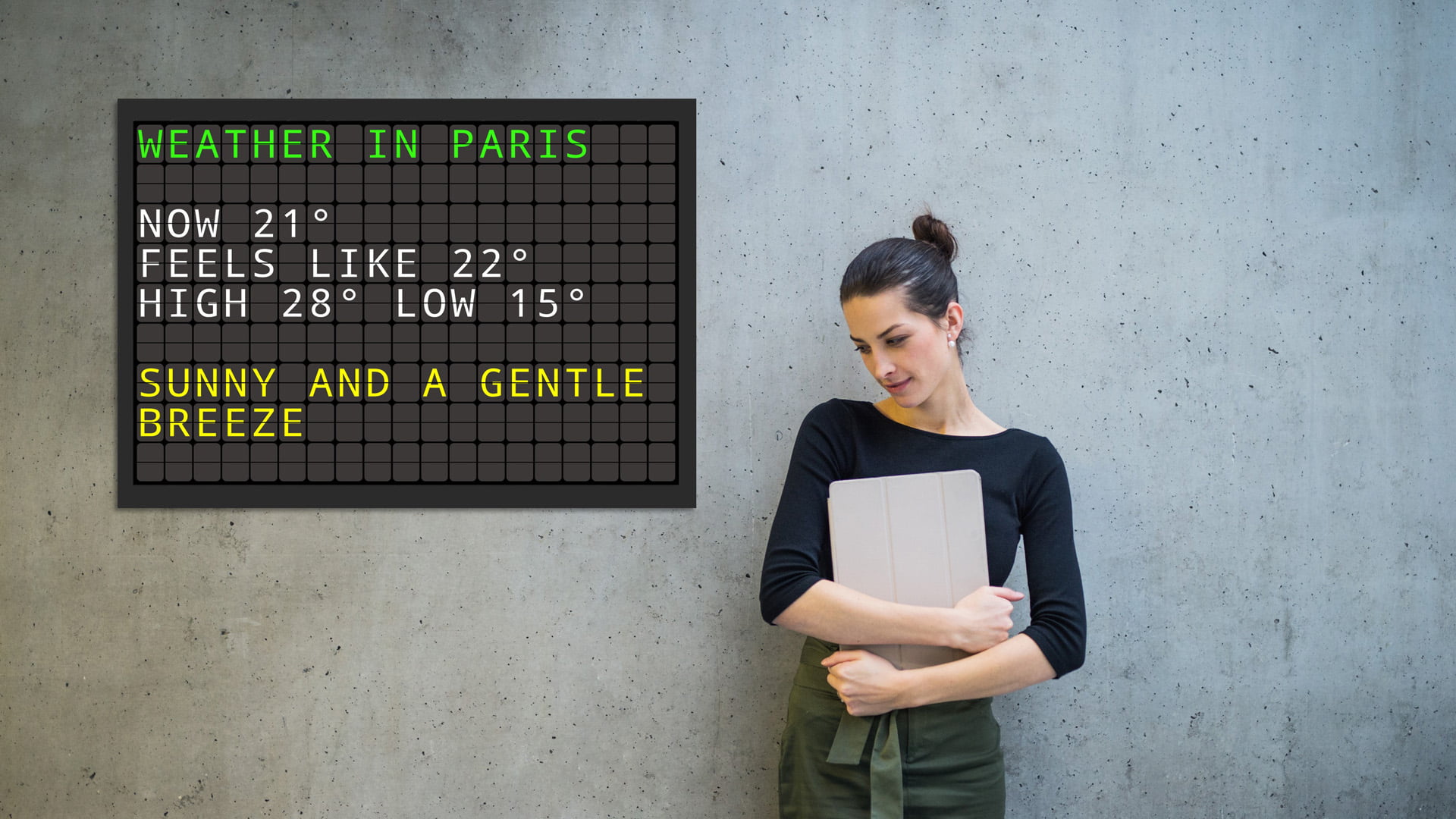
If you have ever been in an old European train station or a classic airport terminal, you know the split-flap display. It’s that massive board of flipping letters and numbers that updates flight times with a cascading wave of mechanical clicks.
This technology, originally patented in the 1950s, evokes a specific kind of nostalgia. It reminds us of travel, adventure, and a time when things were built with gears and motors rather than code and pixels.
The appeal lies in three key areas:
- Auditory Engagement: The sound of the flaps turning is unmistakable. It signals that information is changing. It triggers a Pavlovian response to look up.
- Kinetic Satisfaction: Watching the letters cycle through the alphabet until they land on the right character is oddly satisfying. It turns the delivery of information into a mini-event.
- Physical Presence: Unlike a flat screen, a split-flap display has depth. It occupies space. It casts shadows. It feels permanent and substantial.
However, traditional mechanical split-flap displays are incredibly expensive, difficult to maintain, and hard to program. They require specialized parts and engineering know-how. This is where modern solutions bridge the gap.
Enter Split-Flap TV: The Best of Both Worlds
Split-Flap TV takes the aesthetic and charm of the classic mechanical board and reimagines it for the modern user. It captures the retro vibe without the maintenance nightmares of vintage hardware.
By simulating the mechanical action on high-quality screens or using hybrid technologies, Split-Flap TV allows businesses to deploy that retro look instantly. It offers the visual language of the past with the flexibility of the future.
Here is why this hybrid approach is changing the game for interior design and customer experience.
1. Instant Atmosphere and Brand Differentiation
Your brand voice isn’t just what you say on social media; it’s the feeling customers get when they walk through your door. A sleek, ultra-modern coffee shop might feel cold with standard digital menus. But add a Split-Flap TV display showing the daily roasts, and suddenly the space feels curated, warm, and thoughtful.
It signals to your customers that you care about design. You aren’t just slapping a JPEG on a monitor; you are creating an environment. This differentiation is crucial in crowded markets like hospitality and retail.
2. Information That Actually Gets Read
Because the format is novel, people read it. If you put your “Daily Special” on a whiteboard, some people see it. If you put it on a standard TV, fewer people see it. But if that special is revealed with a virtual clack-clack animation on a Split-Flap TV board, people will watch it update.
This increased dwell time on your signage means your messaging actually lands. Whether it’s flight times, lunch specials, or conference room schedules, the medium enhances the message.
3. Flexibility Without the Grease
Real mechanical signs are rigid. If you buy a board with 10 rows and 20 columns, that is all you will ever have. You can’t change the font. You can’t easily change the colors.
Split-Flap TV allows for customization that mechanical boards can’t dream of. Do you want to switch from a train station schedule layout to a cafe menu in seconds? Done. Do you need to incorporate your brand colors into the flaps? Easy. You get the retro aesthetic, but you keep the digital agility to change your content on the fly from a cloud-based dashboard.
Use Cases: Where Retro Fits Best
The versatility of retro digital signage allows it to slide seamlessly into various industries. It isn’t just for hipsters; it’s for anyone who values engagement.
The High-End Cafe or Brewery
Imagine a tap list that doesn’t look like a spreadsheet. A Split-Flap TV display behind the bar can cycle through available beers. When a keg kicks, the board updates with a visual cascade of flipping tiles. It turns a mundane operational update into a piece of theater that guests enjoy watching.
Corporate Offices and Lobbies
Tech companies often struggle to make their offices feel welcoming rather than sterile. A retro display in the lobby welcoming guests by name adds a personalized, warm touch. It contrasts beautifully with the sleek glass and steel of modern architecture, providing a focal point that humanizes the space.
Retail and Fashion
In a clothing store, atmosphere is everything. Standard digital signage can feel “cheap” or overly commercial. A retro-style display showing sizing availability or brand slogans adds a boutique feel. It aligns with the trend of “experiential retail,” where the goal is to give shoppers a reason to visit in person rather than buying online.
Events and Trade Shows
Trade show floors are the ultimate battleground for attention. Everyone has a big screen. Few have a display that looks like a vintage departure board. Using Split-Flap TV to display session times or winner announcements creates a buzz. Attendees will stop to take photos of the sign itself, giving you free social media exposure.
The Psychology of Nostalgia Marketing
Why does this work so well? It comes down to nostalgia marketing.
Research shows that nostalgia creates a feeling of social connectedness and increases self-esteem. When a customer sees a split-flap display, it often triggers positive memories of travel or classic cinema. These positive emotions are then subconsciously associated with your brand.
By using retro signage, you aren’t just displaying information; you are tapping into an emotional reservoir. You are making your customers feel something. In a transactional economy, feelings are the currency that builds loyalty.
Breaking the Digital Wall
We spend our days looking at high-resolution text on smartphones. It is crisp, clean, and utterly devoid of character.
Retro digital signage breaks that “fourth wall” of digital interaction. It acknowledges the device itself. It creates a texture that the eye enjoys exploring. Split-Flap TV understands that the medium is the message. The way you display your content says just as much as the content itself.
If you use a standard screen, you are saying, “Here is some information.”
If you use a Split-Flap TV display, you are saying, “Here is an experience.”
Conclusion: Time to Flip the Script
The race for higher resolution and brighter screens has reached a plateau. More pixels don’t equal more engagement. To capture the modern consumer, you have to offer something different. You have to offer soul.
Retro digital signage brings the romance of the mechanical age into the reliability of the digital age. It captures attention, enhances brand identity, and turns information delivery into a spectator sport.
If you are ready to stop being background noise and start being the main attraction, it is time to look at your signage strategy differently. Don’t just put it on a screen. Put it in motion.
Ready to captivate your audience? Explore how Split-Flap TV can transform your space with the perfect blend of nostalgia and technology today.