
Restaurant Specials Screen Example That Works
May 14, 2026 · Captain
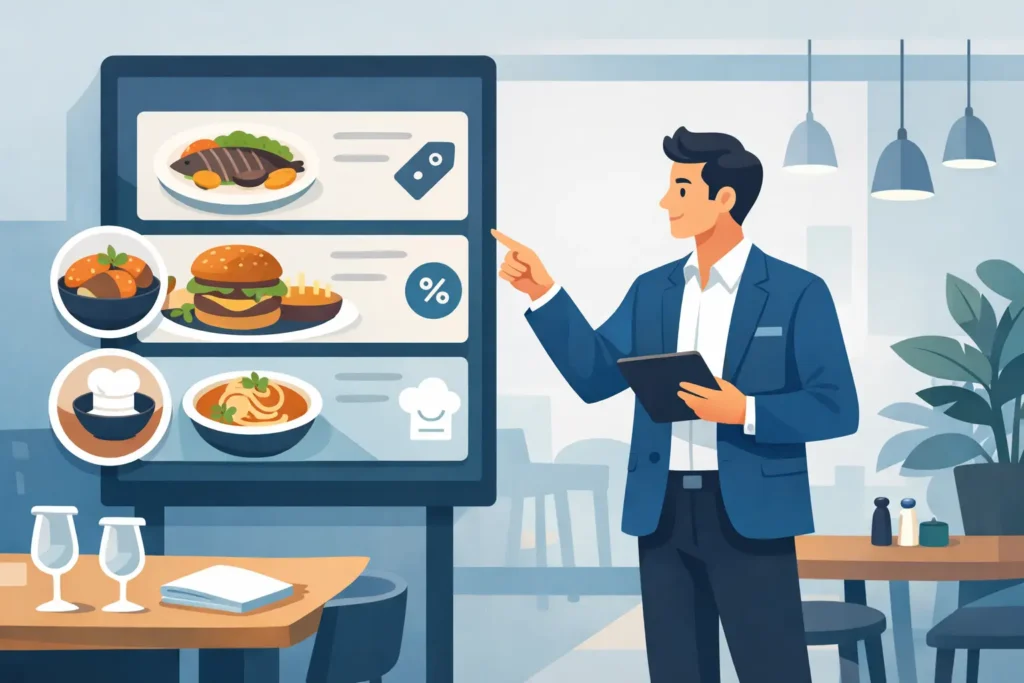
The lunch rush is not the moment to rewrite a chalkboard, squeeze in one more menu insert, or explain the soup special fifteen times before noon. A strong restaurant specials screen example fixes that. It puts your best offers where guests can actually see them, keeps the message current, and adds a little theater to the room instead of more visual noise.
For restaurants, bars, cafes, and hotel lounges, specials change fast. The problem is not just getting the information on display. It is making it feel intentional. If the screen looks like a generic ad slide, guests tune it out. If it looks too busy, they miss the one thing you want them to notice. The sweet spot is a format that feels elegant, readable, and alive.
What a good restaurant specials screen example should do
A specials screen has one job on the surface – show people what is available right now. But in practice, it does a few jobs at once. It answers common guest questions, supports upsells, reduces back-and-forth for staff, and reinforces the tone of the space.
That means the best screen is not necessarily the one with the most information. It is the one that helps someone understand the offer in a glance. If you run a fast-casual counter, that might mean a bold daily special and a cutoff time. If you run a cocktail bar, it might mean three rotating happy hour offers with a stronger emphasis on mood and pacing.
A split-flap style screen is especially effective here because it behaves differently from modern motion-heavy digital signage. It is not trying to compete with every glowing screen your guests have already ignored that day. It uses motion sparingly, relies on text, and creates a crisp moment of attention with that familiar click-clack transition. The result feels less like an ad and more like a public display worth noticing.
A practical restaurant specials screen example
Imagine a neighborhood bistro with a host stand near the entrance and a bar visible from the door. One screen sits near the entry, formatted like a classic split-flap board with a dark background and warm cream text. The top line reads TODAY’S SPECIALS. Below that, four rows rotate every few seconds.
The first page shows LUNCH – ROASTED TOMATO BISQUE + HALF SANDWICH. The second row lists DINNER – BRAISED SHORT RIB WITH POLENTA. The third row highlights HAPPY HOUR 4-6 PM – HOUSE RED / FRIES / OYSTERS. The fourth row answers a practical question guests ask anyway – PATIO OPEN / WALK-INS WELCOME.
That is already more useful than a handwritten sign because it is legible, timely, and easy to change. But the better version goes one step further. It is scheduled. At 10:30 a.m., the lunch feature appears. At 3:45 p.m., happy hour moves to the top position. At 6:00 p.m., the dinner special takes priority. No one on staff has to stop service to swap signs around.
This is where design and operations meet. The screen is not only attractive. It is doing real work.
Why this format gets attention without feeling loud
Restaurants do not need another flashy rectangle on the wall. In many spaces, that kind of screen actually cheapens the atmosphere. A split-flap layout works because it brings movement and character without turning the room into a sports bar scoreboard.
There is also a psychological advantage to text-first design. Guests process it quickly. They know where to look, and they know the information is current because the board visibly changes. That tiny bit of motion signals freshness. It tells people this special is live, not a poster someone forgot to remove three days ago.
The nostalgic edge matters too, especially in hospitality. People remember displays that feel considered. The visual rhythm of a split-flap board has a public-space familiarity to it – old stations, classic terminals, big-city arrival boards. Used well in a restaurant, it creates a sense of occasion.
What to include and what to leave off
A useful restaurant specials screen example is selective. Most venues should avoid treating the screen like a full menu. Once you cram too many lines onto it, the charm disappears and readability drops.
Start with the information guests are most likely to act on immediately. Daily food special, drink special, happy hour window, sold-out notices, limited-time items, and one or two service updates are usually enough. If you want to promote events, brunch hours, or seasonal offerings, use a second page or a timed rotation.
It depends on the pace of your business. In a coffee shop, speed matters more than atmosphere, so shorter lines and fewer rotating pages make sense. In a full-service dining room, you can lean more into presentation and let the board set the mood. Either way, brevity wins.
There is a trade-off here. More detail can reduce staff questions, but too much detail means fewer guests will read any of it. The best approach is to put high-interest information on the board and leave the deep specifics to the printed menu or the server.
Design choices that make the screen feel premium
The screen should look like part of the space, not an afterthought clipped onto it. That starts with color. High contrast is essential, but the colors should still fit the room. Cream on black has a timeless terminal feel. White on charcoal feels a little more modern. Brighter accent colors can work for bars or quick-service spots, but too many colors weaken the split-flap effect.
Typography matters, even in a display built around a classic board aesthetic. Keep the rows clean and structured. Give the headline room to breathe. Do not mix too many message styles on one page. A board with consistent spacing and pacing always feels more expensive than one trying to do five visual tricks at once.
Placement is just as important as layout. A specials screen near the entrance helps guests decide faster. A second screen near the bar can push drinks or late-night food. If the room is small, one well-placed display is often stronger than several competing screens.
This is also why old-school split-flap styling works so well on TVs and tablets. You get the charm of the original format without the operational burden of mechanical boards. Content can be updated instantly, scheduled by time of day, and adjusted from anywhere. That is a practical advantage restaurants feel immediately.
Common mistakes with specials screens
The most common mistake is overloading the board. If every row is packed with long item names, prices, emojis, and extra descriptions, the screen stops helping. It becomes decor with text on it.
The second mistake is stale content. A specials screen only builds trust if it reflects reality. If the board still shows brunch at 4:00 p.m. or highlights a dish that sold out an hour ago, guests notice. So do staff, who then have to apologize for the screen.
The third mistake is treating the display as a novelty instead of a system. A good restaurant screen should be part of the daily operating rhythm. It should change with service periods, support staff communication, and reduce the need for manual updates. That is where a managed platform matters more than the screen itself.
Turning one screen into a better guest experience
When operators think about specials signage, they usually think about promotion first. Fair enough. Specials should sell. But the better use case is broader. The screen can also tell guests whether patio seating is open, when live music starts, whether the kitchen is serving late, or which menu is active right now.
That is why the most effective setups feel calm and intentional. They answer the right question at the right time. A breakfast crowd wants something different from the dinner crowd. A Friday happy hour audience is looking for quick cues, not a text wall.
With a platform like Split Flap TV, that rhythm is easy to manage because the board can be scheduled around real service patterns. You are not stuck with one static layout all day. The display can shift as the room shifts, while keeping the same polished split-flap look.
The best restaurant specials screen example is not the fanciest one. It is the one that makes service smoother, keeps offers visible, and gives your space that satisfying click-clack sense of life. If a screen can help guests decide faster and make the room feel sharper at the same time, it has earned its spot.