
Best mechanical split flap alternatives
April 16, 2026 · Captain
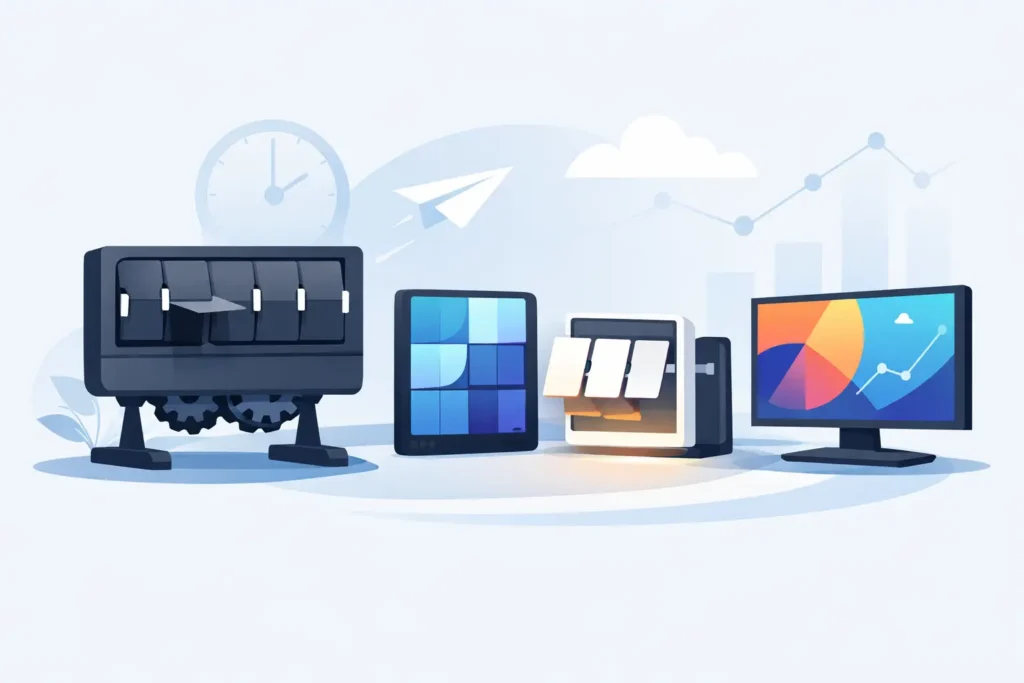
A real mechanical board still has a way of stopping people mid-step. The sound, the rhythm, the sense that information is arriving with a bit of theater – it works. But for most businesses, mechanical split flap alternatives make more sense once the daily reality sets in: menus change, schedules shift, promotions come and go, and nobody has time to babysit a display.
That is the tension at the heart of this category. You want the charm of classic split-flap signage without the maintenance burden, hardware complexity, or content bottlenecks that come with moving parts. The good news is that there are solid alternatives. The better news is that not all of them feel generic.
Why businesses look for mechanical split flap alternatives
Mechanical split-flap displays earned their place in design history for a reason. They are iconic. They bring motion to text in a way that still feels tactile, even from across the room. In public spaces, that matters. People notice them because they do not behave like standard screens.
Still, the qualities that make them memorable can also make them difficult to run as everyday business signage. Mechanical systems rely on physical components that wear down over time. Updating content can be slower and more limited than most busy venues need. If you run a cafe, boutique hotel, bar, retail shop, or office lobby, your display is not there to be admired only. It has work to do.
That usually means handling changing hours, rotating specials, event schedules, guest messages, directional information, and recurring customer questions. A beautiful display that is hard to update becomes one more operational headache. For many teams, the search for an alternative starts there.
The most practical mechanical split flap alternatives
The best replacement depends on what you actually value most. Some businesses want the look above all else. Others care more about speed, scheduling, and remote control. Most want both.
Digital split-flap displays
This is the closest fit for businesses that love the split-flap aesthetic but do not want mechanical hardware. A digital split-flap display recreates the visual language of classic boards on modern screens or tablets, including the signature flipping animation and, in some setups, the familiar click-clack sound.
For many venues, this is the sweet spot. You keep the nostalgia, motion, and design impact that make split-flap displays memorable, but you gain the practical benefits of app-based updates, cloud control, scheduling, and flexible layouts. That means you can change a breakfast menu before opening, switch to lunch automatically, and post an event message in seconds without touching the display itself.
It also opens up more creative control. You are not locked into the physical constraints of a fixed mechanical board. You can adjust rows and columns, change timing, create multiple pages, fine-tune colors, and keep the overall look aligned with your space. That matters for businesses that care about atmosphere as much as information.
The trade-off is simple: it is not a mechanical object. For some purists, that distinction matters. But for businesses focused on daily use, digital split-flap usually delivers the experience people actually want, with much less friction.
Standard digital signage
A conventional digital signage screen is another alternative, especially if your content needs go beyond text. If you want full-color graphics, videos, product photography, animated promos, or social content, a standard signage setup offers more visual range than a split-flap format ever could.
That said, it solves a different problem. Standard digital signage is versatile, but it rarely carries the same personality. In many spaces, it feels functional rather than distinctive. If your goal is to create a memorable in-store moment or reinforce a retro-modern brand identity, a typical slideshow screen can feel flat fast.
This option works best when visual flexibility is more important than atmosphere. For fast-moving retail campaigns or media-heavy messaging, it can be the right fit. But if what drew you to split-flap in the first place was the emotional pull of text in motion, standard digital signage may feel like a compromise.
Manual letter boards and printed signage
Some businesses consider low-tech options when they want a vintage look. Felt letter boards, menu boards, chalkboards, and printed signs can all bring a certain handcrafted charm. They also avoid the complexity of powered hardware.
The issue is labor. These formats are fine when content changes once in a while. They are much less fine when information changes throughout the week or throughout the day. Updating by hand takes time, introduces errors, and usually depends on whoever is available during a busy shift. The result is often what businesses were trying to escape in the first place: outdated messages, taped-over corrections, and signage that slowly loses its polish.
There is also a scale problem. A small handwritten sign can be intimate and appealing near a register. It is not the same thing as a clean, visible display that anchors a lobby, storefront, or bar wall.
What to look for in a split-flap-style alternative
If you are comparing mechanical split flap alternatives, the smartest question is not Which one looks coolest? It is Which one will still feel useful six months from now?
Easy updates matter more than most businesses expect
The novelty of any display wears off quickly if updating it is clunky. What holds value is speed. Can your staff change messaging in under a minute? Can someone update content remotely? Can you schedule recurring messages in advance instead of relying on memory during a rush?
This is where digital split-flap systems stand out. They preserve the visual appeal of old transit-style boards while fitting modern workflows. For restaurants, that means rotating specials without reprinting. For hotels, it means refreshing welcome messages and event information without a front desk scramble. For offices, it means keeping visitor guidance current without another paper sign taped to the wall.
Aesthetic fit is not a small detail
Design-led businesses already know this, but it is worth saying plainly: signage changes how a space feels. A display can either blend into the background or become part of the brand experience.
Mechanical boards built their reputation on that emotional impact. A good alternative should respect it. If a replacement gives you convenience but strips away all character, you may save time and lose presence. The strongest alternatives keep the atmosphere intact while improving control behind the scenes.
Maintenance is where the romance gets tested
Classic mechanical systems are beautiful, but beauty in motion comes with upkeep. Physical parts age. Repairs are specialized. Downtime is disruptive. For businesses that need a reliable, always-on communication tool, maintenance is not a side note.
That does not mean mechanical displays are never worth it. In some spaces, especially where the board is treated as a centerpiece installation, the commitment can make sense. But if your display has to function every day with minimal intervention, fewer moving parts usually means fewer surprises.
When digital split-flap is the right call
If your business wants the split-flap mood without mechanical limitations, this is usually the clearest answer. A digital split-flap setup gives you that familiar departure-board drama, but it behaves like a modern signage tool. You can publish messages quickly, manage layouts from an app, schedule content ahead of time, and keep everything looking intentional instead of improvised.
That balance is exactly why businesses gravitate toward this format. It does not ask you to choose between nostalgia and practicality. It lets the display do both jobs at once.
A restaurant can use it for menus, happy hour callouts, and recurring guest info. A boutique hotel can use it for welcome messages, amenities, and local recommendations. A retail shop can feature store hours, launches, and event announcements in a format that feels curated rather than disposable. Even offices benefit, especially in reception areas where first impressions carry weight.
For businesses that want this look without turning signage into a maintenance project, a system like Split Flap TV offers a modern way to revive the classic experience on screens that are easy to install and even easier to update.
The real choice behind mechanical split flap alternatives
This is not only about replacing one display type with another. It is about deciding what role signage should play in your space. If it is purely informational, almost anything can get the job done. If it is part of the atmosphere, part of the customer experience, and part of how your brand is remembered, the details matter a lot more.
The strongest alternatives are the ones that respect why people love split-flap in the first place. They keep the movement, the rhythm, and the visual confidence, then remove the parts that slow a business down. When a display can turn heads and still save your team time, it stops being a novelty and starts earning its spot on the wall.
Choose the option that fits your daily reality, not just your mood board. The best signage should feel a little magical to your guests and completely manageable to your staff.