
Opening a coffee shop in 2025 takes more than a quality espresso machine and a good location. With over 38,000 independent coffee shops competing across the US and annual market growth hovering between 3-5%, standing out requires a clear concept that gives customers a reason to choose your café over the chain down the street.
This guide walks you through 30+ actionable coffee shop ideas—from cat cafés and roastery showrooms to split-flap TV menu boards that turn your signage into a marketing asset. Whether you’re planning your first café or rethinking an existing one, you’ll find concrete concepts you can adapt to your neighborhood, budget, and target customer.
Introduction to the Coffee Shop Business
The coffee shop business has become an essential part of daily life in towns and cities across the country. According to the National Coffee Association, out-of-home coffee consumption continues to rise, making coffee shops a go-to destination for everything from a quick morning pick-me-up to a relaxing afternoon with friends. But in today’s crowded market, simply serving good coffee isn’t enough.
To build a thriving coffee shop, you need more than just a great cup of coffee—you need a brand that stands out and keeps customers coming back. This means offering specialty drinks that excite the palate, hosting community events that bring people together, and creating a welcoming space where patrons feel at home. Live music nights, art shows, and seasonal events can transform your shop into a local hub, fostering customer loyalty and long-term relationships with regular customers.
A successful coffee shop business is built on more than just sales; it’s about building a community, developing a strong brand personality, and consistently delivering experiences that attract new patrons while keeping your regulars engaged. By focusing on what makes your shop unique, you can carve out your own niche and become a beloved part of your local community.
How to Choose a Coffee Shop Idea, Theme or Concept
The crowded market for specialty coffee means that simply serving good brews isn’t enough. Rising commercial rents, the dominance of social-media discovery, and customers’ appetite for “Instagrammable” experiences have raised the bar for what a successful local coffee shop looks like. Today’s café owners need to think like brand builders from day one.
Coffee houses have a long history of serving as gathering places. From 17th-century London’s Penny Universities—where admission cost a penny and conversation was the main attraction—to the 1676 Boston coffee house and eventually to modern specialty cafés in cities like Portland, Austin, and Melbourne, the coffee culture has evolved dramatically. In recent years, themed or specialized cafes—such as internet cafes, library cafes, and cat cafes—have emerged, combining a cafe environment with additional experiences to attract diverse customer bases. The third-wave movement post-2000 shifted focus toward bean traceability, light roasts, and educated baristas who can explain the difference between Ethiopian Yirgacheffe and Colombian Supremo.
Your goal is to create a place that feels like a “third space” for your neighborhood—not just a caffeine stop, but somewhere people want to linger, work, meet friends, or simply enjoy a welcoming space. The strongest concepts blend community needs (child-friendly hours, late-night service, pet-friendly patios) with a distinctive visual identity that photographs well and spreads organically online.
As you explore the ideas ahead, keep your target customer in mind. Are you serving students who need power outlets and cheap drip coffee? Commuters who want speed above all else? Young families looking for a relaxed morning spot? Remote workers seeking strong Wi-Fi and ergonomic seating? Match your concept to your location, budget, and the people you want to serve.
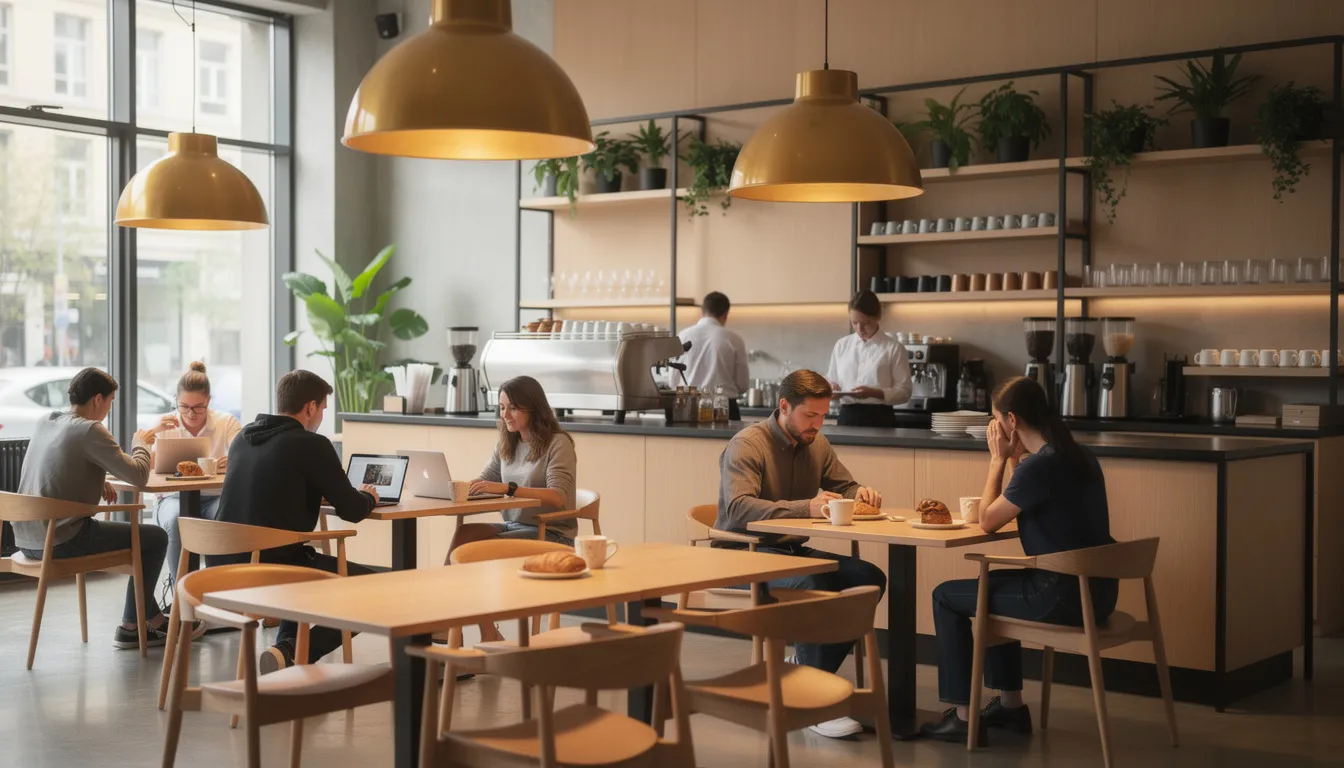
Real-Life Inspiration and Examples for Coffee Shop Owners
The years following 2020 forced many café owners to rethink their business models. Drive-throughs, expanded patios, and robust online ordering became survival tactics—and many of those adaptations revealed new opportunities. The cafés that thrived didn’t just react; they leaned into concepts that differentiated them from national chains.
Consider a few examples from recent years:
- A 2023 drive-through kiosk in Phoenix focused entirely on speed and consistency, serving commuters in under 60 seconds using pre-order apps and a streamlined menu of espresso drinks and cold brew on tap.
- An arts-focused café in Atlanta partnered with local artists to rotate gallery walls monthly, taking a small commission on sales and hosting opening-night events that attracted new patrons.
- A coworking café in Denver added reserved seating memberships and hourly meeting-room rentals, capturing reliable weekday revenue from remote workers who appreciated the professional environment.
- A mobile espresso cart in Austin tested three different neighborhoods before settling on a permanent food hall location, using the cart phase to build a following and refine the menu.
What inspired these concepts? Owners point to personal heritage, gaps in their local community, proximity to universities or creative districts, and simply noticing what people asked for. One Atlanta owner explained that her neighborhood had plenty of coffee but nowhere to see emerging local artists—so she combined both.
Strong ideas often emerge from studying what’s missing in your market. Adapt, don’t copy, and you’ll find your own lane.
Community Involvement and Events for Coffee Shops
Community involvement is at the heart of every great local coffee shop. Hosting events and supporting local causes not only strengthens your ties to the neighborhood but also drives repeat business and builds customer loyalty. Coffee shops that regularly organize community events—like open mic nights, live music performances, art exhibitions featuring local artists, or charity fundraisers—become gathering places where people want to linger and return.
Consider offering your space for book clubs, board game nights, or workshops led by local experts. Partner with nearby small businesses for pop-up markets or collaborative events, and use your café as a platform to spotlight local talent. Seasonal celebrations, such as pumpkin spice launches in the fall or cold brew tastings in the summer, give customers a reason to visit again and again.
By actively engaging with your local community, you create a welcoming space that feels like a second home for your patrons. These connections not only boost foot traffic but also turn first-time visitors into regular customers who help spread the word about your shop.
30 Unique Coffee Shop Ideas
This section is a fast “idea buffet” of specific concepts that can stand alone or be combined into a hybrid model. Each idea includes practical notes on design, revenue angles, and examples from real or realistic businesses.
As you read, shortlist 3-5 ideas that resonate. Later, you can refine them into one cohesive brand concept that matches your budget and customer base. Some ideas are low-investment (pop-ups, mobile carts), while others require significant build-out (roastery, coworking space). Later sections will cover customer experience and marketing once your concept is chosen.
Make it a purr-fectly cozy environment (Cat Café)
A cat café pairs specialty coffee with adoptable rescue cats housed in a separate lounge area. The concept has spread from Asia to major US cities, attracting customers who want stress relief alongside their latte.
A 2024 cat café in Chicago partners with a local shelter and uses timed 45-minute sessions booked online, keeping the environment calm for both cats and guests. The layout features a clear glass partition separating the coffee bar from the cat lounge, washable surfaces, soft textiles, and cat trees that double as photo backdrops.
Operational notes include reserving sessions in advance, following local health regulations for animal-café separation, and scheduling extra cleaning between sessions. Revenue extends beyond coffee through cat-themed merchandise, adoption fees passed to shelters, and premium “cat cuddle” packages.
Marketing hooks practically write themselves: adoption events, Instagram-friendly décor, and partnerships with rescue organizations that bring their own audiences.
Or open a dog-friendly café
A dog-friendly café welcomes four-legged customers alongside their owners, typically featuring an outdoor patio with water stations, leash hooks, and a small menu of dog treats or “puppuccinos” (a cup of whipped cream).
A Los Angeles café donates a portion of treat sales to local rescues, building community ties and goodwill. Design considerations include durable flooring, fenced patios for off-leash socializing, and clear rules signage to keep the space comfortable for guests without pets.
Event ideas like “Yappy Hour” afternoons, adoption days, and breed meetups build a loyal core crowd of regulars who organize their social lives around your shop.
Offer a look behind the beans (Roastery Café)
A roastery café places roasting equipment behind glass so guests can watch the process—seeing beans transform at 400-450°F over 8-12 minutes creates theater and education in one.
Post a weekly schedule board announcing roast days with times customers can observe a live roast and ask questions. Use origin maps, producer stories, and tasting notes printed on bags and wall displays to deepen engagement.
Offer paid “Intro to Roasting” workshops on Saturday mornings for small groups. Blue Bottle Coffee built a loyal following with this model, emphasizing 100% direct-trade beans and in-house roasting.
Plan for acoustics and ventilation so roasting adds atmosphere without overwhelming noise or smoke.
Take your coffee to the streets (Mobile Cart or Truck)
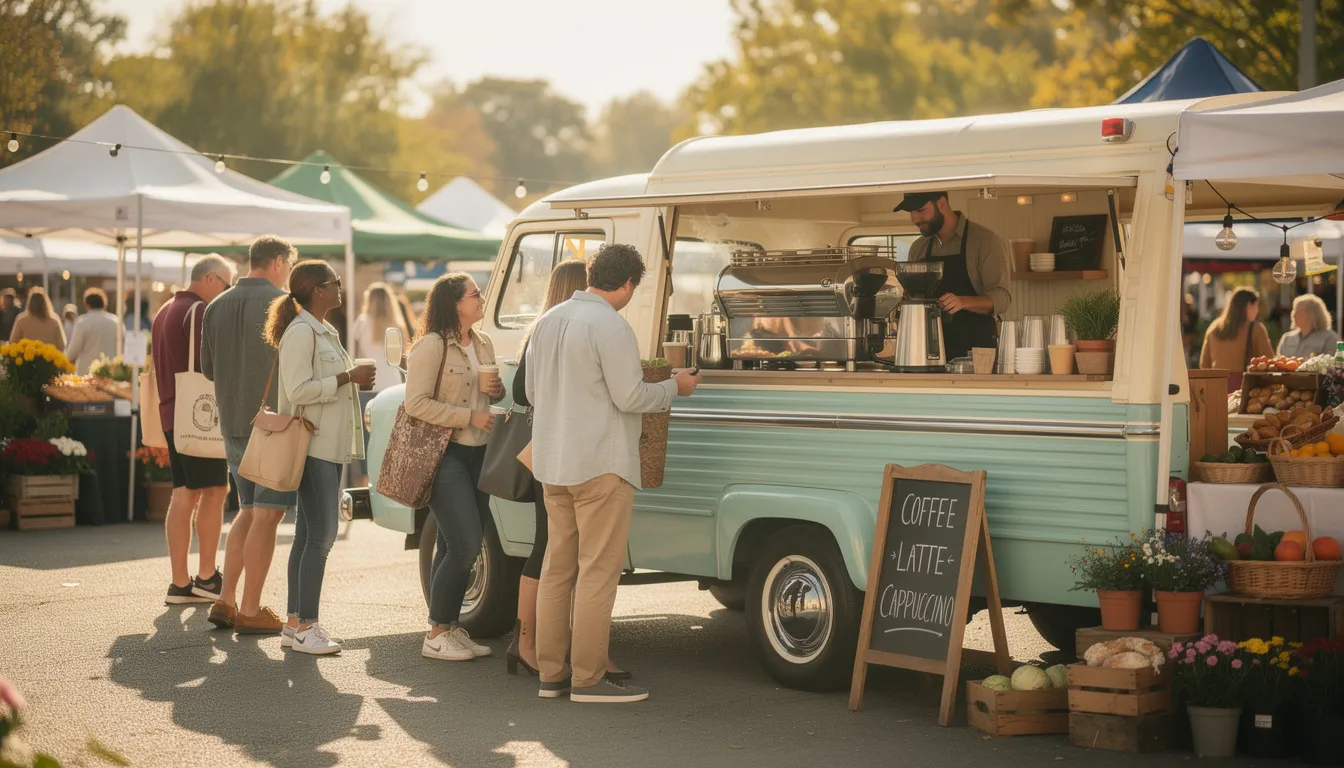
A compact espresso cart or vintage truck serves farmers’ markets, office parks, festivals, and private events—testing neighborhoods before committing to a fixed location.
|
Venue Type |
Potential |
|---|---|
|
Saturday farmers’ markets |
High foot traffic, repeat weekly customers |
|
Office campuses |
Weekday commuter rush |
|
Summer concerts & festivals |
High volume, event-driven |
|
Private events |
Premium pricing, brand exposure |
|
Mobile setups require $10K-30K in startup costs and can serve around 200 customers per day. Design bold branding, weather-resistant materials, and a clear overhead menu. |
|
Revenue extends to private event bookings, corporate breakfasts, and seasonal holiday pop-ups.
Embrace the grab n’ go
A small-footprint grab-and-go kiosk near transit hubs, hospitals, or universities focuses on speed over ambiance. Layout centers on an order window, minimal seating, and an optimized bar flow for high volume during the 7-10 a.m. rush. Drive-through coffee shops are the ultimate grab n’ go option for customers on the run.
Keep the menu simple: espresso, batch brew, cold brew on tap, and a few fresh pastries or baked goods. Mobile ordering with labeled pickup shelves clears lines quickly—after preparation, orders are sent to the window or shelf for customer pick up, streamlining the process.
This model competes with big chains by emphasizing speed plus local personality—something a national chain can’t replicate.
Invest in the whole experience (Hygge & Cozy Concept)
The Danish concept of “hygge” (roughly translated as cozy contentment) translates into warm lighting, layered textures, soft lighting, and gentle background music.
Design elements include:
- Low, warm color temperature bulbs (2700K or warmer)
- Big communal tables alongside armchair nooks
- Seasonal touches like blankets in winter, candle-like LED lights, and comfort-food snacks
- Staff trained to remember names and usual orders
This concept works well in residential neighborhoods with strong local foot traffic, appealing to patrons who want a break from screens and stress.
Use the building as inspiration (Adaptive Reuse Café)
Build your café inside an old garage, warehouse, bank, or firehouse, keeping original architectural details that tell a story.
A 1950s service station becomes a bright café with roll-up doors and vintage signage. Raw brick and steel pair with plants, wood, and soft seating to create visual contrast. Interpretive signage or framed photos showing the building’s history give press and social media natural content.
This approach creates a unique sensory experience that’s impossible to replicate elsewhere.
Give events a jolt of energy (Coffee Catering)
Build an events arm with a portable espresso bar for weddings, conferences, and office parties.
Package types might include:
- Per-hour barista service
- Per-drink pricing
- Flat-rate corporate packages
Use branded cups and a compact menu designed to serve 100+ guests efficiently. Capture event leads with QR codes and discount cards pointing back to your main café location.
Position event photos and testimonials prominently on your website and social profiles.
Serve drive-through brews
A drive-through hut model suits suburban or roadside locations with high car traffic counts.
Physical layout includes dual drive-through lanes where feasible, clear lane signage, and headsets for staff communication. “Runners” can take orders directly at car windows during peak times.
Include a small walk-up window for pedestrians and cyclists. Digital menu boards and pre-order apps speed up morning rush throughput.
Double as a bookstore
A café-bookshop hybrid features curated shelves of fiction, cookbooks, and titles from local authors. Low shelves form cozy “rooms” around seating, with quiet corners for reading.
Recurring events like monthly book clubs, local author signings, and poetry nights drive repeat visits. Revenue comes from book sales, coffee, and branded bookmarks or tote bags.
This concept pairs well with neighborhoods near universities or arts districts.
Create a cozy coworking space
A coffee shop optimized for remote workers offers strong Wi-Fi (100+ Mbps), abundant power outlets spaced every six feet, and ergonomic seating.
Zone the space:
|
Zone |
Purpose |
|---|---|
|
Quiet laptop area |
Focused solo work |
|
Small meeting room |
Hourly reservations |
|
Social zone |
Calls, casual meetings |
|
Optional membership tiers offer reserved seating, bottomless drip coffee, and after-hours access. Clear house rules address call etiquette and peak-hour time limits. |
|
This model provides weekday daytime revenue stability compared to purely social cafés—remote workers now comprise roughly 25% of café traffic in urban areas.
Play some games (Board Game Café)
Having a selection of board games available for customers to play can turn your coffee shop into a social hub, enhancing social experiences and encouraging community building. A board game café stocks shelves with modern board games like Catan, Azul, and Ticket to Ride. Large communal tables, sturdy chairs, and good lighting support long gaming sessions.
Charge a modest cover or “game library fee” ($3-5 per person) to fund game upkeep and new purchases. Weekly tournaments, learn-to-play nights, and themed evenings drive community events and repeat business.
Calibrate the menu toward snacks and easy-to-eat items that won’t damage game components—think fries in paper cones, sliders, and drinks with lids.
Create a modern internet café
A 2020s internet café offers high-speed fiber, gaming PCs, and console stations alongside coffee service.
Separate gaming zones from quiet coffee areas with acoustic panels and thoughtful layout. Charge hourly PC rental fees and offer memberships for regular gamers or students.
Add-ons include LAN party nights, esports watch parties, and coding meetups. Robust power management and cooling systems are foundational design elements.
Combine art and coffee
A café that doubles as a rotating gallery for local painters, photographers, and illustrators turns white walls into revenue.
Design with picture rails and track lighting for easy art swaps. Take a 15-25% commission on each piece sold. Regular opening nights or “first Friday” events with live music and special drinks attract the creative community.
This concept builds strong relationships with local artists and earns local media attention.
Research while you sip (Library Café)
A library-style café features floor-to-ceiling bookshelves, study tables, and quiet zones for focused reading or work.
Use color-coded spine labels and a tablet-based index for easy navigation. Offer free in-house borrowing or a small subscription for home checkout privileges.
Design cues include classic reading lamps, dark wood, and comfortable but upright chairs. The appeal extends to students, researchers, and anyone seeking analog, distraction-light spaces.
Keep up with current events (Newsstand Café)
Stock your café with print newspapers and magazines from local, national, and international sources.
Display headlines on a chalkboard each morning to spark conversation. Partner with local newspapers for subscriber discounts. Host election-night watch parties and Saturday “coffee & headlines” discussions.
The visual charm of printed materials photographs well for social media and appeals to patrons seeking a slower pace.
Moonlight as a wine bar
A dual-concept shop serves specialty coffee by day and transforms into a wine or aperitivo bar after 5 p.m.
Physical changes at night include dimmer lighting, candles, vinyl records, and updated menu boards. Curate natural wines, local beers, or small plates that match your brand’s personality.
Train baristas to confidently recommend both espresso and wine pairings. Extended revenue hours appeal to guests who want a single neighborhood spot for multiple occasions.
Go minimalist
A minimalist espresso bar features simple lines, a monochrome palette, and a tightly focused menu.
Visual elements include white walls, light wood, black fixtures, and abundant natural light. Offer just espresso, macchiato, cappuccino, filter, and one seasonal signature drink.
Minimalism directs attention to coffee quality and trained baristas demonstrating their craft. Clean lines photograph strongly online, attracting design-conscious customers.
Embrace another culture (Global Café Themes)
Draw inspiration from specific cultural vibes:
|
Theme |
Design Cues |
Signature Drinks |
|---|---|---|
|
Parisian sidewalk café |
Bistro chairs, marble tables |
Café crème, croissants |
|
Italian espresso bar |
Stand-up counter, brass fixtures |
Straight espresso, affogato |
|
Japanese kissaten |
Tatami-inspired corners, hand-drip |
Kissaten-style pour over |
|
Turkish coffeehouse |
Ornate brass sets, cushions |
Turkish coffee, lokum sweets |
|
Research respectfully and collaborate with people from the culture when possible. Cultural transport creates a “mini-vacation” feeling that encourages lingering visits. |
|
|
Bounce around with a pop-up shop
A time-limited café inside existing businesses—bookstores, plant shops, galleries—lets you test neighborhoods and menu ideas with lower risk.
A 3-6 month pop-up requires a portable bar, branded backdrop, and compact menu boards. Co-branded drinks and shared marketing with the host business extend reach.
Capture email signups and social follows to convert pop-up fans into long-term regulars when you open a permanent location.
Feature rotating roasters
Act as a “roaster showcase,” changing featured roasters every month or quarter.
Display the current roaster’s story with origin maps and tasting cards on a dedicated wall. Offer flights where guests can sample different beans and roasts side by side.
Simple signage like “Guest Roaster of March 2026” creates time-bound excitement. This appeals to coffee enthusiasts and supports smaller local roasters.
Provide a sensory experience
Immersive concepts like low-light or blackout tastings emphasize aroma and flavor over visual distractions.
Pre-booked 60-minute sessions led by a trained baristas guide guests through carefully curated tastings. Communicate accessibility considerations clearly so guests know what to expect.
Curated playlists, specific textures in seating, and intentional scent control round out the experience. Partner with organizations focused on disability awareness or sensory education for community events.
Host coffee tastings
Structured cuppings and informal tasting flights can become recurring calendar events.
Provide tasting mats, flavor wheels, and small educational cards for each coffee. Ticketed Sunday afternoon events with capped attendance create intimacy and exclusivity.
Use tastings to spotlight new menu items and limited-release coffees. Encourage signups to a “coffee club” newsletter for ongoing engagement and repeat visits.
Pick a pop culture theme
Design a café loosely inspired by a beloved show, decade, or genre—without infringing trademarks.
Use evocative color palettes, quotes on walls, and playlists that hint at the reference. Themed nights like trivia, watch-along events, or cosplay meetups attract passionate fan communities.
Avoid direct use of copyrighted logos or character names. Devoted fans can quickly become hyper-loyal regular customers and online advocates.
Partner with local bakeries
A partnership model has a nearby bakery supply pastries daily, letting you focus on beverages.
Display pastries in a labeled case with the bakery’s name, origin notes, and delivery times. Cross-promote on social media and consider occasional “bakery takeovers” with special weekend menus.
Benefits include lower production overhead, variety of offerings, and visible support for small businesses in your community.
Pair coffee with pastries (In-House Baking)
Bake your own croissants, cookies, and specialty items like cardamom buns on-site.
Open-kitchen or glass-window baking areas let guests watch fresh pastries emerge from the oven. Morning baking schedules fill the shop with irresistible aroma before doors open at 7 a.m.
Print menu pairing suggestions near the register—“try our single-origin pour over with lemon cake.” Investment in labor and equipment is higher, but margins and brand distinctiveness improve.
Go international (World Coffee Bar)
Feature drinks from different coffee cultures:
- Vietnamese cà phê sữa đá (iced coffee with sweetened condensed milk)
- Italian affogato (espresso over gelato)
- Mexican café de olla (spiced, clay-pot brewed)
- Greek frappé (iced instant coffee, foam whipped)
Rotate a “Country of the Month” with matching décor accents and educational blurbs. Train staff to prepare each drink authentically and explain origins clearly.
Global variety encourages repeat visits as customers “collect” all the drinks.
Attract movie buffs (Cinema Café)
A cinema-themed café features classic film posters, marquee-style signage, and a projector wall for weekly film nights.
Name specialty drinks after genres or archetypes (not copyrighted titles). Manage sound levels so movie nights don’t disturb daytime customers.
Partner with local film festivals or film schools for screenings and Q&A events.
Honor your roots (Classic Community Coffeehouse)
A traditional coffeehouse centers on open mics, acoustic performances, and student study sessions.
Mismatched furniture, community bulletin boards, and walls full of local flyers create authentic charm. Recurring community events include poetry slams, language-exchange nights, and neighborhood meetings.
Long opening hours and a menu with affordable staples attract students and artists. This model leans on genuine community engagement over polished branding.
Go green (Cannabis or Plant-Focused Café)
Where legal, cannabis cafés require specialized lounge design, ventilation, and compliance. For most markets, a lush plant café offers similar appeal.
Pack the space with hanging plants, potted trees, and a small retail plant section. Use natural materials, maximize daylight, and choose earthy color palettes.
Sustainability practices—reusable cup incentives, composting coffee grounds, local sourcing—reinforce the “green” theme and attract environmentally conscious customers.
Make your menu move with a split-flap display board
A split-flap display—the mechanical board with rotating flaps familiar from vintage train stations and airports, with a rich history and evolution of split-flap display boards—becomes your main menu and event board.
The board physically flips to reveal different menus: morning espresso and pour over offerings, afternoon cold brew specials, and evening wine or dessert options. Program it to change on schedule or trigger manually during events, adding theater whenever the flaps start clicking—very similar to how modern Split Flap TV digital boards recreate the nostalgic motion of departure boards on standard screens.
Mount it high over the bar so it’s visible from the entrance and becomes a signature visual feature that can rival Split-Flap TV business signage solutions used in airports and retail spaces. Case studies from Brooklyn’s Devoción café found split-flap boards increased impulse orders by 25%—the mechanical, analog feel encourages video shares on TikTok and Instagram Reels at rates 3x higher than digital screens.
Cost runs $2,000-5,000 installed for a 24×36 inch board with 4-8 lines, though modern affordable split-flap board alternatives on standard TVs can deliver similar impact with lower upfront spend thanks to customizable digital split-flap message boards. Unlike LCD screens, split-flap displays resist screen glare and work during power fluctuations. The clicking sound alone draws attention and sparks curiosity, turning your menu into a marketing asset.
Store Operations and Management for Coffee Shops
Behind every successful coffee shop is a foundation of strong operations and effective management. From hiring and training skilled baristas to maintaining a clean, inviting environment, attention to detail is key. Invest in staff development so your team can confidently explain different beans, brewing methods, and specialty drinks—this expertise enhances the customer experience and sets your shop apart.
Efficient workflows behind the bar ensure quick service during busy hours, while regular inventory checks keep your menu stocked with fresh coffee and baked goods. Prioritize cleanliness, from sparkling espresso machines to spotless restrooms, as these small touches contribute to a welcoming space that encourages repeat visits.
Customer service should always be at the forefront. Encourage your staff to greet regular customers by name, remember their favorite orders, and create a friendly, approachable atmosphere. By focusing on operational excellence and consistent service, you lay the groundwork for long-term relationships and a loyal customer base.
Local Coffee Shops and Competition
In a world dominated by national chains, local coffee shops have a unique opportunity to stand out by embracing their individuality and community roots. While big brands may offer convenience, local coffee shops can deliver a personalized experience, showcase local roasters, and support small businesses in the area.
To compete effectively, highlight what makes your shop special—whether it’s sourcing beans from nearby farms, collaborating with local artists for rotating gallery walls, or offering specialty drinks that reflect your neighborhood’s tastes. Building partnerships with other small businesses, such as bakeries or bookstores, can expand your reach and create a network of support within your community.
Stay attuned to your customers’ preferences and adapt your offerings to meet their needs. By fostering a strong sense of place and prioritizing community ties, your coffee shop can thrive even in a crowded market, attracting patrons who value authenticity and local flavor.
Why Repeat Customers Matter for Your Coffee Shop Idea
According to the National Coffee Association, Americans aged 25-44 spend an average of $20.50 weekly on coffee. Converting even a fraction of that spending to your café depends on repeat customers—the regulars who account for a disproportionate share of daily sales and tolerate modest price increases because they’ve formed a habit around your space.
A strong concept—whether it’s a coworking café, a cat café, or a split-flap-equipped “train station” theme—gives people a reason to return beyond caffeine alone. Loyalty levers include punch cards, app-based loyalty programs, and “locals’ hours” discounts during slower periods.
Rituals compound attachment: same drink, same time, same table. Designing your concept from day one with repeatable experiences—weekly events, seasonal specialty drinks, evolving art on the walls—builds the emotional layer that turns a first visit into a long term relationship.
Creative Ways to Enrich the Coffee Shop Customer Experience
Good coffee is the baseline. Experience is the differentiator.
Barista hospitality sets the tone. Train staff to offer friendly, non-pretentious explanations of different beans, different brewing methods, and menu items. Not everyone knows what a cortado is—make learning comfortable.
Sensory elements round out the visit:
- Curated playlists at moderate volume
- Signature scent (fresh grind, subtle baked goods)
- Comfortable seating that invites lingering
Food options should feel substantial, not token. Offer real breakfasts, pastries from local bakeries or baked in-house, and gluten-free or vegan choices. When you offer food alongside great coffee, you capture the full morning occasion—not just a quick cup of coffee.
Practical touches reduce friction: fast Wi-Fi, clean restrooms, clear signage, and smooth ordering flow. These basics keep patrons happy without them noticing why.
Staying Up-to-Date with Industry Trends
The coffee shop industry is constantly evolving, with new trends shaping customer expectations and business opportunities. Staying informed about the latest developments—like the rise of cold brew, innovative brewing methods such as pour over or siphon, and the growing demand for plant-based milk options—can help your shop stay ahead of the curve.
Follow industry publications, attend coffee expos, and connect with other café owners to share insights and best practices. Keep an eye on emerging technology, from app-based loyalty programs to advanced espresso machines, that can streamline operations and enhance the customer experience.
Regularly refreshing your menu with seasonal specialty drinks or limited-time offerings keeps things exciting for your regular customers and attracts new visitors eager to try something different. By embracing change and staying curious, your coffee shop can remain relevant, inspired, and ready to serve the evolving tastes of your local community.
Marketing Ideas to Support Your Coffee Shop Concept
Marketing works best when it’s tied directly to your concept. A cat café should post adoption success stories; a roastery café should share tasting calendars and live-roast schedules.
Signature drinks reinforce your theme. A train-inspired café with a split-flap board might offer a “Departure Latte” or “Platform 9 Espresso.” Tie seasonal drinks to events—pumpkin spice in fall, lavender-honey in spring.
Social media thrives on behind-the-scenes content, especially when you use customizable split-flap TV displays for cafés and bars and take the time to set up and manage your split-flap TV with features like the Split Function in the Split-Flap TV Manager:
- Latte art videos
- Roasting process clips
- Menu flips on the split-flap display
- Live music performances
Building a strong social media presence helps showcase your brand’s personality. Consistent, high-quality content not only communicates your brand’s personality but also enhances customer engagement and brand recognition.
Event-based marketing creates calendar anchors: live music nights, seasonal drink launches, art openings, and board game tournaments. Each event is a reason to post, invite, and draw new foot traffic.
Collaborations extend reach without big ad budgets. Partner with local bakeries, artists, bookstores, and markets. Co-host community events with nearby small businesses. Cross-promote on each other’s channels.
Ready to Get Started?
The path forward is straightforward: pick a concept, define your target audience, then align location, layout, and menu to serve them.
Create a concise business plan covering:
- Budget and funding sources (small business loans, community investors, phased build-outs)
- Staffing and training requirements
- Equipment (espresso machines, grinders, POS systems)
- A 12-month event and marketing calendar
Starting small—with a cart, pop-up, or catering arm—lets you test concepts before committing to a full build-out.
Before you finalize anything, visit 5-10 cafés in your city. Study what works and what’s missing. Talk to owners when you can. Notice how regulars behave, what they order, how long they stay.
A clear idea plus consistent execution can turn a simple coffee bar into a beloved neighborhood institution. The world has plenty of coffee shops—it needs more cafés worth returning to.
Related Coffee Shop Resources
As you move from concept to execution, practical resources accelerate the process:
- Floor plans and bar flow guides help you design a layout that handles rush-hour volume without bottlenecks.
- Sample business plans provide templates for financial projections and staffing models.
- Equipment checklists cover espresso machines, grinders, brewers, and POS systems with cost ranges.
- Menu engineering guides show how to price drinks for 35% gross margins while keeping customers happy.
- Loyalty program setup tutorials walk through app-based rewards and punch-card systems.
Build a resource toolkit that serves you throughout your coffee shop business journey—not just at launch, but as you scale, add locations, and attract new customers year after year.