
A Guide to Plug and Play Signage
May 10, 2026 · Captain
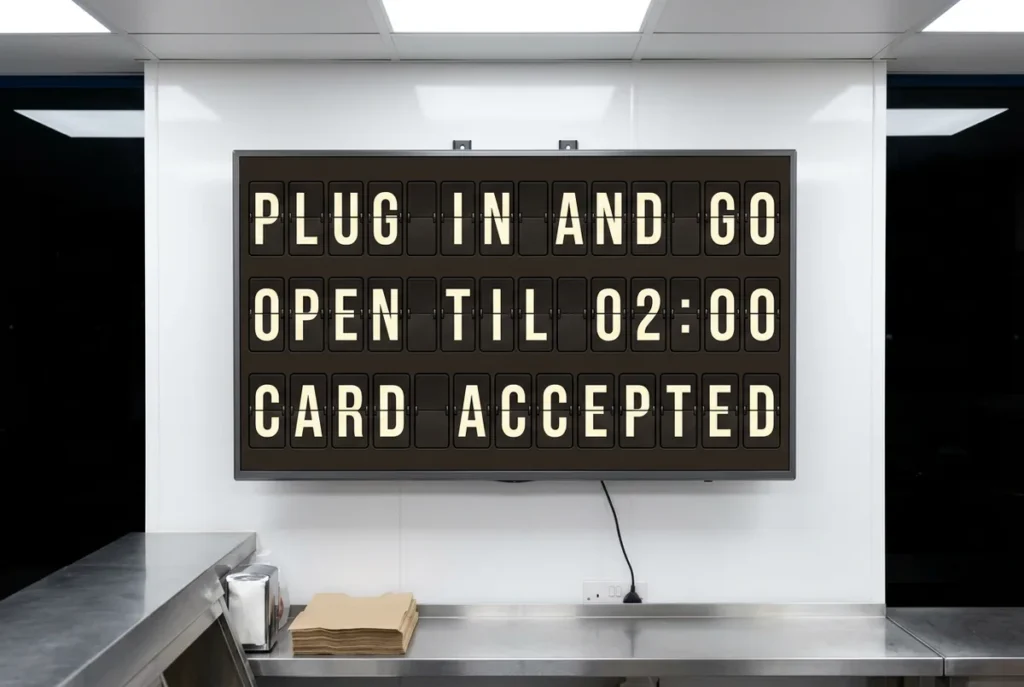
If you have ever taped a last-minute notice to a front door, crossed out a menu item mid-shift, or rewritten the Wi-Fi password for the tenth time, you already understand the value behind a guide to plug and play signage. The real appeal is not technical. It is operational. You want a display that looks polished, updates fast, and does not ask for an AV degree every time something changes.
That is where plug-and-play signage earns its keep. It strips away the usual friction of digital displays and gives businesses a cleaner path from idea to screen. For a restaurant, that might mean swapping brunch for dinner in seconds. For a boutique hotel, it could mean updating event times without printing fresh inserts. For an office manager, it is a better way to share visitor instructions, room schedules, or internal announcements without a cluttered reception desk.
The best version of this category does one more thing. It turns signage into part of the atmosphere. That matters more than many businesses realize. A display can communicate information, but it can also shape how a space feels. In a world full of generic screens, the tactile rhythm and retro charm of split-flap style signage still stop people in their tracks.
What plug and play signage actually means
At its simplest, plug-and-play signage is a display system designed to be easy to set up and easy to manage. You do not piece together separate hardware, content software, media players, and complicated installation steps just to get a message on screen. You start with prepared hardware, connect it, open an app, and publish.
That simplicity is what makes it attractive to busy operators. A coffee shop owner does not want to troubleshoot display settings before opening. A bar manager does not want to rely on a designer every time happy hour changes. Plug-and-play systems are built so that the person closest to the message can control the message.
Still, not all plug-and-play signage feels the same in practice. Some systems are easy to install but awkward to update. Others are functional but visually flat. That is why it helps to think about signage in two parts: setup and daily use. If installation is simple but content management is a headache, the product is only doing half the job.
A guide to plug and play signage for real businesses
For most small to mid-sized businesses, signage fails in familiar ways. It gets outdated. It looks improvised. It depends on one staff member remembering to change it. The stronger approach is to choose a system that reduces those weak points from day one.
Start with the obvious question: what changes often in your space? Menus, specials, event listings, room assignments, waitlist messages, opening hours, house rules, and promotional copy all tend to shift more than people expect. If your messaging changes weekly, daily, or even a few times per shift, static signage creates extra work. Plug-and-play signage makes more sense when the cost is not just printing, but the constant attention those updates require.
Then consider visibility in context. Many modern digital displays chase brightness, motion, and heavy graphics. That works in some environments, but it is not always the right fit. In hospitality, retail, and design-conscious spaces, a text-led display with character can often communicate more clearly. Split-flap style signage has a very different presence. It is not trying to imitate an ad screen. It feels closer to a public information board – deliberate, elegant, and memorable.
That difference matters when you want signage to support the room rather than dominate it. The right display should catch attention, but it should also belong in the space.
Why the split-flap format works so well
There is a reason people still pause for the click-clack effect. Split-flap boards were designed to be read in busy public environments, and that original logic still holds up. The format is direct. It favors short, useful information. It creates a small moment of theater each time the content changes.
For businesses, that creates two advantages. First, people notice updates. Second, they remember the display itself. A handwritten sign gets ignored because it looks temporary. A generic TV loop can disappear into the background because customers have seen a thousand versions of it. A split-flap inspired display lands differently. It feels intentional.
This is especially useful for businesses that care about brand atmosphere as much as communication. A boutique hotel lobby, a well-designed cafe, or a stylish office reception area does not want signage that feels like an afterthought. Retro-modern split-flap signage brings visual discipline to practical information. It can announce a special, direct foot traffic, answer common questions, and still contribute to the identity of the space.
There is a trade-off, and it is worth saying clearly. This format is not built for complex visual campaigns or image-heavy storytelling. It is strongest when the message is concise. If your goal is to show text clearly, elegantly, and with personality, it shines. If you need animation-packed promotional media, you are solving a different problem.
What to look for in a plug-and-play setup
The best guide to plug and play signage is not really about specs. It is about friction. Where does the system make your day easier, and where does it quietly add work back in?
Prepared hardware is a major advantage because it removes setup uncertainty. You are not left wondering whether the screen, player, and software will cooperate. Once the display is in place, the next question is control. Can you update messages from an app without being on site? Can you schedule content ahead of time? Can you create multiple pages or layouts for different needs? Those features sound small until you are managing a lunch rush, checking in guests, or handling office traffic.
Customization matters too, but only if it serves the message. Being able to adjust rows, columns, colors, timing, and page structure gives you room to fit the display to your environment. A restaurant may want bold daily specials. A hotel may prefer understated local information and check-in notes. An office may need a cleaner, more structured board for visitor guidance. Flexibility is useful when it protects consistency.
The best systems also make content maintenance realistic. That means no complicated design workflow and no dependence on a specialist for routine changes. If staff can learn it quickly, the signage is more likely to stay current.
Where plug and play signage has the biggest payoff
Restaurants and bars are obvious candidates because the information shifts constantly. Menus change, items sell out, specials rotate, and event promotions come and go. A digital split-flap display keeps those updates clean and visible without the mess of taped paper or worn chalkboards.
Retail shops use it differently. Here the display often supports the experience as much as the transaction. Store hours, pickup instructions, promotions, fitting room notices, and brand messaging all benefit from a format that feels curated rather than improvised.
Hotels and hospitality spaces tend to see a broader operational benefit. Event schedules, welcome messages, breakfast hours, meeting room updates, and directional notes all work well in a concise text format. The display becomes part information desk, part atmosphere.
Offices often underestimate how useful this can be until reception gets crowded. Visitor instructions, room bookings, internal announcements, and wayfinding notes become much easier to manage when updates can be made instantly from one place.
Keeping it simple after installation
The smartest signage choice is the one your team will actually keep using. That means the setup should feel straightforward, but the day after setup matters just as much. If publishing a message takes too many steps, old habits return fast. Paper signs creep back in. Temporary fixes become permanent again.
A stronger system keeps the routine simple: install the display, connect it, open the app, and update content when needed. Scheduling helps even more because it reduces manual work during busy periods. If you know your weekday lunch special, weekend hours, or recurring event messaging in advance, the screen should handle that without a daily reminder.
This is one reason the plug-and-play model fits so well with split-flap signage. The format itself encourages clarity, and the software side should do the same. You are not trying to build a mini broadcast studio. You are trying to keep your messaging sharp, current, and on-brand.
A good sign should do more than fill space on a wall. It should answer questions before customers ask them, save your team time, and add a little character to the room while it works. If your current signage still depends on tape, markers, or last-minute printing, that is usually the moment to choose something better – something that looks considered, sounds like a click-clack memory, and works like a modern tool.