
Display Board Airport: From Classic Split-Flap to Digital Signage on Your TV
October 30, 2023 · Captain
Introduction: What Is an Airport Display Board Today?
In 2026, the display board airport terminals rely on has evolved into a sophisticated network of LED and LCD screens delivering real-time flight information to millions of air travelers daily. Most Flight Information Display Systems (FIDS) are now displayed on LCD or LED screens, although some airports still use split-flap displays. These Flight Information Display Systems update every few seconds, showing departures, arrivals, gates, and delays with reliability exceeding 99.9% at major hubs.
A flight information display system (FIDS) is a computer system used in airports to display flight information to passengers. An airport display board, or Flight Information Display System (FIDS), provides crucial flight data such as gate numbers and departure times.
This article is designed for business owners, designers, and tech enthusiasts who want to understand how airport display boards work and how their iconic design and technology can be leveraged for modern business environments. Understanding airport display boards is relevant for anyone seeking to enhance customer experience, streamline information delivery, or add a nostalgic and engaging visual element to their space.
The classic 1960s mechanical split-flap boards—those mesmerizing panels that clacked and flipped—inspired today’s digital signage. Digital displays, such as those using an LED screen, can provide real-time updates more efficiently and are generally easier to maintain than split-flap displays. Now, business owners can recreate that iconic airport look on a standard television using Split-Flap TV’s software, no custom hardware required. The nostalgic appeal of split-flap displays is often associated with their unique sound and visual spectacle.
Modern airport-style boards offer:
- Clarity that passengers and guests recognize instantly
- Real-time data updates without manual intervention
- Familiar design that draws attention naturally
How Airport Display Boards Work
Data Flow and Sources
Flight Information Display Systems form the backbone of every airport display board. Data flows from airline operational databases through airport command centers into FIDS software, then out to hundreds of screens across terminals.
Information Shown on FIDS
A flight information display system (FIDS) is a computer system used in airports to display flight information to passengers. FIDS display crucial flight data such as gate numbers, departure times, flight status (including departures, arrivals, cancellations, and delays), and other details like flight number, airline logo, destination, scheduled times, and current flight status. These real-time updates help reduce anxiety for travelers and ensure smooth passenger flow.
Information displayed includes:
- Flight number and airline
- Destination or origin city
- Scheduled and estimated time
- Boarding status and gate number
- Delays and cancellations
Most airports operate LED or LCD displays driven by centralized software running 24/7. International hubs like Hartsfield-Jackson Atlanta require uptime above 99.9% to keep thousands of travelers moving.
From Solari Boards to LED Screens: A Short History of Airport Displays
The Era of Mechanical Split-Flap Boards
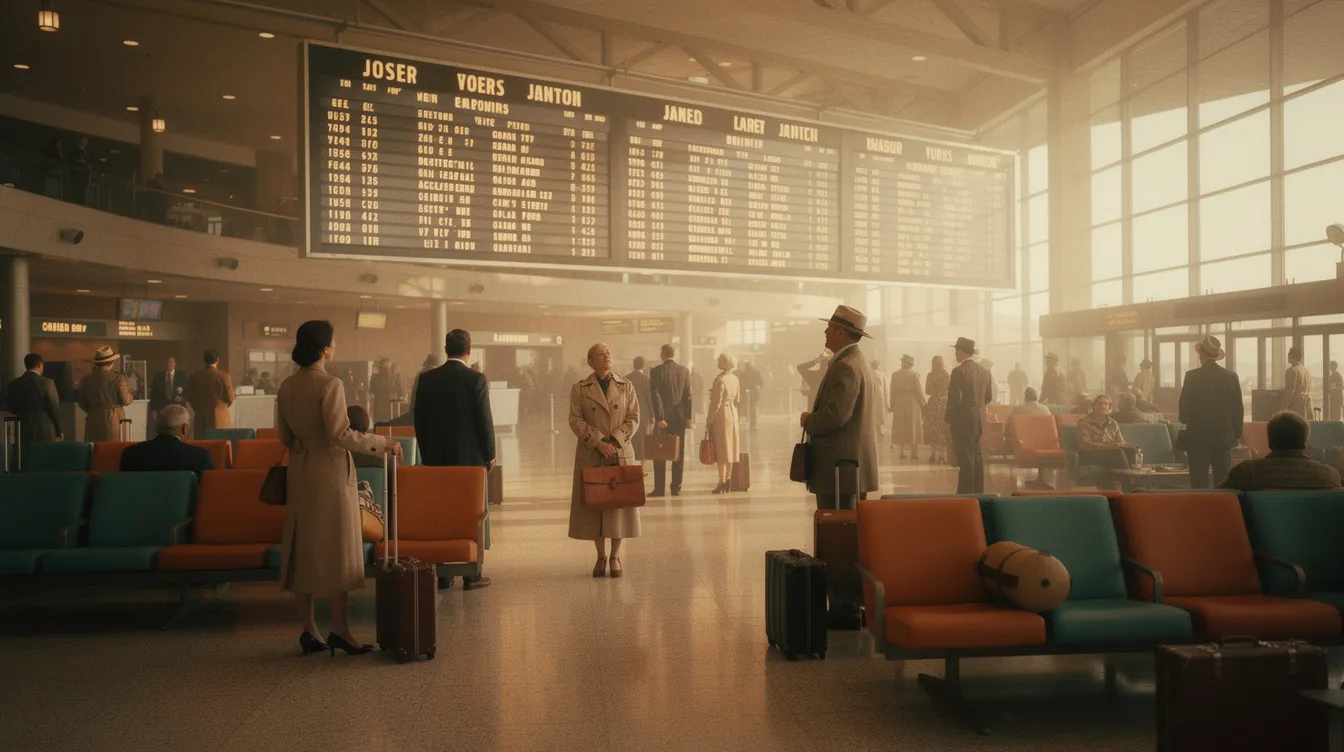
Picture a 1960s terminal: polished floors, cigarette smoke drifting, and the unmistakable “clack-clack-clack” of split-flap boards updating flights. As highlighted in an article exploring the history and evolution of split-flap display boards, these displays became iconic features of airport terminals. The split-flap display technology was developed by the Italian company Solari di Udine, which opened for business in 1725. The Solari board was initially designed to display time at railway stations before being adapted for use in airports. Solari di Udine boards dominated airports like Rome Fiumicino and Paris Orly, their synchronized wave of flipping panels announcing exotic destinations. The Solari board won the prestigious Compasso D’Oro award in 1956 for its innovative design. Over time, split-flap display technology has been largely replaced by digital LED displays in modern airports.
Key milestones:
- 1950s–1970s: Mechanical split-flap boards reign
- 1980s–1990s: Early CRT and LED matrices emerge
- 2000s onward: LCD video walls take over
Transition to Digital Displays
Airports transitioned away from mechanical systems due to maintenance complexity, spare parts scarcity, and limited flexibility. As an example, preserved Solari boards at locations like the TWA Hotel at JFK and Philadelphia’s 30th Street Station still exist, albeit often in a non-operational state, kept for historical reasons and as nostalgic exhibits rather than operational FIDS.
What Is a Split-Flap Display Board?
Split-flap displays are electro-mechanical digital display devices that present changeable alphanumeric graphics. They operate by rotating flaps to show the desired character or graphic.
Split-flap displays are electro-mechanical boards where each character sits on rotating flaps, originally designed for train stations and airports. Motors spin drums containing stacks of flaps, creating that characteristic flipping motion as letters change, a process explored in depth in this overview of the history and mechanics of split-flap display boards.
- A single departures board contained thousands of moving components
- Specialized technicians were required for upkeep
- The sound of flipping drew collective attention across terminals
- Original boards survive in Qantas lounges and design museums
Why Old Airport Display Boards Still Matter
The emotional impact runs deep. When that board clacked to update, people looked up together, scanning for their city among exotic names like “Casablanca” or “Hong Kong.” That anticipation of travel, that moment of collective attention—it still resonates, and modern digital solutions can recreate the nostalgic magic of departure board motion without the mechanical complexity.
Why businesses recreate the look:
- Instantly signals travel, reliability, and international connections
- Stands out against generic digital signage
- Triggers positive memories and curiosity
- Creates a “this is so cool” reaction from guests
Even though airports use silent LED walls today, the visual language of those boards influences UI design and wayfinding worldwide.
Bringing the Airport Display Board to Your Business with Split-Flap TV
Digital Split-Flap for Modern Spaces
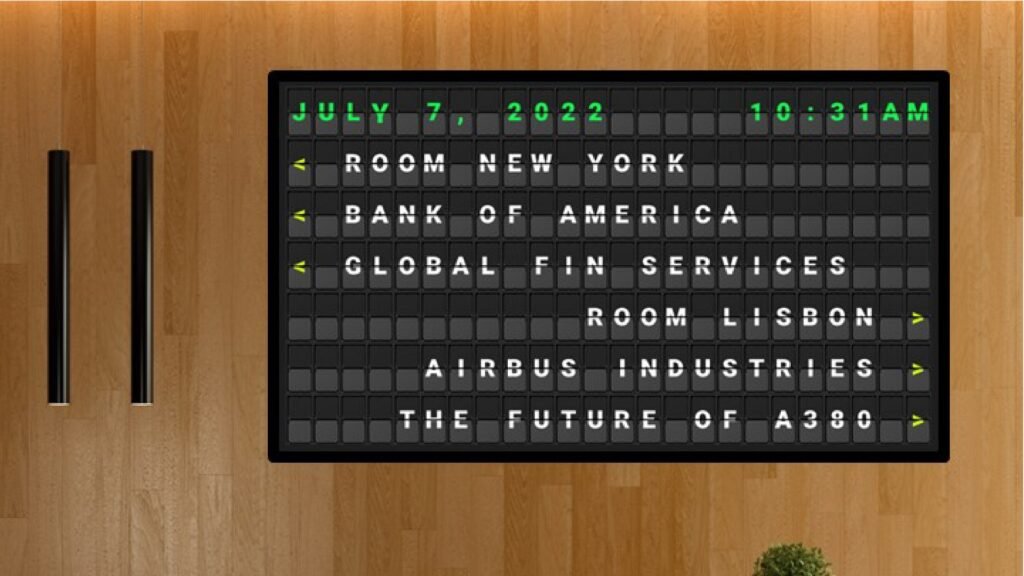
Here’s the simple truth: you can now have a split-flap style airport display board on any television, without mechanical parts. Split-Flap TV elevates airport-style and in-store signage by recreating the 1960s Solari-board aesthetic in software—flipping animations, retro typography, high-contrast layouts.
How It Works
The software works on smart TVs, Android TV sticks, Apple TV, tablets, or external media players via HDMI. A 7-day free trial and subscription tiers (Economy, Business, Cockpit) make it accessible for bars, hotels, retail, offices, and coworking spaces as an affordable split-flap board alternative.
What your TV can display:
- Rotating schedules (events, meetings, departures)
- Weather and time zones for multiple cities
- Social media counters and KPIs
- Branded messaging in airport-style split-flap designs making a comeback in digital spaces
Key Features: From Real-Time Messaging to Retro Design
- Multiple columns for destinations, times, and status—just like classic boards
- Animated flips that capture the mechanical feel
- Customizable headers and brand colors
- Live time, date, and weather integrations
- Social follower counters displayed as “arrivals”
- Scheduling tools for automatic content changes throughout the day
- Web dashboard control from any browser—no contact with the TV needed
Additionally, team members can manage playlists showing morning schedules, afternoon events, and evening promos without touching the device itself.
Use Cases: Airport-Style Display Boards Beyond the Terminal
Concrete examples by sector:
- Hotels near airports: flight-style check-in/check-out lists for guests
- Coworking spaces: meeting room “departures” showing availability
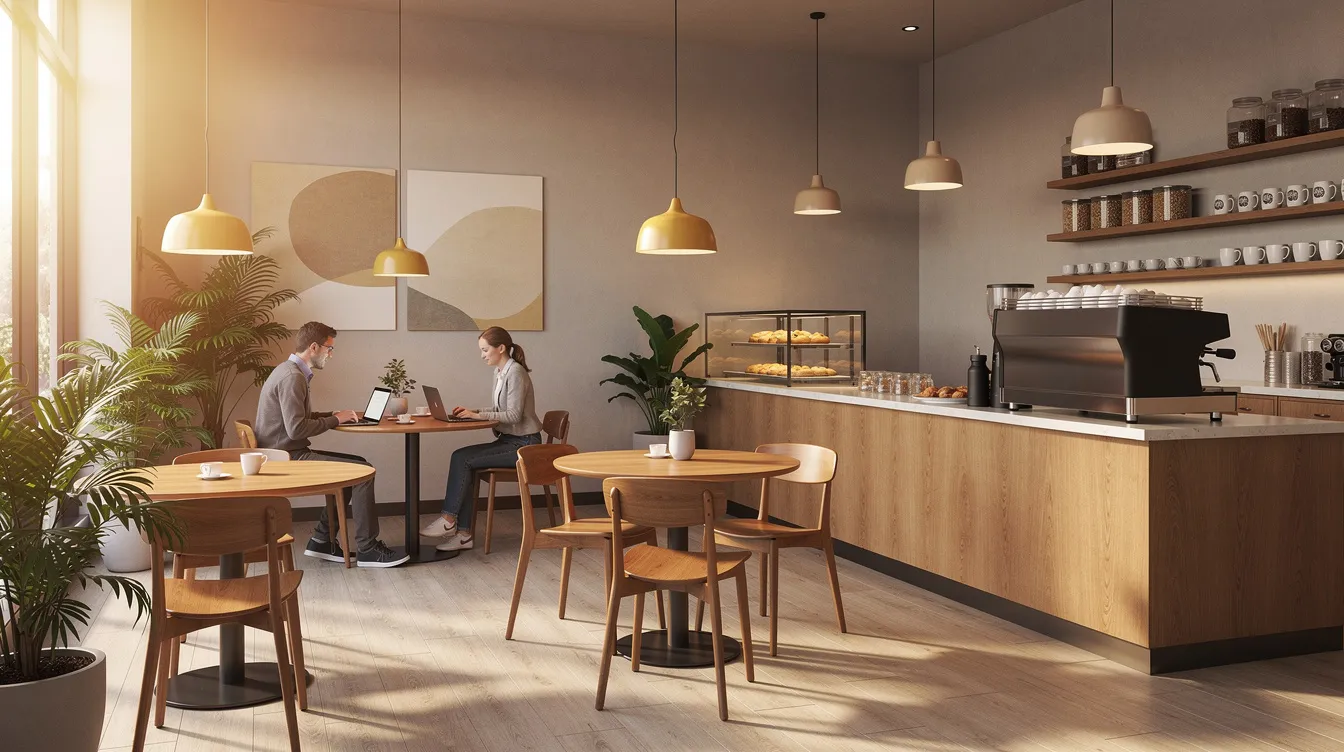
- Cafés: “Departures to: Espresso at 14:00, Latte at 14:15”
- Retail: daily offers displayed as flight destinations
- Warehouses: shipment “departures” for dock teams
- Corporate HQs: global office time zones on one board
- Event venues: “Flight 101 to Main Stage, Boarding 7:30 PM”
The nostalgic design encourages people to look up and read—far more engaging than generic slideshows, especially when you use digital split-flap display alternatives that combine retro charm with cloud-based control.
Choosing Between Hardware Split-Flap and Digital TV-Based Boards
- Physical split-flap boards: Premium cost, ongoing technician maintenance, fixed scalability, showpiece appeal
- TV-based solutions: Affordable, cloud-managed, easily updated, works with existing screens, and can be configured as split flap display boards that actually work
- Best for hardware: High-budget flagship installations
- Best for Split-Flap TV: SMBs, multi-location chains, venues with existing screens, anyone wanting ease without complexity
How to Set Up an Airport-Style Display Board on a TV
- Choose a TV (43–55 inch works well for most venues)
- Connect it to the internet
- Install the Split-Flap TV app or connect a media player to start creating modern digital split-flap displays
- Log into the web dashboard from any browser
- Pick an airport-style template
- Customize columns: Flight, Destination, Time, Status
- Add your logo and adjust colors
- Check legibility from typical viewing distance under both daylight and evening lighting
Setup typically takes under an hour once your screen is mounted.
Conclusion: The Future of Display Boards, On and Off the Airport
Airport display boards evolved from 1960s Solari icons to today’s silent LCD walls—but the split-flap aesthetic remains powerful for capturing attention and conveying information clearly. With Split-Flap TV, any business owner can turn a simple television into a retro airport display board in minutes.
Key takeaways:
- No mechanical parts or specialist technicians required
- Works on devices you already own
- The 7-day free trial lets you test engagement on your busiest day
Head to our page and start your free trial today. Your guests will look up—and remember.