Digital Signage for Bar Happy Hour Schedule
May 16, 2026 · Captain
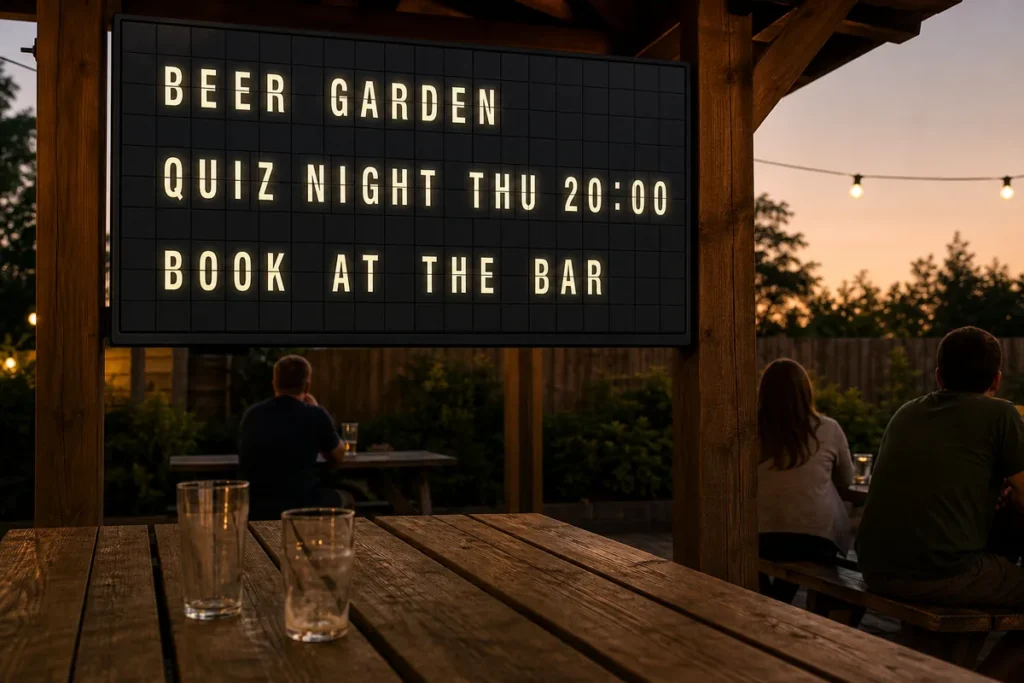
The worst time to realize your happy hour signage is wrong is 5:07 p.m., when the bar is three-deep, a server is answering the same specials question for the sixth time, and someone points at last night’s chalkboard price like it’s a binding contract. Digital signage for bar happy hour schedule fixes that exact mess. It gives you a cleaner way to show the right drinks, the right times, and the right promotions without the scramble of erasing, reprinting, or taping up another sign.
For bars, happy hour is not just a discount window. It is a traffic lever. It fills slow periods, shapes what guests order first, and nudges regulars into repeat habits. That means the schedule itself matters as much as the deal. If your messaging is inconsistent, hard to read, or hidden behind a cluttered bar setup, you lose part of the opportunity before service even starts.
Why digital signage for bar happy hour schedule works
A bar runs on timing. Lunch gives way to late afternoon, then pre-dinner, then game time, then the long push into night. Static signage struggles because bar offers rarely stay static. One day it is half-off drafts from 4 to 6. Another day it is martinis after 8. On weekends, maybe there is no happy hour at all. A handwritten board can communicate that, but only if someone has time to keep it current and legible.
Digital signage makes the schedule behave more like the bar itself – fast, flexible, and controlled. You can set content to change by daypart, weekday, or event, so the display updates without someone remembering to swap a sign mid-shift. That matters operationally, but it also matters to guests. Clear timing reduces confusion. Clear offers reduce hesitation. And when the board looks intentional, the promotion feels more credible.
There is also a branding angle that many bars underestimate. A sloppy sign can make even a good special feel cheap. A well-designed display does the opposite. It frames the happy hour as part of the experience, not an afterthought.
The bar environment changes what good signage looks like
Not every screen works in a bar. And not every bar should use the same style of display.
A sports bar with lots of movement, noise, and competing visuals may need bold, short messages that can be understood in two seconds. A cocktail bar may want something more restrained and design-led, where the display supports the room instead of shouting over it. A hotel bar might need a schedule that is polished enough for guests who are seeing the space for the first time and deciding whether to stay for a drink.
This is where the format matters. Split-flap style digital signage is not trying to imitate flashy modern ad screens with motion-heavy visuals. It works differently. It is text-first, deliberate, and memorable. The classic board aesthetic brings a sense of occasion to information that is usually treated like filler. When a happy hour schedule appears with that familiar click-clack rhythm, people notice it because it feels public, tactile, and a little theatrical.
For bars that care about atmosphere, that difference matters. You are not just displaying a discount. You are staging information in a way that fits the room.
What to show on a bar happy hour screen
The best happy hour displays do not try to say everything at once. Guests need the essentials first. Start with the timing, then the offer, then any limitation that avoids confusion. If your schedule changes across the week, make that obvious. If certain specials apply only at the bar, or only on select items, say so plainly.
A common mistake is treating the screen like a full menu. In practice, happy hour signage works better when it acts as a prompt. Show enough to trigger a decision, then let the staff or main menu handle the fine detail. A board that reads too much like a spreadsheet gets ignored.
Good bar signage often includes rotating pages or scheduled content blocks. One page can announce happy hour times. Another can feature signature discounted items. Another can call out trivia night, live music, or a late-night special that follows. That progression helps guests understand what is happening now and what is happening next.
Scheduling beats constant manual updates
The real value of digital signage is not that it is digital. It is that it can be managed without adding friction to a busy shift.
If your team still has to remember to change the board at 6 p.m. every day, you have only replaced one manual task with another. The smarter setup is scheduled content. You decide in advance what appears on Monday at 3:30, what changes at 6:01, and what shows after the dinner rush. Once that is built, the screen does the routine work for you.
That is especially useful for bars with layered promotions. Maybe weekday happy hour runs from 4 to 6, but Tuesday also includes all-night wine specials and Thursday adds a later cocktail window before close. Trying to keep that straight on paper is annoying. On a scheduled display, it is simply part of the programming.
There is a staffing benefit too. When signage answers the first wave of questions, bartenders spend less time repeating the basics and more time selling. Guests order faster when they know what qualifies, when it ends, and what they should try.
Why the split-flap look fits bars so well
There is a reason old information boards still have such a hold on people. They were built to stop foot traffic and command attention with motion, rhythm, and clarity. In a bar, that translates surprisingly well.
A split-flap style display has personality, but it does not feel tacky. It can be nostalgic without turning into theme decor. It feels curated. For venues trying to create a memorable environment, that is valuable. Guests may not remember every price point, but they do remember details that made the place feel distinct.
This is also where digital convenience changes the old model. You get the retro charm and the click-clack effect without the maintenance burden of mechanical boards or the daily mess of analog signs. Screens and tablets can be updated from an app, layouts can be adjusted, messages can be scheduled, and the look can be tailored to the space.
For operators, that blend is practical. For guests, it feels special.
Where to place digital signage for bar happy hour schedule
Placement is not a small detail. Even a beautiful display underperforms if guests only see it after they have already ordered.
The front window can work well if your goal is to pull in foot traffic during a slow hour. Near the host stand or entrance is useful when guests need an immediate reason to stay. Behind the bar works when the display supports ordering and helps reinforce featured specials. Some venues also use a smaller screen near waiting areas so guests start browsing offers before they reach a seat.
It depends on your layout. In a narrow neighborhood bar, one well-positioned board may be enough. In a larger venue with multiple sightlines, you may need separate displays that each serve a different function. One draws people in. Another confirms what is available now. Another promotes what starts later.
The key is not to overdo it. Happy hour signage should feel integrated into the room, not sprayed across every wall.
Design choices that help, and a few that hurt
The most effective designs respect reading distance and attention span. Large text beats crowded detail. Strong contrast beats decorative fuss. A concise offer beats a long explanation.
Bars sometimes assume brighter and busier means more noticeable. Often the reverse is true. If the room already has televisions, backbar bottles, pendant lights, people moving, and menus on tables, your signage should create clarity, not add more chaos. A restrained text-led display can stand out precisely because it is disciplined.
That said, there are trade-offs. If your happy hour changes constantly and includes many item-level specifics, a minimal board may need support from printed menus or staff explanations. If your audience expects a very visual menu experience, a text-forward display should be part of the system, not the whole system. The right answer depends on how your bar sells and what guests need in the moment.
A smarter way to keep the board current
For many operators, the appeal is simple. Buy a screen, download the app, publish the schedule, and stop babysitting the signage. That is the difference between a display that looks good for one week and one that actually becomes part of your day-to-day operation.
Split Flap TV is built around that idea. The look is classic split-flap, but the control is modern. You can customize layouts, colors, timing, pages, and messaging, then update content without standing in front of the screen with a marker or a roll of tape. For bars that want a polished room and fewer avoidable service interruptions, that is a meaningful upgrade.
Happy hour should feel easy on the guest side and easy on the staff side. If your current setup creates confusion, repeats work, or undercuts the atmosphere you have worked hard to build, the signage is doing more harm than it seems. A better board does not just announce the special. It sets the tone before the first order is poured.