
Boutique Hotel Arrivals Board Example
June 21, 2026 · Captain
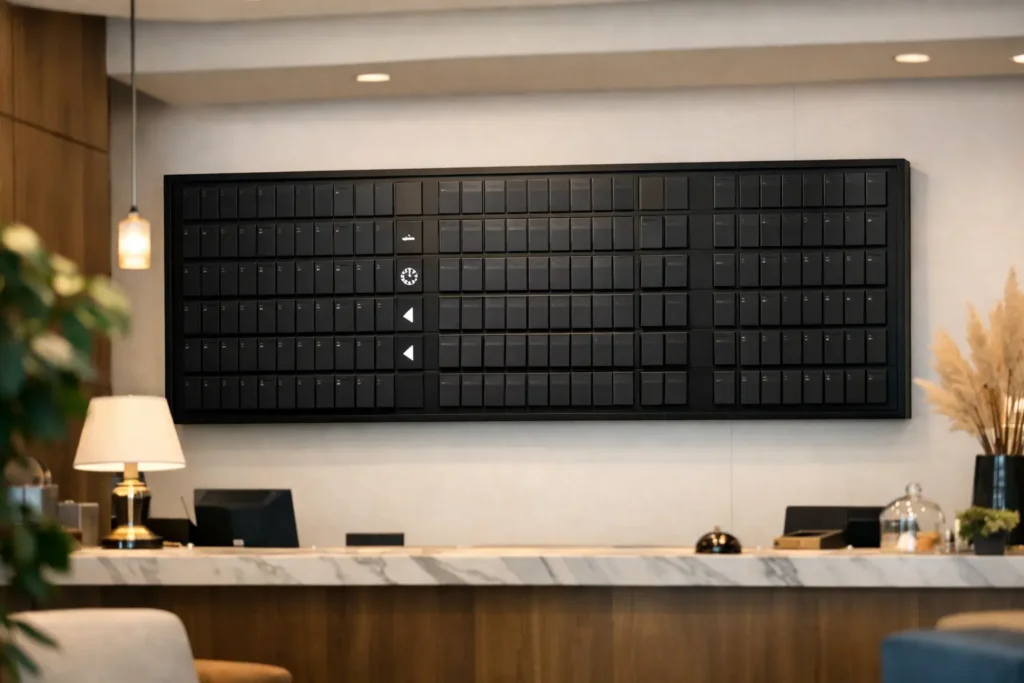
A guest steps into your lobby after a long flight, glances up, and instantly knows where to go. That is the value of a strong boutique hotel arrivals board example – it reduces front desk friction while setting the tone before a single word is spoken.
In a boutique hotel, the arrival experience is not a side detail. It is part of the product. Guests are reading the room the second they walk in: lighting, scent, music, materials, staff presence, and the way information is presented. A taped printout at the desk feels temporary. A generic screen can feel forgettable. A split-flap style arrivals board lands differently. It brings structure, motion, and a little click-clack theater into the lobby while still doing a practical job.
What a boutique hotel arrivals board example should actually do
The best arrivals boards are not trying to replace your front desk team. They are there to support it. A good board helps guests self-orient, confirms that the hotel is organized, and reduces repeated questions during busy check-in windows.
For boutique properties, the board usually needs to do three things well. First, it should display useful arrival information clearly. Second, it should match the visual language of the hotel. Third, it should stay easy to update when plans change, rooms shift, or groups arrive early.
That last point matters more than most hotels expect. A beautiful board that becomes a maintenance headache will not last. The smartest setup is one that feels curated to guests and simple to manage for staff.
Boutique hotel arrivals board example: a practical layout
Here is a strong format for a boutique hotel lobby board using a split-flap style display.
Header row
The top line can carry the hotel name or a short welcome message such as WELCOME ARRIVALS TODAY. This keeps the board branded without wasting too much space.
Main columns
A clean arrivals layout often includes guest name or group name, arrival time, room readiness, and a short note. Depending on the property, the note field might show CHECK IN AT DESK, VIP WELCOME, EARLY ARRIVAL, or EVENT GUEST.
Because split-flap displays are text-led by nature, they work best when the message is stripped down to what matters most. That is an advantage in a hotel lobby. Guests do not want to decode a cluttered dashboard. They want a quick answer.
Example content
NAME | TIME | STATUS | NOTE MARTIN | 3:00 PM | READY | FRONT DESK LEE | 3:30 PM | READY | WELCOME BACK PARKER | 4:00 PM | PENDING | BAG HOLD OK AURELIA GROUP | 5:00 PM | READY | EVENT CHECK-IN
This kind of board does two jobs at once. It communicates logistics, and it contributes to atmosphere. The visual rhythm of changing text feels intentional, not decorative for the sake of it.
Why split-flap style works especially well in boutique hotels
A boutique hotel has to feel distinct. That does not always mean louder, flashier, or more digital. In many cases, it means more edited. More tactile. More memorable.
That is where split-flap style signage earns its place. It references classic transit halls and grand hospitality spaces, but on a modern screen or tablet it becomes much easier to control. You get the nostalgic movement and disciplined typography without the burden of mechanical hardware or handwritten updates.
There is also a brand benefit here. Standard digital signage often pushes hotels toward image-heavy, motion-heavy layouts. That can work for promotions, but it is not always ideal for arrivals communication. A split-flap board is less visual in the modern advertising sense and more text-focused, which keeps attention on the message. In a lobby, that restraint can feel more premium than a flashy screen full of animations.
Design choices that make the board feel high-end
Not every arrivals board feels elegant. The difference usually comes down to editing.
Start with language. Keep labels short, clear, and consistent. If one row says READY and another says ROOM READY NOW, the board starts to feel improvised. A boutique property should sound composed. Standardize your status terms and keep your note field disciplined.
Then look at spacing. A board that tries to show too many fields loses its charm fast. If your team wants to include check-out details, restaurant hours, event promos, and weather all on one screen, the arrivals board stops being an arrivals board. It becomes a clutter board. Better to rotate pages or assign different displays to different purposes.
Color matters too, but in a restrained way. High-contrast text is easier to read from the doorway. Brand-aligned background and flap colors can still carry personality without turning the board into a novelty piece.
And sound is a judgment call. The click-clack effect can be a beautiful part of the experience, especially in a lobby with character. But it depends on the property. In a lively urban hotel bar, it can add energy. In a quiet wellness retreat, you may want the motion without the audio.
Operational trade-offs to think through
A boutique hotel arrivals board example can look perfect in a mockup and still fail in real use if the workflow is wrong.
One common issue is over-personalization. Some hotels want to display every guest surname, custom greeting, and room-specific note. That can feel thoughtful, but it also raises privacy and staffing concerns. Depending on your brand and guest expectations, it may be better to show first names, group names, or general arrival status rather than full identifying details.
Another trade-off is live updating versus scheduled content. If your arrivals change constantly throughout the day, you need a board that staff can update quickly from an app without interrupting service. If your property has a more predictable arrival pattern, scheduled pages may be enough. It depends on volume, staffing, and how much detail you want visible.
There is also the question of permanence. A board can become a signature part of the lobby, but only if someone owns it operationally. Usually that is front desk leadership, operations, or marketing. If no one is responsible for keeping content current, even the best-looking display starts to work against you.
Where to place the board in the lobby
Placement changes how useful the board really is. If it sits behind a plant or off to the side, guests will miss it. If it competes with your reception queue, it may create congestion.
The sweet spot is usually visible within the first few steps of entry, but not so dominant that it overwhelms the room. Near the front desk works well, especially if the board acts as a pre-check-in orientation point. In a larger lobby, a second display near elevators or an event check-in table can carry group arrivals or directional notes.
Scale matters here too. A smaller boutique hotel may only need one compact board with a few rows. A larger property with frequent events may benefit from multiple pages or separate boards for arrivals, meetings, and wayfinding.
Making updates easy for staff
This is where modern split-flap style signage wins. The old-world look gets attention, but the modern control is what makes it viable.
Staff should be able to change names, notes, and timings without printing anything, handwriting anything, or calling in technical help. If the system is app-based and cloud-managed, updates can happen from the desk, office, or off-site when plans shift. That means fewer taped notices, fewer crossed-out signs, and less scrambling before a group check-in.
For hotels, the real luxury is not just aesthetic. It is control. When content can be scheduled, adjusted, and reused across layouts, the board stops being a special project and becomes part of daily operations.
A boutique hotel arrivals board example that feels memorable
The strongest board is not the one with the most information. It is the one guests notice, understand, and remember.
Picture a warm lobby with textured walls, a polished desk, and a arrivals board softly clicking through the evening roster. It welcomes a returning guest by name, flags that a room is almost ready, and points an event group in the right direction. It does this without shouting, without visual clutter, and without adding work for your team every hour.
That is the sweet spot. Retro charm, modern control, and a practical role in the guest journey.
If you are building your own arrivals board, start simple. Choose the few fields guests actually need, match the display to your interior language, and make sure your staff can update it fast on the busiest day of the week. The board should feel like part of the hotel, not an accessory added later.