
Best Retail Window Text Screens for Stores
June 27, 2026 · Captain
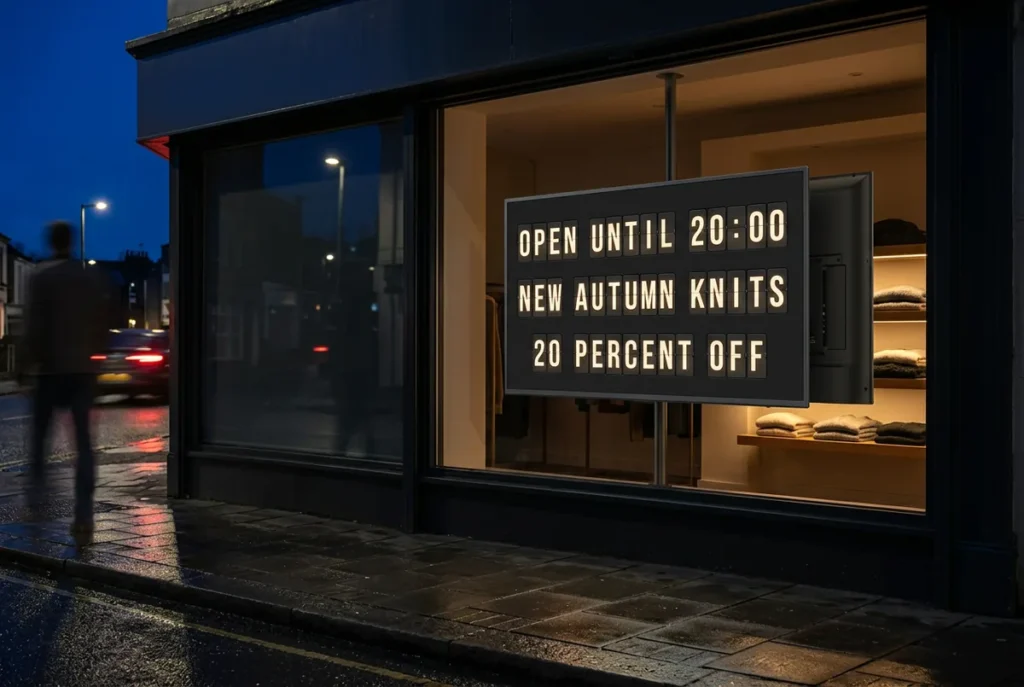
A retail window has about three seconds to do its job. People glance, decide, and keep walking. That is why the best retail window text screens are not the ones trying to do everything at once. They are the ones that say the right thing, clearly, beautifully, and at exactly the right moment.
For many stores, that means moving away from taped paper signs, handwritten notes, and generic TV slides overloaded with graphics. Window messaging works best when it feels deliberate. A strong text-first screen can announce new arrivals, hours, promotions, wait times, pickup instructions, or brand moments without turning the glass into visual clutter. When it is done well, it feels less like advertising and more like part of the storefront itself.
What makes a retail window text screen actually good
The first test is readability from outside. Sunlight, reflections, distance, and foot traffic all work against you. If your message needs a customer to stop, squint, and decode it, the screen is not helping. Good window text screens favor high contrast, clean layouts, and short lines that can be understood in motion.
The second test is speed of updating. Retail messaging changes constantly. One day it is store hours, the next it is a weekend drop, a private event, or a same-day pickup note. If updating the screen requires too many steps, it will eventually go stale. The best systems let staff change content quickly, from anywhere, without turning a simple message into an AV project.
The third test is whether the screen fits the brand experience. This is where many setups fall apart. A sleek boutique, café, hotel lobby, or specialty shop can spend years refining its atmosphere, then ruin the effect with a screen that looks like a waiting-room monitor. Text screens should not just deliver information. They should support the feeling of the space.
The best retail window text screens prioritize text over noise
There is a reason old public information boards still feel compelling. They were built around hierarchy. Big message first. Extra detail second. No decorative chaos. That philosophy still works, especially in street-facing retail.
Text-led screens are often the better choice when your customers need fast answers. Are you open? What is the special today? Is the pop-up on the second floor? Is happy hour starting at five? A screen focused on language rather than flashy motion gets to the point faster.
That does not mean every text screen should look plain. Some of the most effective ones bring character to the message itself. Split-flap style displays are a strong example. The familiar click-clack rhythm, structured rows, and transport-board aesthetic grab attention without relying on modern ad-screen tricks. They feel human, public, and memorable. For brands that care about atmosphere, that matters.
Why split-flap style screens stand out in retail windows
A split-flap display does something most screens fail to do. It creates anticipation. People notice the movement, recognize the format, and look up. That brief pause is valuable in a storefront.
The appeal is not only nostalgic, though nostalgia helps. It is also about discipline. Split-flap style layouts naturally force clearer messaging because the format favors concise text, strong alignment, and intentional pacing. Instead of cramming in logos, animations, product photos, and six competing calls to action, you present one message with confidence.
For a retailer, that can be incredibly practical. You can rotate through store hours, new arrivals, limited-time promos, event announcements, and pickup details in a way that still feels elegant. The old-school look softens the technology, while the digital control makes it useful in real operations.
That balance is where systems like Split Flap TV fit especially well. They revive the classic split-flap experience on modern screens and tablets, so the result feels artful and tactile without the maintenance burden of mechanical boards. For businesses that want a premium storefront moment and easier message control, that combination is hard to ignore.
Best retail window text screens by use case
The right choice depends on what your window needs to accomplish.
For boutiques and design-led shops
Aesthetic matters as much as information. In these spaces, generic digital signage often feels too cold, while printed signs feel temporary. A split-flap style text screen works well because it becomes part of the visual identity. It signals curation. You can use it for launches, capsule drops, appointment messaging, or simple brand statements that feel considered rather than improvised.
For restaurants, cafés, and bars
Food and beverage businesses change messaging constantly. Hours shift, menus rotate, specials come and go, and customers always want quick answers. A text-first window screen handles that pace better than static signage. The key is choosing a format that can be updated in seconds and remains legible in daylight. Short menu highlights, brunch hours, happy hour notices, or pickup instructions are perfect fits.
For hotels and hospitality spaces
Hospitality brands need information to feel polished. A text screen facing the street can announce check-in details, rooftop access, live music, seasonal events, or dining service hours without cluttering the entrance. Here, style is not extra. It is part of the guest experience. A retro-modern text display can feel far more intentional than a standard commercial panel.
For offices and shared commercial spaces
Office managers and building teams often need to communicate changing schedules, event notices, visitor instructions, or amenity updates. A window or lobby-facing text screen keeps messages current without the usual mess of printed notices. In professional environments, clean typography and scheduled content matter more than flashy visuals.
Features worth looking for in the best retail window text screens
Brightness matters, but not in isolation. Plenty of businesses assume a brighter screen automatically solves window visibility. Sometimes it does. Sometimes glare, poor contrast, or bad layout is the real problem. A well-designed text system with strong contrast and restrained formatting often beats a brighter but busier screen.
Scheduling is another essential feature. Retail teams are busy, and nobody wants to manually swap messages every morning or during every shift change. If your platform can schedule hours, promos, and daypart messaging in advance, it saves time and prevents errors.
Layout flexibility also deserves attention. Different windows, different viewing distances, and different message types require different row and column setups. A rigid template can feel limiting fast. The better systems let you adjust the structure so the content fits the storefront, not the other way around.
Sound is optional, but in the right setting it adds character. The signature click-clack of split-flap animation can turn a passing glance into a real moment of attention. That said, it depends on the environment. A quiet boutique may love it. A space that already has a dense audio atmosphere may prefer the visual effect without sound.
What to avoid when choosing a window text screen
The biggest mistake is treating a window screen like a mini billboard. Most pedestrians will not stand still long enough to absorb a paragraph or decode a complicated animation sequence. Keep messages short. One idea at a time.
Another mistake is choosing a system that looks impressive in a demo but becomes annoying in daily use. If content management is clunky, staff will stop updating it. Then the screen turns into expensive wallpaper. Ease matters more than feature overload.
It is also worth avoiding display styles that fight your interior design. Retail environments are emotional spaces. The wrong screen can cheapen the storefront, even if it functions well. The best choice usually sits at the intersection of visibility, usability, and brand character.
How to choose the best retail window text screens for your store
Start with the message, not the hardware. What does your window need to communicate most often? If the answer is hours, promotions, availability, events, and quick operational notes, a text-led screen is probably the right direction.
Then think about your brand mood. If you want something sleek but familiar, eye-catching without feeling loud, split-flap style is a strong fit. It gives you movement and personality while staying grounded in text. If your store relies heavily on product imagery, a text screen may still play a role, but likely as a complement rather than the star.
Finally, think about who updates the content. The best screen is the one your team will actually use. If a manager can change messaging from an app in under a minute, the screen stays relevant. If the process is complicated, even a beautiful display loses value.
The smartest retail window screens do not try to outshout the street. They create order, spark curiosity, and make the storefront feel more intentional. When text is treated as part of the experience, not an afterthought, customers notice before they ever step inside.