
Cloud Signage vs Static Posters: What Wins?
May 20, 2026 · Captain
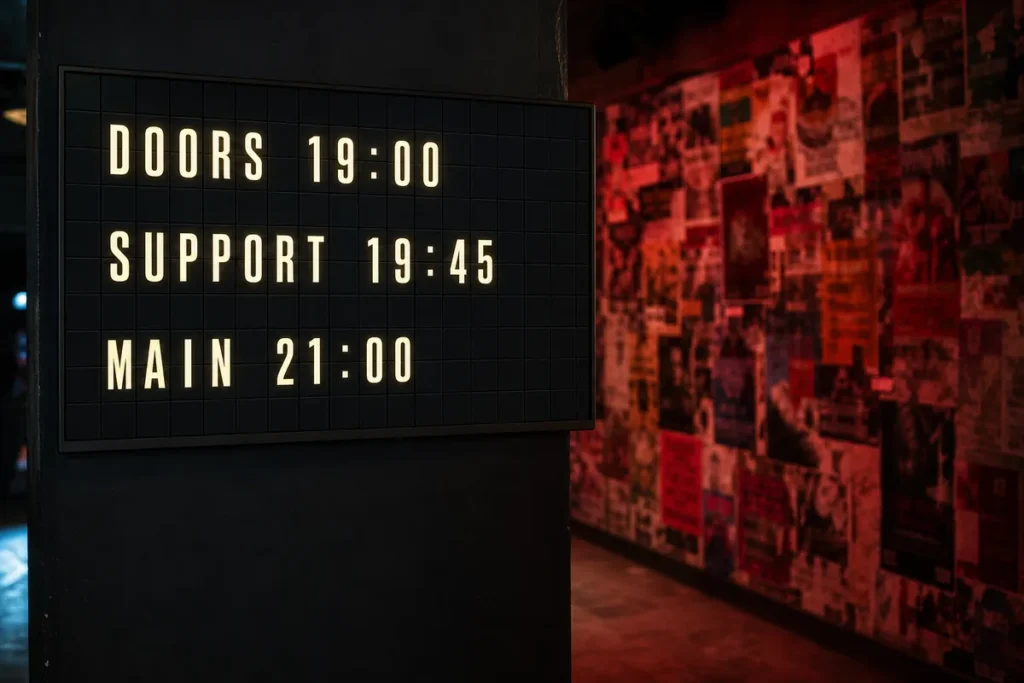
By 4 p.m., the lunch special is gone, happy hour starts in an hour, and the paper sign taped near the register still says yesterday’s soup. That is where cloud signage vs static posters stops being a branding debate and starts becoming an operations problem.
For restaurants, bars, boutiques, hotels, and office spaces, signage is not decoration alone. It answers questions, steers traffic, sets tone, and quietly tells people whether your business feels current or cobbled together. The right format depends on what you need the sign to do, how often information changes, and how much control you want once the sign is on the wall.
Cloud signage vs static posters: the real difference
Static posters do one job well. They present a fixed message in a fixed format. If your content rarely changes, the look is carefully art-directed, and you want a simple physical display with no software involved, posters can still make sense.
Cloud signage is different. It is built for content that changes, rotates, or needs to be managed without standing in front of the display. That could mean updating hours during a holiday week, changing menu items mid-shift, scheduling promos for certain times of day, or pushing the same message across multiple screens from one app.
This is not just paper versus pixels. It is flexibility versus permanence.
Where static posters still work
Posters have real strengths, and pretending otherwise is lazy marketing. A well-designed print piece can feel tactile, intentional, and visually rich. For a campaign image, a seasonal window graphic, or a permanent brand statement, print can be beautiful.
They also ask very little from the operator once installed. No logins, no scheduling, no device management. If the message is evergreen, that simplicity is appealing.
The trade-off shows up the moment the message changes. A poster cannot react to sold-out items, shifting schedules, weather, events, or daypart promotions. It cannot correct a typo without being reprinted. It cannot switch from breakfast to lunch on its own. In a busy customer-facing environment, that limitation adds friction fast.
Why cloud signage changes the daily workload
Most businesses do not struggle because they lack signage. They struggle because their signage is always one step behind reality.
Cloud-managed displays solve that by making updates immediate. Instead of printing, laminating, taping, removing, and replacing, you publish changes from an app. That matters more than it sounds. When staff are juggling customers, orders, and opening or closing tasks, every manual sign update becomes one more thing to forget.
The operational benefit is not flashy. It is simply cleaner and faster. Your hours stay accurate. Your specials match what is actually available. Your lobby or front desk can display useful information without a stack of paper notices drifting out of alignment.
For multi-location businesses, the gap gets even wider. Static posters require coordination, shipping, and local setup. Cloud signage gives you centralized control.
Design impact is not one-size-fits-all
This is where the conversation gets more interesting. Some digital signage is all motion, color, and visual noise. That may work in certain retail environments, but not every business wants a glowing billboard on the wall.
For many spaces, the better question is not whether a sign is digital, but what kind of digital presence fits the room. A boutique hotel lobby, a cocktail bar, or a design-conscious cafe may want something quieter, more distinctive, and more text-led.
That is why split-flap style cloud signage has a different appeal from generic screen content. It brings the public-display theater people remember from classic transit boards – the click-clack rhythm, the anticipation of changing lines, the structured elegance of text in motion – while still giving operators modern control. It feels intentional rather than promotional.
If your brand leans on atmosphere, not just information, that distinction matters. A taped poster says one thing. A thoughtfully designed, remotely managed split-flap display says something else entirely.
Cost is not just about the first purchase
When people compare cloud signage vs static posters, they often focus too heavily on the initial setup. That misses the real math.
Static posters can look cheaper at first, especially if you only need one sign. But every update carries a cost in time, reprinting, replacement, and staff effort. The more often your message changes, the more expensive “simple” becomes.
Cloud signage has a higher commitment because there is hardware and software involved. But if you are changing content regularly, the value comes from avoiding constant rework. You are not paying only for a screen. You are paying for speed, control, consistency, and fewer recurring headaches.
The tipping point depends on your use case. A poster for a long-running brand campaign may stay cost-effective for months. A food menu, event schedule, hotel notice board, or office communication display usually will not.
Accuracy matters more than most businesses think
A sign that is wrong is worse than a sign that is absent.
If a poster says a product is available when it is not, customers get annoyed. If office signage lists the wrong meeting room update, people lose time. If a hotel display shows outdated check-in details or event timing, the front desk pays for it in repeated questions.
Cloud-managed signage reduces that risk because the content can be corrected the moment something changes. That does not just improve communication. It protects the overall feeling of competence.
Customers notice when a space feels maintained. They also notice when information is stale, curled at the edges, or crossed out with marker. One feels polished. The other feels temporary, even when the business itself is not.
The best choice depends on how alive your information is
If your content is static by nature, static posters may be enough. Brand artwork, wayfinding that never changes, and long-term campaign visuals still belong in print in many environments.
But if your information is alive – changing by day, hour, season, shift, or event – cloud signage is usually the stronger tool. Menus change. Promotions rotate. Schedules move. Announcements expire. The more dynamic the message, the less practical a poster becomes.
There is also a middle ground that works well for many businesses. Use print where permanence and rich visuals matter. Use cloud signage where timing, relevance, and speed matter. That combination often creates the smartest in-store communication system.
Why split-flap style signage stands apart
Not every business wants a conventional digital display looping full-screen graphics. In many interiors, that aesthetic can feel too bright, too busy, or too close to an ad screen.
A cloud-managed split-flap format offers a different answer. It is digital, but not generic. It is dynamic, but not loud. It turns changing text into an experience people actually look at.
That is especially useful when the message itself needs attention. Daily specials, event listings, room info, welcome messages, hours, Wi-Fi details, and rotating notices all benefit from a format that feels both readable and memorable. The nostalgia helps, but it is not nostalgia alone doing the work. The structure is clear. The motion has purpose. The display feels premium without trying too hard.
For businesses that care about atmosphere, this is often the missing piece. You get the practicality of cloud control with the character of an object people want to watch.
So which one wins?
Cloud signage wins when information changes often, accuracy matters, and the sign needs to work as part of daily operations rather than a one-time design asset. Static posters win when the message is stable, visually led, and unlikely to need revision.
The more interesting question is not which format is universally better. It is which one respects your time and your space. If your team is constantly updating handwritten signs, replacing taped notices, or apologizing for outdated information, you already know the answer.
A good sign should not create more work just to stay useful. It should keep up with the business, look like it belongs in the room, and make the customer experience feel more considered. That is why so many operators are moving away from paper clutter and toward cloud-managed formats like Split Flap TV, where the message can change in seconds but the impression stays elegant.
If your signage still depends on scissors, tape, and last-minute reprints, it may be time to choose a display system that behaves more like the business you are trying to run.