
A Guide to Digital Specials Boards
May 4, 2026 · Captain
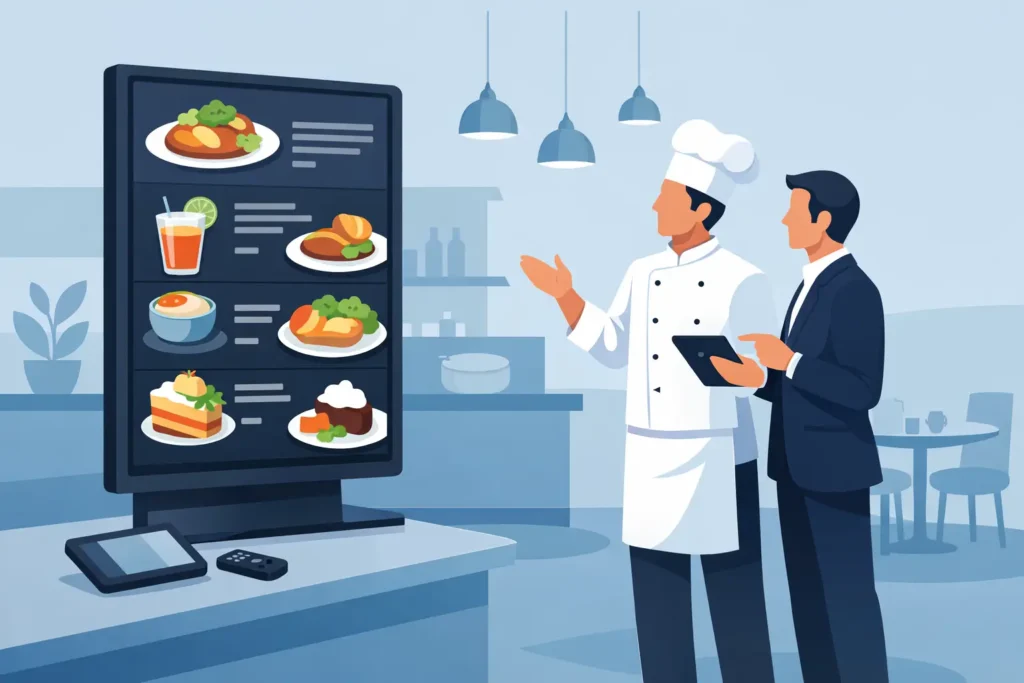
The lunch rush is not the moment to rewrite a chalkboard, fix a typo on a printed sign, or explain for the tenth time which soup is available today. A good guide to digital specials boards starts there – with the real pressure of keeping changing information clear, current, and attractive when your staff already has enough to do.
For restaurants, bars, boutique hotels, cafes, and retail spaces, specials boards are doing more than listing offers. They set the tone of the room. They answer repeat questions before they reach the counter. They quietly shape what customers notice first. And when the display feels considered instead of improvised, the whole business feels tighter.
That is why digital specials boards have become such a practical upgrade. But not every digital board needs to look like a giant ad screen. In many spaces, a text-led split-flap style display does the job better. It feels deliberate, highly visible, and a little theatrical – all without the mess of taped notices or the constant upkeep of handwritten signage.
What a digital specials board should actually do
At its best, a specials board is not decoration. It is operational signage with a strong sense of style. It should let you change information quickly, present it clearly, and support the atmosphere you want customers to remember.
That sounds simple, but there is a real balance to get right. If the board is too plain, people ignore it. If it is too busy, they stop reading. If updating it takes more than a minute or two, staff will put it off and the information will drift out of date.
A well-designed digital specials board solves those problems by making updates immediate and repeatable. Instead of rewriting the same categories every day, you create a structure once and then swap in the parts that change – the beer of the week, the two-for-one cocktail window, the sold-out pastry, the late checkout message, the Wi-Fi reminder.
That is where format matters. For many businesses, especially those with a design-conscious interior, text-first displays work harder than graphic-heavy ones. A split-flap aesthetic has a built-in clarity. Short lines, bold character spacing, and the familiar click-clack motion pull attention without asking people to stare at a screen full of moving visuals.
A guide to digital specials boards by use case
Different venues need different rhythms from their signage. The board in a cafe has a different job than the board in a hotel lobby, even if both are updating daily.
In restaurants and bars, the board often needs to manage frequent change. Happy hour timing, rotating taps, menu features, sold-out items, and event announcements all shift throughout the day. The best setup is one that lets staff update a line quickly from a phone, tablet, or computer without touching the screen itself.
In boutique hotels, the board may be less about specials in the strict sense and more about timely guest information. Breakfast hours, live music in the lounge, welcome messages, local event reminders, or shuttle times all fit naturally. Here, elegance matters as much as legibility. Guests notice when signage feels intentional.
In retail, specials boards often work best near the entrance or point of sale. They can feature flash offers, product drops, fitting room notes, pickup instructions, or store hours. The key is restraint. Retail teams are often tempted to add too much. A shorter message with strong visual rhythm usually wins.
For offices and reception spaces, a digital board can announce meeting room changes, visitor welcomes, internal reminders, and service notices. In these settings, the split-flap look adds character without turning the lobby into a typical corporate screen wall.
Why the split-flap style works so well
There is a reason people still stop for the old departure boards in train stations and airports. The movement is simple, but it feels alive. The sound, the rhythm, and the anticipation of letters flipping into place create a public display moment that ordinary screens rarely match.
That same effect translates beautifully to specials boards. A split-flap-inspired digital display does not compete by being louder. It competes by being more memorable. It brings retro charm into a modern workflow.
This matters more than it may seem. Customers are surrounded by polished screens all day. Many of them fade into the background because they look interchangeable. A split-flap board stands apart because it feels designed, not generic. It signals taste. It suggests care. And in hospitality or retail, that perception carries into how people read the rest of your business.
There is also a practical upside. Text-led boards force clarity. You choose the message that matters most instead of filling space with unnecessary graphics. That discipline usually leads to better communication.
How to plan your content without overcrowding the board
The fastest way to weaken a specials board is to treat it like a flyer. If every offer, note, rule, and announcement lands in the same frame, nothing feels special.
Start by deciding what the board is for right now. Is it driving a purchase decision, answering common questions, or setting a mood? It can do more than one thing across the day, but each screen or page should have one clear priority.
Then think in short blocks of information. Item name, price tier if relevant, time window, and one supporting detail are often enough. In a hotel or office setting, the same principle applies – headline, timing, location, and maybe one brief instruction.
Scheduling helps here. Morning coffee specials do not need to stay up all afternoon. Event notices should appear when they are useful and disappear when they are stale. When the system lets you program content in advance, your board becomes more dependable and less reactive.
It also helps to build repeatable templates. A weekly special should not require redesign every time. Keep the layout consistent and change only the message. Consistency makes the board easier to scan and easier to manage.
What to look for in a digital specials board setup
Ease of updating should be at the top of the list. If the board depends on a complicated media workflow or someone on staff who happens to be “good with tech,” it will become another unfinished task.
The better approach is plug-and-play hardware paired with app-based control. Buy a screen, download the app, set your layout, and publish. That kind of setup suits busy businesses because it removes the friction between deciding on a message and getting it on screen.
Customization matters too, but in the right way. You want control over rows, columns, color, page timing, and scheduling so the board fits your space and your brand. At the same time, too many design decisions can slow people down. The sweet spot is a system that feels flexible without becoming a design project every week.
Remote management is another quiet advantage. If a manager needs to update a sold-out item, change store hours for a holiday, or post a last-minute event note, they should be able to do it from anywhere. That is especially useful for multi-location businesses or owners who are not always on site.
And yes, aesthetics belong on the checklist. Not as an extra, but as part of performance. A display that looks premium gets noticed. A display that fits the room gets trusted.
The trade-offs to keep in mind
A digital specials board is not automatically the right choice for every message. If you need long explanations, detailed imagery, or an interactive ordering flow, a text-led display may not be the main tool for that job.
That is the trade-off with split-flap-inspired signage in particular. It is less about showing everything and more about showing the right thing beautifully. For many hospitality and retail spaces, that is a strength. It keeps the message crisp and the environment elevated. But it does require editing.
Placement matters too. A beautiful board hidden behind a pillar will not help anyone. Think about where customers pause naturally – entrance zones, ordering lines, host stands, reception desks, bar backdrops. The board should meet attention, not chase it.
There is also the human factor. Even the best system needs ownership. Someone should be responsible for keeping content current. The technology reduces manual work, but it does not replace the decision to communicate well.
Making the board part of the brand experience
The strongest digital specials boards do not feel bolted on. They feel native to the space. The message style, timing, and visual treatment all support the room around them.
That is why the split-flap format has such staying power. It feels both familiar and fresh. There is nostalgia in the click-clack, but there is also discipline in the presentation. For businesses that care about atmosphere, that combination is powerful.
A digital specials board should save time, reduce clutter, and keep information accurate. But if it also becomes the thing people photograph, remember, or mention to a friend, it is doing more than signage. It is giving your everyday updates a little stage presence – and that is often what turns a practical tool into part of the experience.