
Guide to Restaurant Digital Signage Screens
April 24, 2026 · Captain
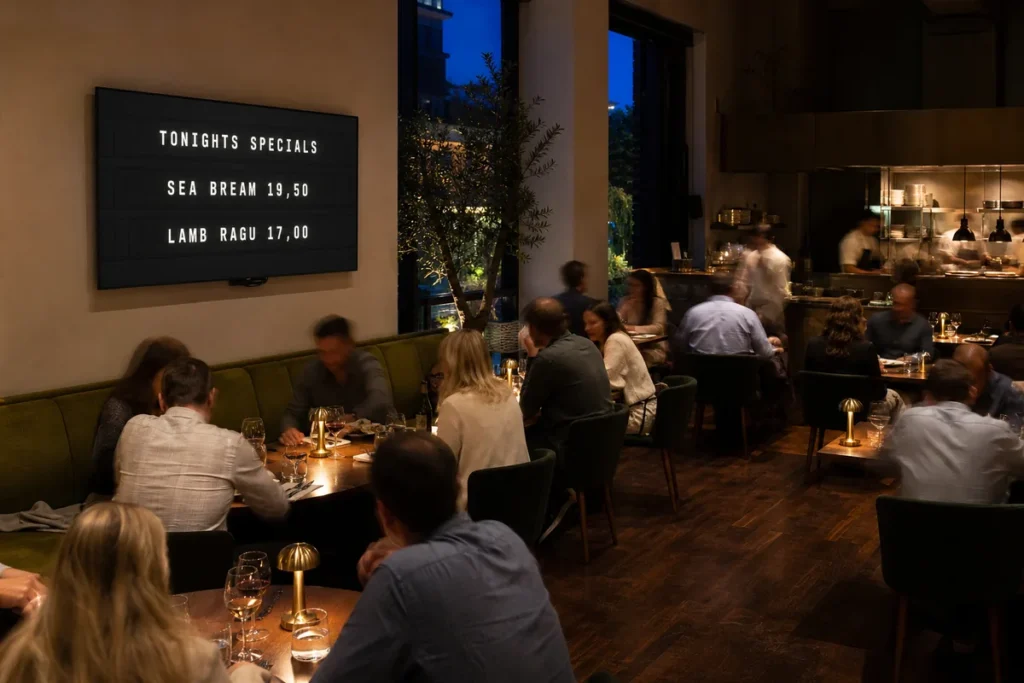
The lunch rush does not wait for someone to erase a chalkboard, tape up a printed special, or explain for the fiftieth time where the pickup shelf is. That is exactly why this guide to restaurant digital signage screens matters. Good screens do more than display information – they reduce friction, sharpen the look of the room, and keep your messaging current when service gets hectic.
For restaurants, bars, cafes, and food halls, the real question is not whether a screen can show content. It is whether that content is readable, on-brand, easy to update, and worth looking at in a space already full of visual noise. The best setups solve practical problems first, then add atmosphere. If they also create a little theater in the room, even better.
What restaurant digital signage screens should actually do
A restaurant screen has a job. Sometimes that job is straightforward, like showing menu items, waitlist updates, hours, Wi-Fi details, or pickup instructions. Sometimes it is more subtle, like reinforcing the identity of the space, setting a tone, or making the room feel more considered.
That is where many operators get tripped up. They buy a bright screen and expect the hardware alone to improve communication. It rarely works that way. A beautiful display with cluttered content still confuses guests. A basic display with clear messaging often performs better.
In restaurants, the strongest signage usually handles one of three tasks well. It informs guests quickly, reduces repeat staff questions, or adds character to the space while staying functional. If your screen cannot do at least one of those jobs, it is probably just decoration.
A practical guide to restaurant digital signage screens
Choosing the right format starts with the kind of restaurant you run. A quick-service counter needs speed and legibility. A cocktail bar may care more about mood, rotating specials, and event messaging. A boutique hotel café might need one display near the entrance and another by the register, each with a different purpose.
That is why placement matters as much as content. Guests should be able to understand the message in a glance. If they need to stop, squint, and decode it, the screen is not helping. Think in zones: exterior windows for hours or specials, entry points for wayfinding and current offers, ordering areas for menus, and pickup or waiting areas for instructions and light brand storytelling.
Screen style matters too, but not always in the obvious way. Many restaurants assume a modern display must be image-heavy to feel premium. In practice, text-led signage can be far more effective when the goal is quick comprehension. A split-flap style board is a good example. It brings the old public-display magic people instantly recognize – the rhythm, the anticipation, the click-clack feel – while still working like a modern, cloud-managed signage system. That makes it especially compelling in spaces where design is part of the experience, but clarity still comes first.
What to show on restaurant screens
Most restaurant operators already know what they need to communicate. The challenge is organizing it so guests absorb it fast. Start with your repeat questions. If customers constantly ask about happy hour, pickup timing, restrooms, reservations, allergens, or the Wi-Fi password, those are signage opportunities.
The next layer is day-to-day change. This is where digital screens earn their keep. Menus shift. Items sell out. Brunch becomes dinner. A private event changes the usual flow of the room. Printed signs can keep up, but they create visual clutter and usually look temporary even when they stay up for weeks.
Digital signage works best when the content is intentionally limited. One message per screen or per content zone is often enough. A display near the host stand might show hours, reservation notes, and event times. A bar display might focus on featured pours and tonight’s music. A pickup area might simply say where to wait, what name format to listen for, and what to do if something is missing.
There is a trade-off here. The more you try to fit on one screen, the less useful it becomes. Restaurants are not conference rooms. Guests are moving, talking, ordering, and scanning the environment quickly. Brevity wins.
It helps to think of what goes on a screen in five categories rather than one long list: the menu itself, today’s specials, upcoming events, wayfinding (restrooms, pickup counter, entrance), and brand moments — a quote, a photo from opening night, a nod to a regular’s birthday. Most restaurants only ever use the first two. The ones that use all five tend to notice it working: guests photographing the screen, repeating a line from it to their server, treating it as part of the room rather than furniture that happens to glow.
Design choices that help, not distract
A lot of signage fails because it is designed like a flyer instead of a public display. Small fonts, long sentences, too many colors, and crowded layouts all work against readability. Restaurant screens need strong contrast, large type, and a layout that makes sense from a few feet away.
This is where a retro-inspired text display can punch above its weight. It strips communication down to what people can actually process in motion. The visual language feels deliberate rather than overproduced. In the right setting, that old transit-board energy adds personality without turning the room into a sports bar full of glowing rectangles.
Of course, not every concept wants nostalgia front and center. It depends on the brand. A minimalist coffee shop may use restrained layouts and muted colors. A lively neighborhood bar may lean into motion and sound. A chef-driven restaurant may want just a few polished text updates rather than a constant content loop. The best screen design fits the room instead of fighting it.
The operational side operators care about most
The design gets attention, but the workflow is what makes digital signage stick. If updating the screen is annoying, it will fall out of date. Once that happens, guests stop trusting it and staff stop relying on it.
That is why app-based control matters. Being able to change a special, schedule a message, or update hours without touching the display itself is the difference between a useful tool and one more thing your team ignores. Restaurants move fast. Your signage has to keep pace without requiring AV expertise.
Scheduling is especially valuable. Breakfast, lunch, happy hour, and late-night each call for different messaging. So do weekdays, weekends, holidays, and event nights. Prebuilding those changes means the screen stays current even when the floor is slammed.
There is also a consistency benefit. If you operate multiple locations or multiple screens in one venue, centralized control keeps the brand tight. You avoid the patchwork look that happens when every manager improvises with paper signs and marker boards.
The other operational piece worth deciding up front is who’s actually responsible for keeping it current. Assign one person per shift to own the screen the same way someone owns the reservation book, and put a five-minute review of what’s scheduled on the weekly manager checklist. A signage system is only as good as its least-updated screen, and “someone will get to it” is how a board ends up advertising a holiday special in March.
Where digital signage pays off in real service
The most immediate return usually comes from fewer interruptions. When guests can see the special, the pickup instructions, or the current kitchen status, staff spend less time repeating themselves. That does not sound glamorous, but in a busy restaurant it matters.
There is also a presentation effect. Clean, intentional signage makes the whole operation feel more organized. Guests may not consciously think, this place has excellent information design. They do notice when the room feels polished and current rather than patched together.
And then there is memorability. Some displays blend into the background. Others become part of the experience. Split-flap style signage has a way of doing that because it feels both familiar and surprising. It recalls stations, airports, old lobbies, and classic public boards, yet it can be updated instantly for a modern venue. That contrast gives restaurants something many generic screens do not: presence.
Common mistakes to avoid with restaurant digital signage screens
One mistake is treating every screen like a menu board. Menus matter, but they are not the only use case. Wayfinding, event promotion, pickup communication, and ambient brand messaging can be just as valuable depending on the space.
Another mistake is over-animating everything. Movement should guide attention, not exhaust it. If the entire screen is in constant motion, nothing feels important. A little drama goes a long way, especially in a hospitality setting.
The third mistake is forgetting the staff experience. Front-of-house teams need signage that supports service, not competes with it. Before installing anything, ask a simple question: what customer conversation would we love to have less often because the screen already answered it?
How to choose a setup that fits your restaurant
Start with one or two high-impact moments rather than trying to digitize every surface. The entrance, ordering point, and pickup area are often the best places to begin. Then think about what kind of content your team changes most often. If the answer is specials, hours, events, and service instructions, a text-forward system may be the cleanest fit.
This is also where brand identity comes in. Some restaurants need glossy visuals. Others benefit more from a display style with texture and character. Split Flap TV sits in that second category – a premium, plug-and-play way to revive the split-flap look on modern screens while keeping content easy to control from an app. For the right restaurant, that balance of retro charm and practical management is exactly the point.
The best screen is not the flashiest one. It is the one your team updates consistently, your guests understand instantly, and your space looks better for having. When signage starts doing all three, it stops being an accessory and starts becoming part of service.