
Food Truck Menu Board – Complete Guide to Printed & Digital Signs
March 19, 2026 · Captain
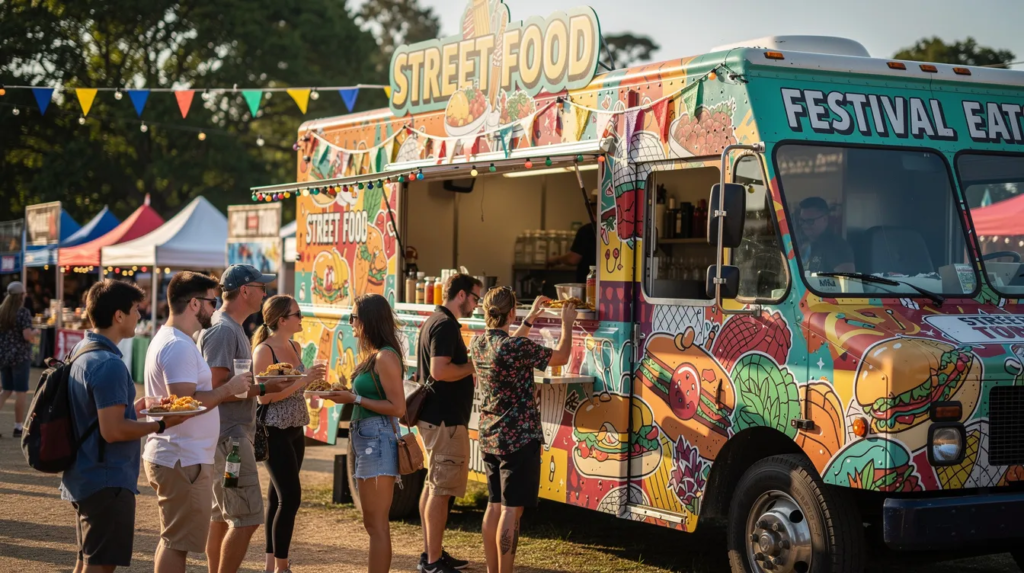
Choosing the right menu board can make or break your food truck’s customer experience. In this guide, we cover a wide range of menu board sizes and features, from durable printed PVC boards to high-tech digital RLCD displays, with pricing that ranges from around $175 for basic screens up to $2,975 for premium sunlight-readable systems. Whether you’re building a new truck or upgrading your current setup, you’ll find the information you need to make a confident decision.
Fast Overview: What This Page Delivers
A great food truck menu board does more than list items and prices. It drives faster ordering, improves visibility from across a crowded festival, and directly impacts how much you sell during those critical lunch and event rushes. The right board helps people decide quickly, move through the line, and leave happy.
Here’s what you’ll find in this guide:
- Materials and specs for printed and digital menu boards
- Sunlight readability and weather resistance requirements
- Design process, example dimensions, and mounting options
- How to select the right menu board size and configuration for your food truck
- Step-by-step ordering workflow from concept to delivery
This guide is written from the perspective of a provider of custom food truck menu boards—both printed and digital—not a marketplace or reseller. Everything here is designed to help you create the perfect menu display for your business.
What Is a Food Truck Menu Board?
A food truck menu board is the primary sign that shows your menu, prices, and promotions on the exterior or service side of your truck. It’s what customers read while waiting in line, and it directly influences how quickly they order and what they decide to buy.
There are two main categories to consider:
- Traditional printed boards: Laminated PVC panels with UV-printed graphics that resist weather and fading
- Digital screens: Outdoor-rated displays (typically 32” RLCD or high-brightness LCD) that show dynamic content, images, and rotating promotions
Most operators mount their menu boards above the service window, beside it, or on a portable stand for street and event use. The best placement depends on your truck layout, typical customer flow, and how much space you have to work with.
Printed Food Truck Menu Boards (PVC & Static Signs)
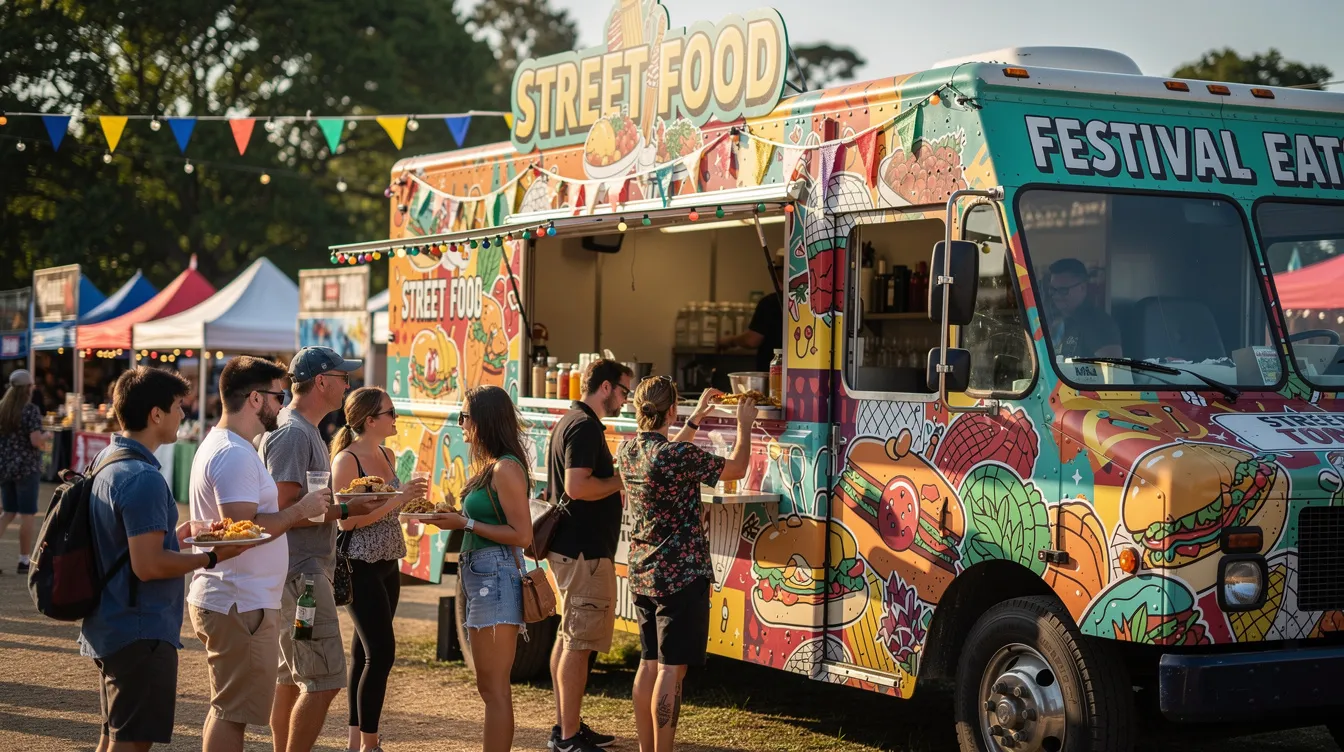
Printed menu boards remain the go-to choice for food trucks with stable menus. They’re durable, low-maintenance, and deliver a polished look without requiring power or software. If you’re running a classic burger truck, taco stand, or everyday coffee cart, printed boards offer the reliability you need.
These boards are typically made from 6mm laminated PVC—a rigid panel material that resists water, warping, and the daily wear of outdoor service. The thickness provides enough stiffness to stay flat even in changing temperatures, while remaining light enough to ship and install easily.
Common sizes include:
|
Size |
Best Use |
|---|---|
|
20” x 30” |
Sidewalk signs, A-frame inserts |
|
24” x 36” |
Primary menu board for most trucks |
|
18” x 24” (sets of 2-3) |
Modular category panels |
|
48” x 60” |
Large trucks with full side coverage |
|
Custom cutting is standard, so your board can fit specific window frames or body panels perfectly. |
|
|
High-resolution UV printing produces vivid colors and a low-glare matte or satin finish that stays readable under outdoor lighting. Professional print technology ensures your food truck menu board stands out with sharp graphics and consistent color, enhancing your branding and attracting more customers. This matters more than you might think—glossy surfaces create reflections that make menus hard to read in direct sunlight. |
|
Printed boards are often permanently fixed to the truck, but you can also install them with removable hardware like French cleats or rail systems. This makes it easy to swap seasonal menus or take boards down for rewrapping.
Key Benefits of Printed Boards
Here’s a quick breakdown of why printed menu boards work so well for many food truck operators:
- Long-term durability: Laminated surfaces resist rain, sun fading, and everyday cleaning with mild detergents. Properly made boards can last 3-5 years outdoors.
- Budget-friendly: One-time cost per board with no recurring expenses for power, software, or content management subscriptions.
- Free design revisions or shipping: Many providers offer free design revisions to ensure your menu looks perfect, and some include free shipping for added savings.
- Clean, readable layouts: Static signs let you create a well-organized menu that customers can scan quickly—ideal when you have a fixed item list.
- Easy logistics: Lightweight panels ship via standard couriers and can be installed in under an hour with basic tools like a drill and level.
- Reliability: No screens to boot, no software to troubleshoot. Your menu is always visible, even if your generator fails.
Popular Printed Menu Board Options
Here are a few concrete examples of what works well for different truck types:
Single-panel coffee truck board: A 24” x 36” PVC board with full-color branding and a clean 10-15 item menu. Perfect for espresso trucks where the menu stays consistent year-round. This is a popular choice among food truck operators, with hundreds sold in the past year.
3-panel category system: Three 18” x 24” panels—one for food, one for drinks, one for rotating specials. This modular approach lets you update just the specials panel when seasons change.
Sidewalk companion sign: A 20” x 30” board designed for an A-frame stand. Place it at the curb to catch attention from people who haven’t spotted your truck yet, giving them time to decide before they reach the window.
All professional options include design setup, proof approval stages, and UV-printed, weather-resistant output that’s suitable for years of outdoor use.
Digital Food Truck Menu Boards (RLCD & High-Brightness Displays)
Digital menu boards bring your truck into the modern era with screens that display dynamic menus, appetizing food photography, and rotating promotions. They’re particularly powerful for trucks that need flexibility—different menus for breakfast versus lunch, special pricing for events, or digital menu screens that cut printing costs and support animated content that grabs attention in crowded markets.
True outdoor food truck digital menu boards use technologies like reflective LCD (RLCD) or high-brightness LCD, often paired with professional digital signage solutions that make content updates and control straightforward. Standard indoor TVs won’t work—they wash out in sunlight, overheat, and fail quickly when exposed to moisture and temperature swings.
Pricing varies widely based on capability:
- Entry-level digital setups start around $175 for basic displays (not outdoor-rated)
- Premium, sunlight-readable RLCD systems run approximately $2,975 including hardware, enclosure, and media player
The investment pays off through easy content updates, the ability to switch between breakfast, lunch, and event menus instantly, and animated promotions that drive upsells during peak hours.
Digital boards can be mounted directly to your truck exterior or used as portable units with stands and carrying cases. This flexibility lets you position screens wherever they’ll have the most impact at different venues.
Sunlight-Readable Technology
Outdoor menus must remain clearly readable in direct sunlight at lunchtime and still visible after dark. This is where technology selection matters.
RLCD (reflective LCD) uses ambient light to brighten the image. Unlike traditional screens that fight against sunlight, RLCD actually becomes clearer as sunlight increases. The brighter the day, the better it looks.
For dusk and nighttime use, these displays include integrated front-light systems—similar to how e-readers work. The same display serves you from early morning through late evening without separate lighting setups.
Compare this to standard TVs, which wash out badly in anything brighter than indoor lighting. Consumer screens aren’t built for outdoor temperatures, moisture, or the grease and dust of food service environments.
Premium outdoor displays typically support HD resolution (1920 x 1080), delivering crisp text that’s easy to read from 10-15 feet away and mouthwatering food photography that draws customers in.
Portability & Power Efficiency
Digital signage on a food truck needs to work within the constraints of mobile operations. That means reasonable weight, manageable power draw, and the ability to set up and tear down quickly.
Power consumption is a key consideration. Many professional RLCD units run under 60 watts on a 12V/5A power supply—a fraction of what high-brightness traditional LCDs require. This won’t overload a typical food truck generator that’s already running cooking equipment and refrigeration.
Weight and form factor matter too:
- Professional units typically weigh 30-35 lbs
- Slim enclosures around 2” thick fit in tight storage spaces
- Integrated handles make daily movement manageable
- Optional carrying cases protect screens during transport
Low power draw means less heat buildup, which extends component life compared to traditional high-brightness signage. You’ll spend less time troubleshooting and more time serving customers.
Weather Resistance & Outdoor Readiness
Food truck signs face rain, heat, dust from busy streets, and the occasional bump from customers or equipment. Consumer electronics aren’t built for this environment.
Professional outdoor displays use enclosure ratings to define their protection levels:
|
Rating |
Protection Level |
|---|---|
|
IP54 |
Dust-protected, resistant to splashing water from any direction |
|
IP65 |
Dust-tight, protected against water jets |
|
For most food truck applications under awnings or partial cover, IP54 is sufficient. Trucks operating in more demanding weather conditions should consider IP65 or higher. |
|
|
Operating temperature ranges for quality outdoor displays typically span -4°F to 158°F, covering everything from early-spring morning markets to midsummer festival conditions. |
|
Construction details that matter include:
- Anodized aluminum frames for durability and corrosion resistance
- Sealed, tempered glass fronts bonded to gaskets
- Internal cooling fans and controlled airflow
- Weatherized cable connectors
Non-weatherized consumer TVs are prone to condensation, overheating, and early failure when used outdoors. The upfront cost difference is quickly offset by reliability and lifespan.
Comparing Printed vs Digital Menu Boards for Your Truck
Choosing between printed and digital menu boards comes down to how you run your food truck business. Both options have clear advantages depending on your menu stability, budget, and operational style.
Printed boards work best when:
- Your menu and prices stay consistent for months at a time
- You’re working with a limited startup budget
- You want zero ongoing maintenance or technical dependencies
- Setup and storage are a piece of cake—just mount or stow as needed
Digital boards shine when:
- You change menus frequently (seasonal, dayparted, event-specific)
- You actively use promotions and want to test what sells
- Your brand image benefits from a modern, tech-forward appearance
- Switching between menu layouts is a piece of cake with just a few taps
Consider total cost of ownership over 3-5 years. Printed signs have low maintenance but require reprints when menus change significantly. Digital systems cost more upfront but eliminate reprinting costs and allow instant edits.
A hybrid approach often makes the most sense: a durable printed “core menu” permanently mounted to the truck, plus one digital screen dedicated to specials, combos, and rotating items.
When a Printed Board Is the Better Choice
Static signage wins in several common scenarios:
- Simple, year-round menus: Classic burger trucks, hot dog stands, or coffee carts with a narrow, predictable item list benefit from the clarity and reliability of printed boards.
- Tight startup budgets: New operators can look professional from day one without recurring costs. Upgrade to digital later once revenue stabilizes.
- Regulatory restrictions: Some historic districts or event venues limit illuminated or electronic signage. Printed boards comply without issue.
- Power limitations: If your generator is already maxed out, printed boards require zero additional wattage.
Printed boards also provide a backup during technical failures—your menu stays visible even if everything else goes wrong.
When a Digital Board Makes More Sense
Digital signage delivers clear advantages in these situations:
- Multiple distinct menus: Trucks serving weekday office lunches, weekend festivals, and late-night crowds can switch playlists instead of swapping physical boards.
- Frequently changing concepts: Monthly rotating menus, chef’s specials, or farm-to-truck seasonal items can be updated in minutes rather than days.
- Price adjustments: In times of ingredient cost volatility, digital menus let you adjust pricing immediately without visible tape or stickers.
- Active marketing: Limited-time offers, happy hour discounts, and cross-selling combos with eye-catching split-flap style signage and other animation drive measurable sales increases.
Digital menus can also display non-menu content between orders: upcoming event locations, catering availability, countdown timers for specials or events, and social media handles that keep customers engaged.
Food Truck-Ready Features to Look For
Not all menu boards are created equal. Use this checklist when evaluating different providers and products to ensure you get something that will actually work on a food truck.
Durability must-haves:
- Weather resistance appropriate for outdoor use
- UV-stable printing or display coatings
- Robust mounting hardware rated for vehicle vibration
For printed boards, baseline specs include:
- 6mm PVC thickness (thinner panels may warp)
- Laminated matte or satin surface
- UV-cured inks for outdoor longevity
For digital boards, critical features are: robust hardware paired with easy-to-manage digital signage apps so your team can update content without needing IT support.
- Sunlight readability (RLCD or 2,500+ nit high-brightness)
- IP54 or higher enclosure rating
- Operating temperature range covering seasonal extremes
- Power consumption under 100W for most trucks
Truck-specific practicalities:
- Easy daily setup and tear-down for portable units
- Secure storage while driving (slim profile, protective cases)
- Anti-glare finishes for varied street angles and sun positions
Size, Layout & Readability
Size and design directly affect whether customers can actually read your menu from 5-15 feet away while standing in line.
Recommended sizes:
- Digital: 32” is a solid baseline; larger trucks may use 43” or multiple split-flap style display screens
- Printed: 24” x 36” works for most primary menus; supplement with smaller category panels as needed
Typography guidelines for outdoor readability:
- Minimum 30pt font size for main item text at 15-foot viewing distance
- High-contrast combinations (dark text on light background or vice versa)
- Limited typefaces—use weight and size for hierarchy, not multiple font families
- Plenty of negative space so customers can scan quickly
Organize your menu into clear sections: mains, sides, drinks, combos. Use highlight areas sparingly for bestsellers or high-margin items—if everything is emphasized, nothing stands out.
Maintain consistent branding across your menu board, truck wrap, and uniforms. Colors, logo placement, and imagery should work together as a cohesive brand experience.
Mounting & Mobility
Food trucks need mounting systems that are secure during highway driving yet flexible enough for daily service positions.
Options for different needs:
|
Mounting Type |
Best For |
|---|---|
|
French cleats |
Fast removal for cleaning, seasonal swaps |
|
Bracket-mounted arms |
Digital screens with angle adjustment |
|
Stand-alone frames |
Sidewalk placement at events |
|
Direct surface mounting |
Permanent printed boards |
|
Ensure your boards don’t interfere with service hatches, awnings, or emergency exits. Nothing should protrude beyond legal vehicle width or height when driving. |
|
|
Portable digital units should include handles, a slim profile, and a protective case for transport between events and overnight storage at your commissary. |
|
Plan mounting positions early when designing or wrapping your truck. Cable paths for digital screens should be routed cleanly through wall penetrations with grommets, avoiding interference with gas lines and electrical systems.
Menu Board Lighting: Enhancing Visibility Day and Night
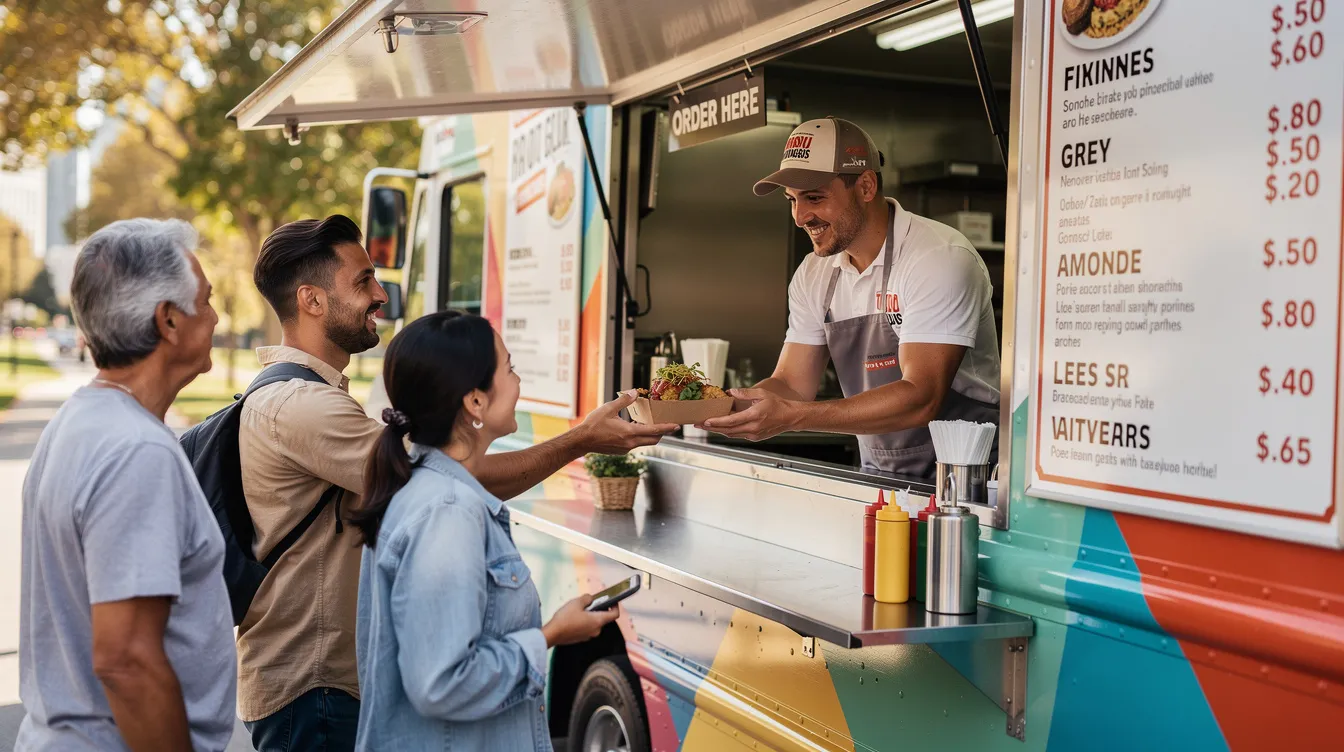
Lighting is a critical factor in making your food truck menu boards stand out, especially when you’re serving customers in the evening or under low-light conditions. For food truck businesses that operate from early morning to late night, ensuring your menu is always visible can make a big difference in sales and customer satisfaction.
Digital menu boards are designed with visibility in mind, often featuring built-in front lights or backlighting that keeps your menu readable in both direct sunlight and after dark. Many operators choose nostalgic split-flap style motion displays that combine that visibility with a distinctive look. These lighting solutions are engineered for outdoor use, offering energy efficiency and long-lasting durability to withstand the rigors of daily food truck operations. Many digital menu boards also include adjustable brightness settings, allowing you to fine-tune the display based on the time of day or the amount of sunlight, which helps conserve energy and extend the life of your equipment.
When selecting a menu board for your food truck, consider the lighting options available. For printed boards, you may want to add dedicated LED strip lighting or spotlights above the menu to enhance visibility during nighttime service. For digital menu boards, look for models with proven outdoor performance and customizable lighting controls. Matching your lighting setup to your food truck’s operational hours and typical locations ensures your menu remains easy to read, no matter the conditions. This attention to visibility not only improves the customer experience but also helps drive more orders, day or night.
Menu Board Regulations and Compliance: What Food Trucks Need to Know
Staying compliant with local regulations is essential for any food truck business, and your menu boards are no exception. Whether you’re using printed or digital menu boards, you’ll need to ensure your signage meets health, safety, and consumer protection standards set by your city or county.
Digital menu boards may require special permits or licenses, especially if they include illuminated or animated content. Always check with your local authorities before installing new signage to avoid fines or forced removal. Regardless of format, your menu boards must display clear, easy-to-read prices and menu descriptions so customers can make informed choices. This transparency is not only good business practice—it’s often required by law.
Accessibility is another key consideration. Make sure your menu boards are visible and legible for all customers, including those with disabilities. Following ADA guidelines—such as appropriate font sizes, contrast, and mounting heights—ensures everyone can read your menu with ease.
Finally, keep your menu boards up to date. Regularly review your menu, prices, and any required nutritional or allergen information to stay compliant with evolving regulations. An accurate, compliant menu board protects your business and builds trust with your customers.
Food Truck Menu Board Examples: Inspiration from Real Trucks
Looking for inspiration? Some of the most successful food truck businesses use menu boards that are as creative and unique as their food. Eye-catching designs, bold colors, and clever layouts help your menu stand out and draw in hungry customers from across the street.
Digital menu boards offer endless possibilities for customization. You can create dynamic displays with high-quality images, mouthwatering videos, and eye-catching split-flap price displays that grab attention and keep your line moving. Highlighting daily deals, limited-time offers, or combo meals on your digital menu board can create urgency and boost sales during busy periods.
When designing your menu board, consider not just the look but also the durability and ease of installation. Options like modern digital split-flap displays can deliver both distinctive aesthetics and easy updates. Choose materials and mounting options that can handle outdoor conditions and the daily demands of food truck life. Work with a designer or menu board manufacturer to create a solution that reflects your brand, fits your truck’s layout, and is easy to update as your menu evolves.
Take a look at other food trucks and restaurants for ideas—notice how they organize their menus, use color, and incorporate branding. Resources that showcase innovative digital signage ideas can also spark concepts for your own truck. With the right design and a little creativity, your menu board can become a powerful tool for attracting attention, communicating your offerings, and growing your business over time.
How the Custom Menu Board Process Works
This section walks through a typical order workflow from initial idea to installation, applicable for both printed and digital boards.
The process includes consultation, design, approval, production, shipping, and optional future updates. Professional design support and clear proofs minimize errors in pricing, spelling, and branding—the details that can be embarrassing to get wrong on a permanent sign.
Realistic timelines run from first design draft to shipping in a matter of days once artwork is approved, depending on complexity and current inventory. Rush options can often support last-minute truck launches or seasonal events when schedules allow.
Step 1 – Choose Your Format & Size
Start by deciding between printed, digital, or a hybrid solution based on your budget and how often you expect to change your menu.
Measure your truck’s available space around the serving window, accounting for door swing and awning clearance. Take photos from multiple angles to share with designers.
Standard starting points:
- Printed: 24” x 36” for primary menus, 20” x 30” for sidewalk signs
- Digital: 32” RLCD as a baseline, scaling up for larger trucks
If going digital, consider power availability early. Confirm your generator has capacity and plan clean cable routing before installation day.
Step 2 – Share Your Menu & Brand Assets
Send your current menu items, descriptions, and pricing in a document or spreadsheet format. Clear organization speeds up the design process.
Provide your brand assets:
- High-resolution logo files (SVG, AI, or 300 dpi PNG)
- Brand color codes (HEX, RGB, or CMYK)
- Food photography if available (especially valuable for digital screens)
Identify must-feature items that deserve prominent placement: your signature dish, best combo deal, or house specialty drink.
Include any legal requirements upfront—allergen indicators, local tax notes, payment method disclosures—so they integrate cleanly into the design rather than being added awkwardly later.
Step 3 – Design, Revisions & Approval
Designers create an initial layout showing sections, prices, branding, and—for digital—sample slides or animations.
You can request revisions to:
- Fonts and colors
- Item order and hierarchy
- Highlight treatments for specific dishes
- Section organization
Generous revision policies prevent surprises on the final output. Take time to review carefully—once approved, designs are locked in for production.
Final proofs come at actual scale with clear instructions to check names, prices, and spelling. This is your last chance to catch errors before production begins.
Step 4 – Production, Quality Check & Shipping
For printed boards: Production involves UV printing on 6mm PVC, followed by lamination or coating for outdoor durability. CNC cutting achieves precise dimensions for your specific layout.
For digital setups: Hardware is configured, tested with sample content, and verified for brightness and playback quality before protective packaging and shipping.
Every order goes through quality control to confirm color accuracy, alignment, and correct file usage.
Shipping typically uses expedited courier services, with many orders arriving within a few business days after approval. Delivery timing depends on your location and any custom hardware requirements.
Inspect your boards or screens immediately upon arrival. Document any transit damage with photos to enable fast replacement or shipping claims.
FAQs About Food Truck Menu Boards
What materials are best for outdoor printed menu boards?
6mm rigid PVC with UV-cured printing and a protective matte laminate is the proven standard. This combination resists water, UV fading, and everyday cleaning while remaining lightweight enough to ship easily. Aluminum composite panels offer extra rigidity for premium applications.
How long do digital menu boards last on a food truck?
Commercial-grade outdoor displays are typically rated for 30,000-50,000 hours of operation. At 8-12 hours daily, that translates to 5-10 years of service life when environmental specs are respected and proper storage practices are followed. Vibration and frequent moves may reduce this somewhat, but careful mounting and handling mitigate wear.
Can I get a custom size to fit my truck’s specific panel?
Yes. Custom dimensions are routinely cut for unique truck layouts and window framings. Provide detailed measurements and reference photos during consultation so designers can create boards that integrate perfectly with your vehicle.
What if my menu changes next season?
For printed boards, you can order reprints when menus change significantly, or use a modular multi-panel system where only the “specials” panel needs updating. For digital, content updates are straightforward—upload new files via USB, SD card, or cloud CMS depending on your system.
Do I need to worry about a lot of technical questions with digital boards?
Quality providers handle configuration and testing before shipping. You’ll receive a ready-to-use system with straightforward setup instructions. Ongoing operation is typically as simple as powering on and letting scheduled playlists run.
Get Started with Your Food Truck Menu Board
Your menu board is one of the first things customers see—and the last thing standing between them and placing an order. Whether you need a durable printed board for a rock-solid menu, an attention-grabbing digital display for dynamic promotions, or a combination of both, the right choice makes every service faster and more profitable.
Your next steps:
- Measure the available space around your service window
- Gather your current menu, logo files, and brand colors
- Decide whether you need printed, digital, or a hybrid setup
- Reach out with your target date (summer 2026 event schedule, new truck launch, etc.)
Professional design assistance, clear proofs, and shipping support are all included to make the process straightforward. Get in touch today for a tailored quote based on your truck size, menu complexity, and preferred format. Your customers—and your checkout line—will thank you.